-
by sayum
29 August 2026 3:15 PM







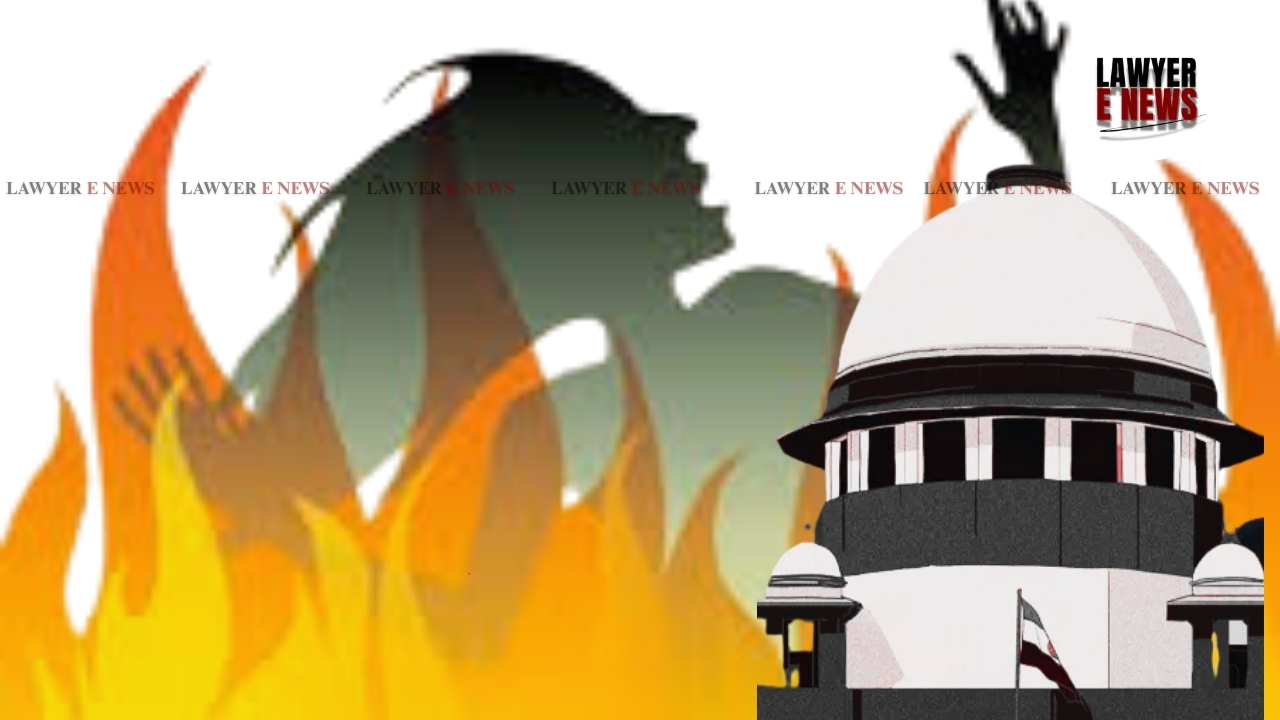
On 12 August 2025, the Supreme Court delivered a clear corrective on the limits of revisional jurisdiction and the primacy of a dying declaration. A Bench of Justices Rajesh Bindal and Manmohan set aside a High Court remand in a prosecution under Sections 498A and 306 IPC, restoring the trial court’s acquittal after finding that the deceased’s own statement described an accidental kitchen fire — not abetment or cruelty. The Court held that re-weighing evidence is beyond the High Court’s revisional remit and, on the record, a remand would serve no purpose.
The appellants had faced trial for dowry cruelty and abetment of suicide, with the second appellant additionally charged under Section 109 read with Section 306. The trial court acquitted them, having considered the prosecution’s witnesses, the defence, and a dying declaration recorded by a doctor. In revision, the Madurai Bench of the High Court set aside the acquittal and sent the matter back, reasoning that the dying declaration had not been properly marked or appreciated. By the time the matter reached the Supreme Court, the core controversy had narrowed to two pivots: what the dying declaration actually said, and what a High Court can — and cannot — do in its limited revisional jurisdiction.
The first issue was whether the dying declaration exculpated the accused. The declaration, recorded contemporaneously, recounted that while the family slept, the “gas regulator was not properly closed”; when the stove was lit in the morning, the fire spread, injuring the deceased, her husband, and their children. Reading it “in its totality,” the Bench underscored: “From the aforesaid dying declaration, nothing could be inferred to suggest that the deceased raised any accusation against her husband.” The Court also took note of the scientific and scene-of-crime record, which aligned with an accidental fire scenario and documented injuries to the entire household — a factual matrix inconsistent with an animus-driven attack or a suicide abetment theory. Against this, hearsay assertions, including the complainant-father’s later allegations, could not displace the deceased’s own words and the forensic trail.
The second issue was the scope of revisional powers. The Supreme Court reiterated that revision is not an appeal in disguise. It exists to correct glaring jurisdictional errors or perversity, not to re-appreciate facts that a trial court has already weighed. By directing a remand to re-examine the dying declaration and evidence afresh, the High Court had, in substance, ordered a re-trial on facts — a course the law does not permit in revision.
Having examined the dying declaration, corroborating forensic material, and the trial court’s reasoning, the Supreme Court concluded that there was no legal warrant to reopen the factual assessment. The Bench stated, “It would be a futile exercise to refer the matter back to the Trial Court for fresh consideration,” and accordingly set aside the High Court’s remand. The acquittal recorded by the trial court was restored in full. The Court’s approach gives operative teeth to two settled propositions: contemporaneous dying declarations stand on a high evidentiary pedestal when coherent and consistent with the objective record; and revisional jurisdiction cannot be expanded to conduct a second fact-finding mission.
The ruling offers a precise, practitioner-friendly message. Where a dying declaration credibly narrates an accident — here, a “gas regulator not properly closed” leading to a flash fire that injured the entire family — courts should be wary of converting revision into a platform for relitigating facts. The Supreme Court’s restoration of the acquittal underscores that justice is not served by endless revisitation, but by respecting the evidentiary hierarchy and the structural limits on revisional review.
Date of Decision: 12 August 2025