-
by sayum
26 August 2026 12:18 PM







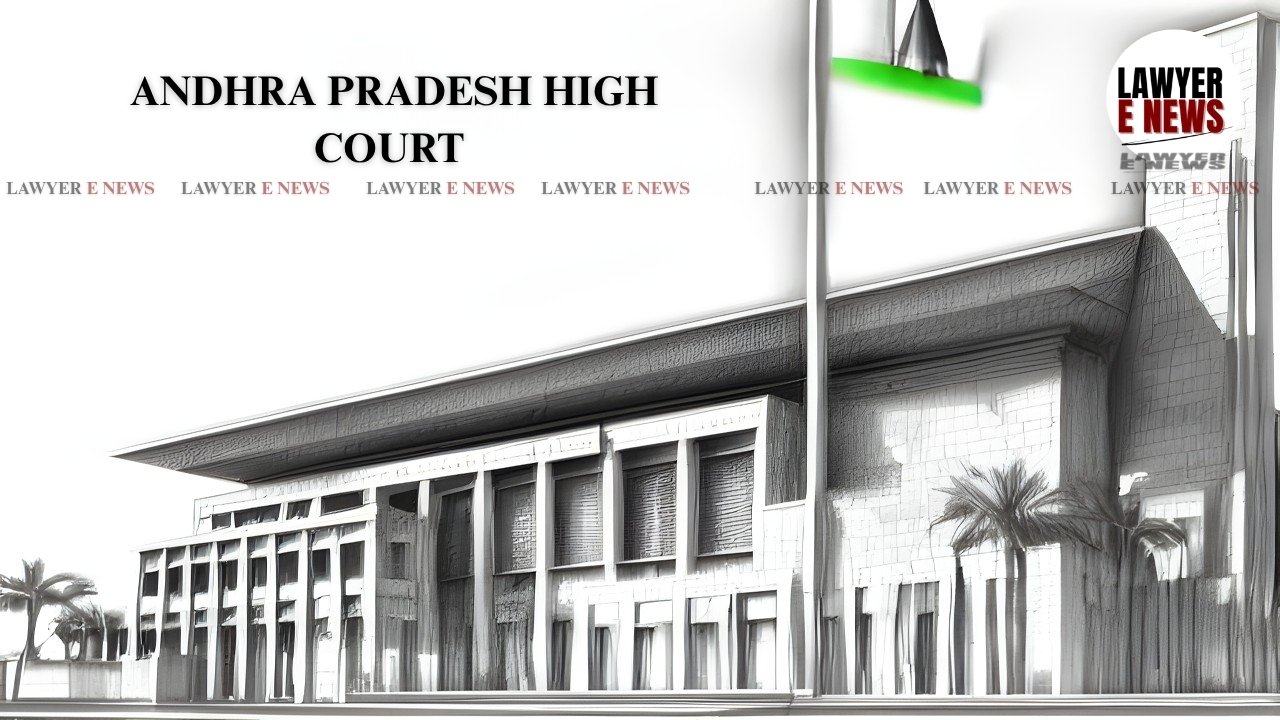
“Suspicion, However Grave, Cannot Replace Proof”— Andhra Pradesh High Court dismissed a criminal appeal filed by the State against the acquittal of the accused in a dowry death case, holding that the Trial Court’s judgment was reasoned, not perverse, and properly appreciated the legal standards governing dying declarations and Section 164 CrPC statements.
Justice T. Mallikarjuna Rao confirmed the acquittal of Matcha Jayanthi Rao and others, passed earlier in Sessions Case No. 38 of 2006 by the Assistant Sessions Judge, Srikakulam, who had found that the prosecution failed to prove the essential ingredients under Section 304B IPC beyond reasonable doubt.
“Suspicion, however grave, cannot take the place of proof,” reiterated the High Court, holding that the prosecution’s case lacked both corroboration and credibility, particularly in light of inconsistencies between the dying declaration, Section 164 CrPC statements, and the hostile testimonies of key witnesses.
Dying Declaration Must Inspire Confidence—Absence of Dowry Allegation Weakens Prosecution Narrative
The deceased, Matcha Lakshmi, allegedly died by suicide through self-immolation on 11.09.2005, suffering 95% burns. Her dying declaration (Ex.P17) was recorded by a Magistrate, but notably omitted any reference to dowry harassment—a critical omission for sustaining a charge under Section 304B IPC.
Though the declaration mentioned that the deceased was harassed by her in-laws and not allowed to visit her family, the Court noted:
“The dying declaration, while admissible, does not mention any dowry demand—this is fatal to the prosecution’s claim under Section 304B IPC.” [Paras 17–18]
Citing the Supreme Court’s ruling in Rajendra v. State of Maharashtra (2024 AIR (SC) 2682), the Court reaffirmed that a dying declaration can be the sole basis for conviction only if it is consistent, cogent, and devoid of tutoring.
Section 164 CrPC Statements Not Substantive Evidence—Cannot Be Basis for Conviction
A significant part of the prosecution’s case rested on the statements recorded under Section 164 CrPC by PWs 1 to 4 and 11—relatives of the deceased—wherein they alleged dowry harassment. However, these witnesses did not support the prosecution when examined in Court.
The High Court firmly reiterated that:
“Statements recorded under Section 164 CrPC are not substantive evidence; they serve only a limited purpose of corroboration or contradiction. They cannot be the sole basis for conviction.” [Para 24]
Relying on Siva v. State by Inspector of Police, Vellore (2022 Supreme (Mad) 3015), the Court observed that Section 80 of the Evidence Act cannot be invoked to presume the truth of a 164 statement, and that substantive evidence must come on oath before the court.
Neighbours and Family Denied Harassment—Prosecution Left Without Any Supporting Testimony
The Court noted that key witnesses including neighbours (PWs 5 and 7) and even the deceased’s siblings (PWs 1–4 and 11) denied any dowry-related harassment. Some described the death as accidental, and others as free of any suspicion.
“No neighbour, mediator, or close family member supported the version of dowry demand. In absence of corroboration, conviction cannot be sustained.” [Para 25]
The Medical Officer (PW14) testified that a person with 95% burns would be unconscious, casting further doubt on the clarity and voluntariness of the dying declaration. While the Court clarified that burn percentage alone does not render a dying declaration invalid (citing Bhagwan v. State of Maharashtra), it emphasized that such statements must nonetheless be reliable and corroborated.
Acquittal Carries Stronger Presumption of Innocence—Appellate Interference Only If Trial Court Was Perverse
The State argued that the Trial Court had failed to give proper weight to the evidence and that its conclusions were erroneous. However, the High Court, applying settled principles from A. Shankar v. State of Karnataka and State of Goa v. Sanjay Thakran, reiterated:
“An appellate court should not interfere with an acquittal unless the trial court’s findings are perverse, illegal, or manifestly unjust. Presumption of innocence is strengthened by acquittal.” [Paras 12–13, 31–32]
Further, the Court noted that the Trial Court had carefully considered the evidence and rightly disbelieved the dying declaration, given its inconsistencies and the lack of support from prosecution witnesses.
Suspicion Is Not Proof—Dowry Death Conviction Requires Clear Establishment of Ingredients Under Section 304B IPC
Under Section 304B IPC, the prosecution must prove that the death occurred within 7 years of marriage, and that the deceased was subjected to cruelty or harassment for dowry soon before her death.
The High Court found that while the death occurred within 17 months of marriage, the evidence did not show any harassment for dowry, let alone “soon before death”. Hence, a critical ingredient of Section 304B was absent.
“In the absence of convincing evidence of dowry-related harassment prior to death, the charge under Section 304B cannot be sustained.” [Para 27]
In a judgment grounded in careful legal reasoning, the Andhra Pradesh High Court reaffirmed the importance of judicial restraint in appeals against acquittal, particularly in sensitive criminal trials like dowry death cases. The Court found no perversity or illegality in the Trial Court’s decision and ruled that:
“The prosecution failed to establish the guilt of the accused beyond reasonable doubt. The judgment of acquittal does not warrant interference.” [Para 34]
The Criminal Appeal was accordingly dismissed, and the acquittal of Matcha Jayanthi Rao and others was upheld.
Date of Decision: 23 December 2025