-
by sayum
26 August 2026 12:18 PM







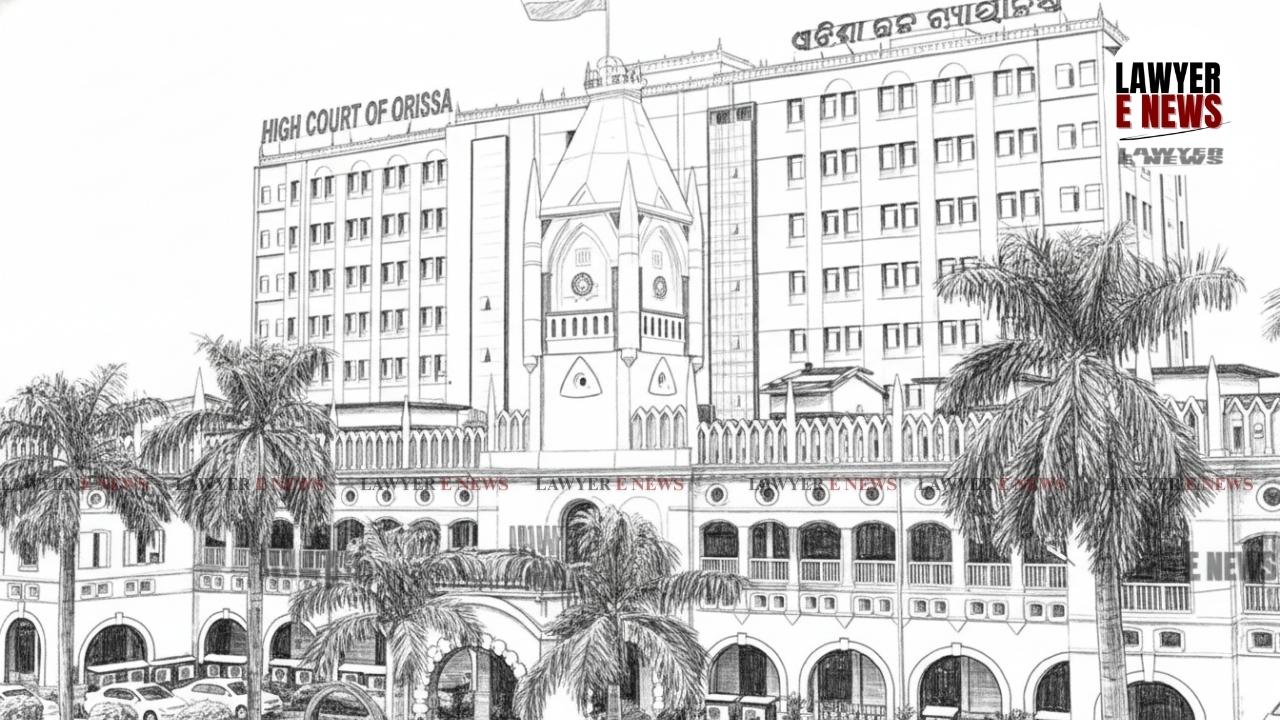
The Orissa High Court has sounded a strong judicial alarm against the growing menace of parties — particularly complainants — securing interim relief under the Protection of Women from Domestic Violence Act, 2005, and thereafter deliberately prolonging proceedings through a barrage of successive petitions and adjournment tactics, leaving the main case in a perpetual state of suspended animation.
Justice Savitri Ratho of the High Court of Orissa at Cuttack, while exercising supervisory jurisdiction under Articles 226 and 227 of the Constitution of India, made pointed observations about the misuse of procedural mechanics in DV Act proceedings, and issued a firm direction to the trial court to conclude the pending case within six months, strictly restraining the grant of unnecessary adjournments to either party.
"Before Disposal Of One Petition, Another 2 To 3 Petitions Get Added" — JMFC's Status Report Exposes Adjournment Game In DV Cases
On 4th February 2026, the High Court of Orissa at Cuttack delivered its ruling in CRLMP No. 86 of 2026, in the matter of Shovan Kumar Sahoo versus Puspanjali Swain, in which the husband-petitioner had approached the High Court seeking a direction to the learned Judicial Magistrate First Class (JMFC), Bhubaneswar to conclude CMC No. 40 of 2022 within a period of 45 days on a day-to-day basis. The legal issue squarely before the Court was the prolonged delay in disposal of a domestic violence application filed under Section 12 of the Protection of Women from Domestic Violence Act, 2005, despite a statutory mandate under Section 12(5) of the Act requiring the Magistrate to endeavour to dispose of such applications within sixty days of the first date of hearing.
Background of the Case
The wife — the Opposite Party in the present proceedings — had originally instituted CMC No. 40 of 2022 before the Court of the learned Sub-Divisional Judicial Magistrate (SDJM), Bhubaneswar against the husband-petitioner and his relatives under Section 12 of the DV Act, 2005, claiming reliefs under Sections 18 (Protection Orders), 19 (Residence Orders), 20 (Monetary Reliefs), and 22 (Compensation Orders) of the Act. The case was subsequently transferred to the Court of the learned JMFC, Bhubaneswar on 02.07.2025 when it was posted for the cross-examination of the Opposite Party.
The husband-petitioner, aggrieved by the inordinate delay, moved the present Criminal Miscellaneous Petition before the High Court contending that despite the clear statutory provision under Section 12(5) read with Section 28(2) of the DV Act mandating disposal within 60 days of the first date of hearing, the proceedings had been deliberately stalled through dilatory tactics employed by the Opposite Party after having already secured interim relief.
Pursuant to the High Court's order dated 21.01.2026, a status report dated 28.01.2026 was received from the learned JMFC, Bhubaneswar. The status report proved to be a clinching document. The Magistrate herself candidly disclosed the ground reality of what was happening in the court below, stating: "Both the parties are filing multiple petitions on almost every date of adjournment and are also pressing more for disposal of the petition rather than for conclusion of evidence. Before disposal of one petition, another 2 to 3 petitions get added for consideration and the case gets lingered for disposal of the petitions. Hence filing of such multiple petitions is creating a lot hardship in further proceeding of this case and its speedy disposal."
Legal Issues At Hand And Court's Observations
The Court carefully analysed the status report and drew a significant factual inference. From the report, Justice Savitri Ratho found it evident that after the file was transferred to the JMFC's Court on 02.07.2025 — when the case was ready for cross-examination of the Opposite Party — the case had been adjourned almost exclusively at the instance of the Opposite Party or her counsel. The only exceptions were two dates, namely 10.11.2025 and 13.01.2026, when the learned counsel for the Petitioner himself remained absent. On all other dates, the adjournments were sought and obtained by the complainant-wife's side, thus effectively freezing the trial at the critical stage of cross-examination.
Counsel for the Petitioner, Mr. Bibhu Prasad Mohanty, Advocate, drew the Court's attention to the specific mandate of Section 12(5) read with Section 28(2) of the DV Act. Section 12(5) of the DV Act, 2005 explicitly provides that "The Magistrate shall endeavour to dispose of every application made under sub-section (1) within a period of sixty days from the date of its first hearing." Further, Section 28(2) of the Act empowers the court to lay down its own procedure for disposal of an application under Section 12, thus conferring adequate procedural flexibility upon the Magistrate to ensure speedy justice.
The Court placed heavy emphasis on the constitutional and legislative foundation of the DV Act. The Court observed that "the D.V. Act has been enacted with the object of providing effective rights of protection to the women guaranteed under Article 15 of the Constitution of India, who are victim of any kind of violence within the family." It further held that "the provision under Section 12(5) of the Act has been inserted with the intention for expeditious disposal of application filed under Section 12(1) of the D.V. Act."
"If Unnecessary Or Long Adjournments Are Granted To Either Party, The Case Will Continue To Linger" — Orissa High Court
While acknowledging the practical constraints of trial courts, Justice Ratho took a realistic yet firm view on the question of the 60-day timeline. The Court observed that "it may not be possible or practical to dispose of the application within 60 days, but endeavour should be made for expeditious disposal, without depriving any of the parties of effective hearing." However, the Court categorically held that "if unnecessary or long adjournments are granted, to either party, the case will continue to linger" — a clear judicial censure of the culture of adjournment-by-design that has come to plague DV proceedings.
The Court also took note of a notable procedural aspect: given the nature of the relief being claimed and the order it proposed to pass, the Court was satisfied that notice of the application was not required to be issued to the Opposite Party before disposing of the petition, thus prioritizing the expeditious exercise of its supervisory jurisdiction without causing further delay through elaborate inter-party notice mechanics.
Details of the Judgment and Directions
In exercise of its powers under Articles 226 and 227 of the Constitution and in view of the clear provision of Section 12(5) of the DV Act, the High Court issued a calibrated and practical direction. The Court directed the learned JMFC, Bhubaneswar to make an endeavour to dispose of CMC No. 40 of 2022 within a period of six months from the date of production of the certified copy of the order. Crucially, the Court directed that for the said purpose, unnecessary adjournments shall not be granted to the parties — a direction addressed to both sides equally, leaving no room for either party to exploit the adjournment mechanism any further.
The Court further directed the Registry of the High Court to send a copy of the order to the learned JMFC, Bhubaneswar forthwith, ensuring that the directions of the High Court reach the trial court without any procedural lag.
The CRLMP was accordingly disposed of with the aforesaid observations and directions.
Date of Decision: 4th February, 2026