-
by sayum
30 August 2026 4:28 AM







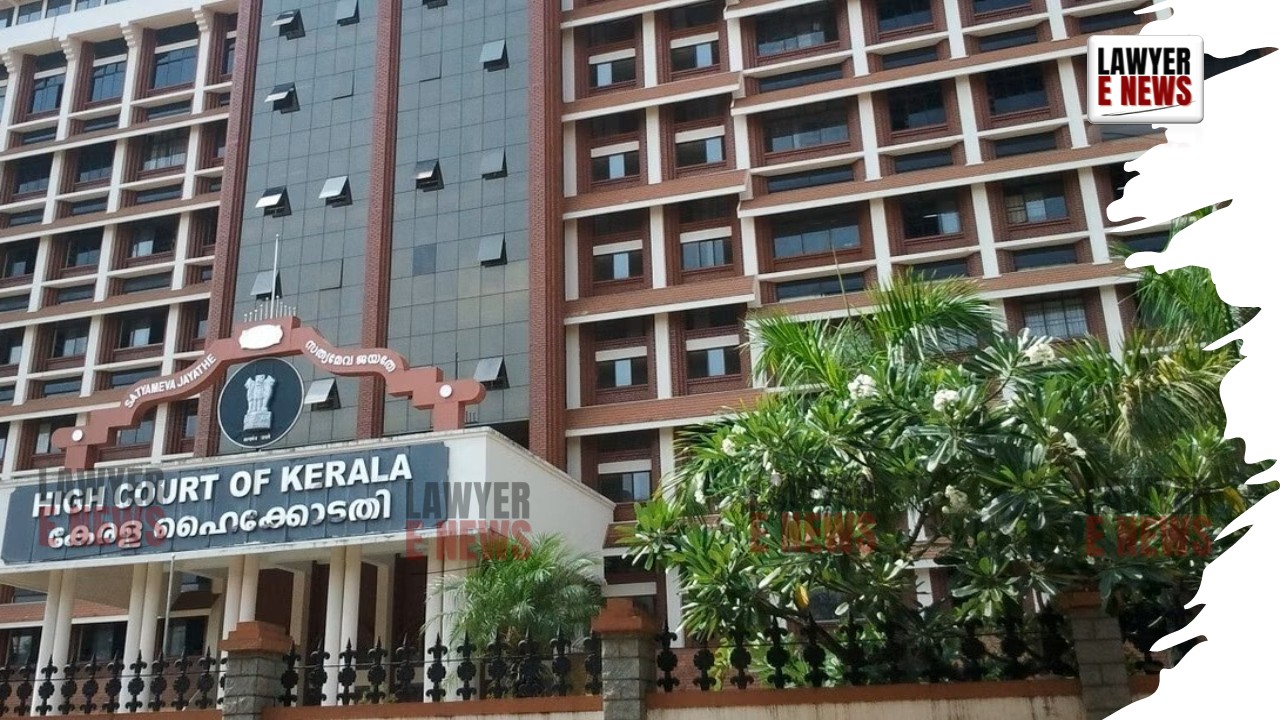
“Forgery of Title Deed, Impersonation of Land Owner and Abuse of Official Power – Prima Facie Offences Clearly Made Out,” Kerala High Court delivered a significant judgment, rejecting the discharge pleas of several accused persons — including a former Tahsildar, village officials, private individuals, and a document writer — in a major corruption and forgery case involving 3.77 acres of encroached government land.
Justice A. Badharudeen ruled that the allegations, backed by forensic evidence and witness statements, "clearly establish a strong prima facie case" and that “the question of whether the land was acquired through forged title and impersonation is a matter for trial — not discharge.”
The case originates from C.C. No. 93/2016 before the Special Judge (Vigilance), Muvattupuzha. The Vigilance and Anti-Corruption Bureau (VACB) had charged 14 individuals, including public servants and private parties, for allegedly engineering a conspiracy to forge land records, impersonate a landowner, and illegally acquire government land under the guise of private property.
The focal point of the prosecution is that Accused Nos. 1 and 9 (M.L. Lenish and his father) fraudulently encroached upon 3.77 acres of government land in Survey No. 148/1 in Chinnakanal Village by manipulating documents to make it appear as private patta land in Survey No. 20/1.
The land transfer was executed using Sale Deed No. 291/2006, allegedly signed by impersonating CW11 (Kurian Mathew), the original patta holder — who later testified he never executed such a deed.
Forgery and Conspiracy – Court's Key Observations:
Rejecting the accused’s arguments that the original patta was missing and the survey numbers were inconsistent, the High Court emphasized the compelling nature of the prosecution’s case.
“The prosecution materials would show that as far as execution of document No.291/06 is concerned, CW11 never executed such a document and it was executed by another person by impersonating him,” observed the Court.
Justice Badharudeen further noted, “On analysis of the materials, it is crystal clear that there is forgery of document No.291/06 and use of the same as genuine. Thereafter, accused Nos.1 and 9 trespassed upon the government land... and attempted to make the same as their property to get illegal pecuniary gain.”
Public Officers Enabled the Fraud – 'Report Was False, and Certificate Misused'
Accused No. 3, a former Tahsildar, was alleged to have furnished a false report to the District Collector, stating that the encroached land was in fact private land belonging to CW11. The Court held:
“The issuance of possession certificate and non-attachment certificate to the 1st accused by the 3rd accused in relation to a property in Sy.No.148/1, treating the same as patta land instead of government land, is clearly supported by the prosecution records.”
Justice Badharudeen underscored that while the 3rd accused joined service after the alleged forged sale deed was registered, his official actions — particularly the report affirming private ownership — were crucial to the encroachment and directly supported the conspiracy.
Mismatch in Survey Numbers Was Not a Defence, But Evidence of Deception
The accused had contended that all title documents referred to Survey No. 20/1, while the prosecution’s encroachment charge pertained to Survey No. 148/1, thereby suggesting a lack of mens rea. The Court rejected this defence.
“The plan shows Sy.No.20/1 and Sy.No.148/1 as distinct properties. The accused encroached upon 3.77 acres in Sy.No.148/1 while using title documents of Sy.No.20/1. This mismatch itself evidences the deception,” the Court ruled.
The Court also found that “the forged patta was used as a foundation to manufacture legal rights over a completely different survey number,” thereby “misleading authorities and dispossessing the government.”
Document Writer's Discharge Reversed – “He Knew the Real Owner Was Absent”
In a critical reversal, the Court also set aside the discharge of Accused No. 6, a document writer who had earlier been absolved by the Special Court.
Holding that his role was not innocent clerical error but part of the larger fraud, the Court observed:
“Forged document No.291/2006 was prepared and produced by the 6th accused for registration... knowing fully well that the person who appeared was not CW11.”
Even though he claimed to have acted in good faith, the Court found that “a strong suspicion as to involvement of the 6th accused is discernible from the prosecution records warranting trial.”
Forgery and Criminal Conspiracy – ‘Trial, Not Discharge, Is the Forum for Determination’
Relying on precedents including Rajiv Kumar v. State of U.P. and Mohammed Ali K. v. Chinnamma K.M., the Court clarified that questions of forgery and impersonation — especially when supported by forensic evidence and witness statements — cannot be resolved at the stage of discharge.
The Court quoted: “The essential ingredients of the offence of criminal conspiracy are: (i) an agreement between two or more persons; (ii) to do an illegal act or an act by illegal means. Meeting of minds and indulgence in the illegal act can be inferred from the conduct of the accused.”
Justice Badharudeen concluded that all these elements were evident on record and a full-fledged trial was the proper avenue to assess the guilt or innocence of the accused.
The High Court’s decision sends a clear message on the judicial approach to land fraud and public corruption. Dismissing the revision petitions filed by Accused Nos. 1, 3, and 9, and allowing the State’s revision against the discharge of Accused No. 6, the Court directed that all four accused face trial.
“It is not proper to hold at this stage that none of the offences are made out... The contentions raised by them would require consideration only after adducing evidence during trial,” the Court stated.
The interim stay was vacated, and the trial court was directed to proceed expeditiously.
Importantly, the Court cautioned that: “All observations made in this judgment are confined to the question of discharge and shall not influence the trial.”
Date of Decision: 29 July 2025