-
by sayum
05 August 2026 3:07 PM







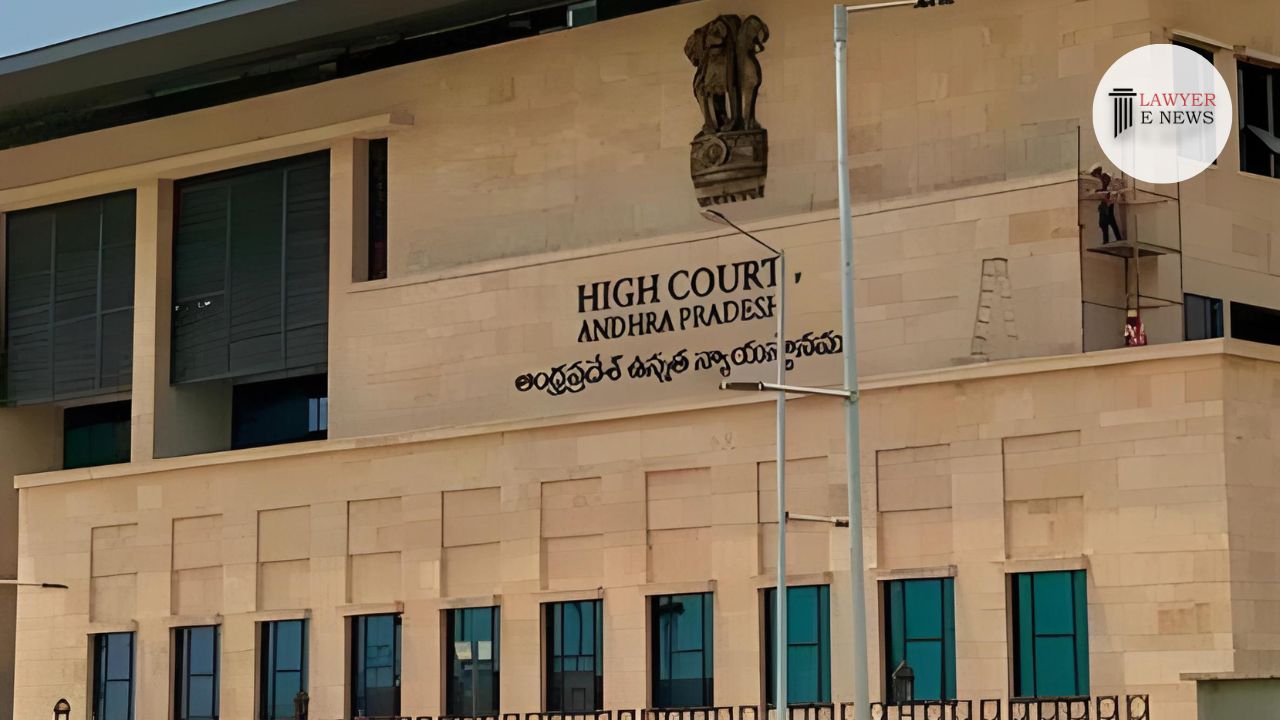
“Mere Recovery of Money Without Proof of Demand is Legally Insufficient”: Andhra Pradesh High Court set aside the conviction of a public servant under Sections 7 and 13(1)(d) read with Section 13(2) of the Prevention of Corruption Act, 1988, on the foundational ground that the prosecution failed to prove the essential element of demand and voluntary acceptance of bribe.
The Court emphatically ruled: “Mere possession and recovery of the currency notes from the accused officer without proof of demand will not bring home the offence under Section 7 of the Act.”
This judgment reiterates the fundamental legal requirement that demand for bribe must be proved beyond reasonable doubt to sustain conviction under corruption laws.
The appellant, Vedagiri Subrahmanyam Naidu, was employed as an Office Superintendent and FAC MPDO at Piler, Chittoor district. The prosecution alleged that he demanded and accepted a bribe of ₹3,000 from the de facto complainant (PW.1), a manual labourer engaged under the Rural Employment Guarantee Scheme, for processing and sanctioning a bill.
Following a complaint lodged with the ACB, a trap was organized, and tainted money was recovered from the accused at the APSRTC Bus Stand, Piler. The Special Judge for ACB cases, Kurnool, convicted the appellant under Sections 7 and 13(1)(d) read with 13(2) of the Prevention of Corruption Act and sentenced him to imprisonment.
Demand and Acceptance: The Heart of Corruption Offences
The High Court meticulously re-evaluated the evidence and underlined the settled principle that:
“Demand of illegal gratification is sine qua non to constitute the offence under Section 7 of the Act and mere recovery of currency notes cannot constitute the offence under Section 7 of the Act unless it is proved beyond all reasonable doubt that the accused officer voluntarily accepted the money knowing it to be a bribe.” [Para 23]
Hostile Witnesses and Collapse of Prosecution Case
In a telling observation, the Court highlighted that the key prosecution witnesses, including the de facto complainant (PW.1), accompanying witness (PW.2), and other crucial witnesses (PWs.3 to 7), turned hostile and categorically denied any demand of bribe by the accused.
The Court recorded:
“PW.1 did not support the prosecution case and was treated hostile… The accompanying witness PW.2 and other material prosecution witnesses PWs.3 to 7 also did not support the prosecution case and they were treated as hostile by the prosecution.” [Para 30]
Spot Explanation and Defence Version Unshaken
The accused officer’s spontaneous explanation was that the amount received was a personal hand loan sent by PW.16 (father-in-law of PW.1). Supporting this, PW.16 himself admitted in Court:
“He had friendly money transactions with the accused officer… he gave ₹3,000/- to PW.1 to deliver it as hand loan.” [Para 20]
The High Court accepted this explanation, noting the absence of any rebuttal.
Presumption Under Section 20 of the PC Act Not Invocable
The Court clarified that the statutory presumption under Section 20 of the Prevention of Corruption Act could not be triggered without proof of demand and voluntary acceptance of illegal gratification.
“Unless there is proof of demand of illegal gratification, proof of acceptance will not follow.” [Para 27, quoting Jhangan vs. State (1966)]
The Court extensively relied on authoritative Supreme Court judgments, including:
B. Jayaraj vs. State of Andhra Pradesh, (2014) 13 SCC 55, where it was held:
“Mere possession and recovery of the currency notes from the accused without proof of demand will not bring home the offence under Section 7.”
Aman Bhatia vs. State (GNCT of Delhi), (2023), emphasizing:
“The demand for a bribe is sine qua non for establishing an offence under Section 7 of the PC Act.”
Jagtar Singh vs. State of Punjab, Criminal Appeal No. 2136 of 2010, where the Supreme Court reversed conviction solely based on recovery of money when complainant and shadow witness turned hostile.
The High Court categorically held: “The present case strictly comes within the purview of Jagtar Singh’s case.” [Para 32]
Concluding that the prosecution had miserably failed to establish the essential ingredients of demand and acceptance of bribe, Justice K. Sreenivasa Reddy observed:
“There is absolutely no evidence to the extent that the accused officer made any demand on the date of trap and mere recovery of amount would not in any way attract the offences under the Act.” [Para 33]
Consequently, the conviction and sentence imposed by the Special Judge were set aside. The Court acquitted the appellant of all charges under Sections 7 and 13(1)(d) read with Section 13(2) of the Prevention of Corruption Act.
The Court ordered: “The appellant is found not guilty… acquitted of the charges… set at liberty. The bail bonds, if any, shall stand discharged. Fine amount, if any, paid by the appellant shall be refunded to him.” [Para 35]
This judgment fortifies the established jurisprudence that corruption charges cannot stand merely on recovery of money. The Court decisively reaffirmed:
“In the absence of proof of demand of bribe amount and acceptance of the same by the accused officer, there is any amount of ambiguity whether the alleged incident as suggested by the prosecution is said to have taken place or not.” [Para 34]
By scrupulously adhering to the demand-and-acceptance doctrine, the Andhra Pradesh High Court has provided a robust reaffirmation of the legal safeguards accorded to accused persons in corruption cases and underscored the high threshold of proof mandated under the Prevention of Corruption Act.
Date of Decision: 15th July 2025