-
by sayum
11 August 2026 2:00 PM







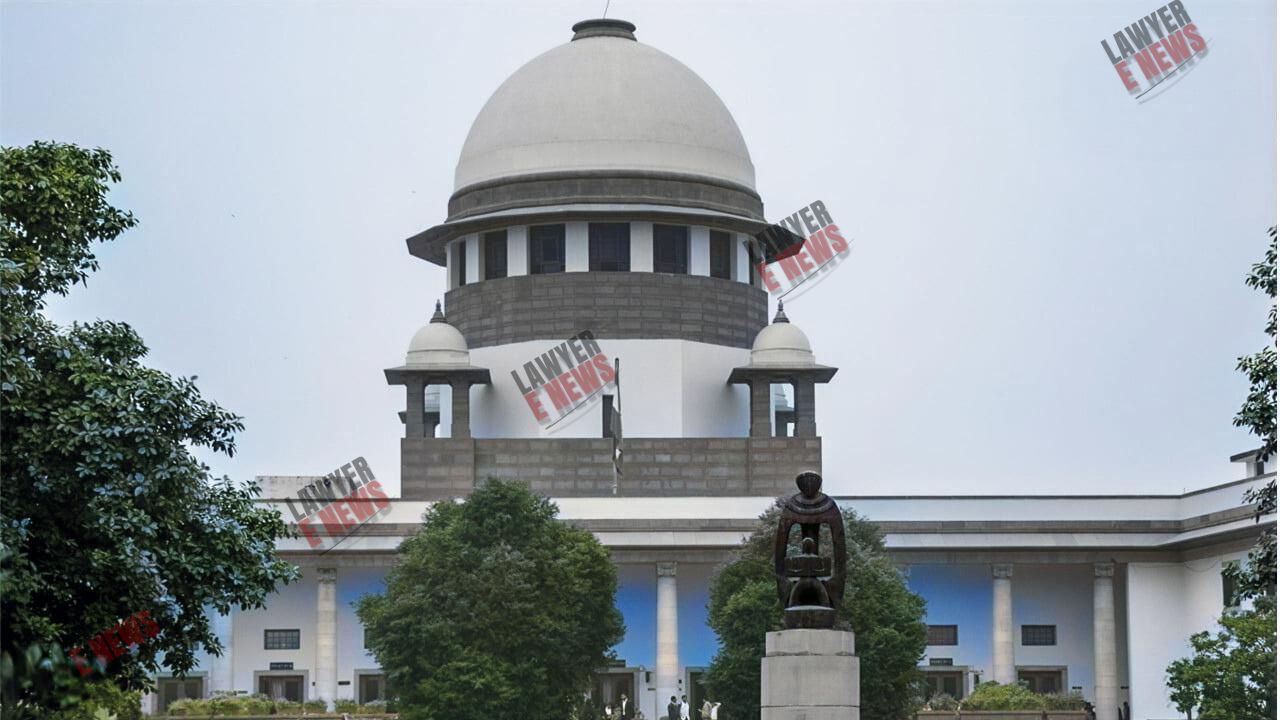
“High Court Overlooked Trustworthy Ocular and Documentary Evidence — Conviction Reinstated After 29 Years in Corruption Case”, - In a judgment restoring accountability under the anti-corruption regime, the Supreme Court reversed the acquittal of a village accountant granted by the Karnataka High Court and restored his conviction under Sections 7 and 13(1)(d) read with Section 13(2) of the Prevention of Corruption Act, 1988. The Court held that the demand and acceptance of bribe were clearly proved, and the High Court had committed a serious error in discarding reliable testimony on minor technical doubts.
“The prosecution proved its case beyond reasonable doubt… The High Court committed a serious error in setting aside the well-reasoned judgment of the Trial Court on erroneous grounds.”
The case goes back to 1995, when the complainant applied for mutation of agricultural land records at the office of the Tehsildar in Belgaum. Upon inquiry, the accused, Nagesh — then serving as Village Accountant — allegedly demanded a bribe of ₹2,000 to process the application. This was later bargained down to ₹1,500, with ₹1,000 to be paid first and ₹500 upon completion.
Unwilling to pay the bribe, the complainant approached the Lokayukta Police, and a trap was laid on April 7, 1995. During the trap, ₹500 marked with phenolphthalein powder was handed to the accused, who accepted it and kept it in his pants pocket. The subsequent handwash turned pink, confirming handling of tainted money.
The Trial Court convicted the accused in 2006, sentencing him to one year’s rigorous imprisonment on each count, along with fines. However, the High Court in 2012 acquitted him, citing inconsistencies in the witness testimonies, particularly regarding which hand was used and which pocket the money was placed in.
“Presumption Under Section 20 of PC Act Applies When Bribe Is Received — Rebuttal Must Be Credible”
Rejecting the High Court’s approach, the Supreme Court held that once demand and acceptance are proven, the presumption under Section 20 of the Prevention of Corruption Act automatically applies. The accused had offered no plausible explanation to rebut it.
“The bribe money recovered from the possession of the accused clearly proves that he had accepted the bribe. The presumption under Section 20 stands unless convincingly rebutted.”
The Court also noted that the accused's statement that the money was “forcibly kept” in his pocket was denied by both the complainant and the shadow witness, and not substantiated by any independent evidence.
“Minor Inconsistencies Cannot Override the Core Truth of Corruption”
The High Court had acquitted the accused by pointing out inconsistencies in the evidence of PW1 (complainant) and PW2 (shadow witness) — such as differences in which pocket was used or whether both hands were involved. The Supreme Court decisively ruled that these were minor discrepancies that could arise after a 10-year delay in trial and do not erode the core credibility of the prosecution.
“These were some minor discrepancies and they were not of such a nature so as to discard the truthful and reliable version of the witnesses.”
The Court quoted the trial judge’s observation: “The trap is dated 07.04.1995 and PW1 is examined before the court on 24.03.2005… lapse of memory regarding names or directions is natural.”
“Trap Proceedings Were Clean and Corroborated — High Court Ignored Shadow Witness Testimony”
The Court highlighted that PW2, the shadow witness, gave a detailed and consistent account: that the accused accepted the ₹500 bribe, counted the money, and placed it in his pocket. He confirmed that both hands turned pink in sodium carbonate solution, which corroborated the trap.
“PW2 stood firm even in detailed cross-examination. The High Court erred in ignoring this crucial testimony.”
The trap mahazar, the serial numbers of the notes, and the seizure of the pant further corroborated the event.
“Long Delay in Trial Cannot Be a Ground to Acquit the Guilty”
Acknowledging that the incident occurred in 1995 and the appeal reached final hearing in 2025, the Court firmly rejected the plea for leniency based on delay or old age.
“The respondent-accused enjoyed liberty during the trial and appeal… there is no reason to show any indulgence now.”
“The conviction and sentence recorded by the Trial Court is upheld. The accused shall surrender within two weeks.”
Setting aside the High Court’s acquittal, the Supreme Court reinstated the conviction and sentence awarded by the Trial Court. The accused was ordered to surrender within two weeks, bringing closure to a corruption prosecution pending for nearly three decades.
“The prosecution proved its case beyond reasonable doubt… The High Court committed serious error in discarding the trustworthy evidence on superficial grounds.”
This judgment reinforces that technical inconsistencies cannot defeat the substance of proven corruption, and courts must apply the statutory presumption under the PC Act rigorously unless convincingly rebutted.
Date of decision: 16/04/2025