-
by sayum
05 August 2026 9:31 AM







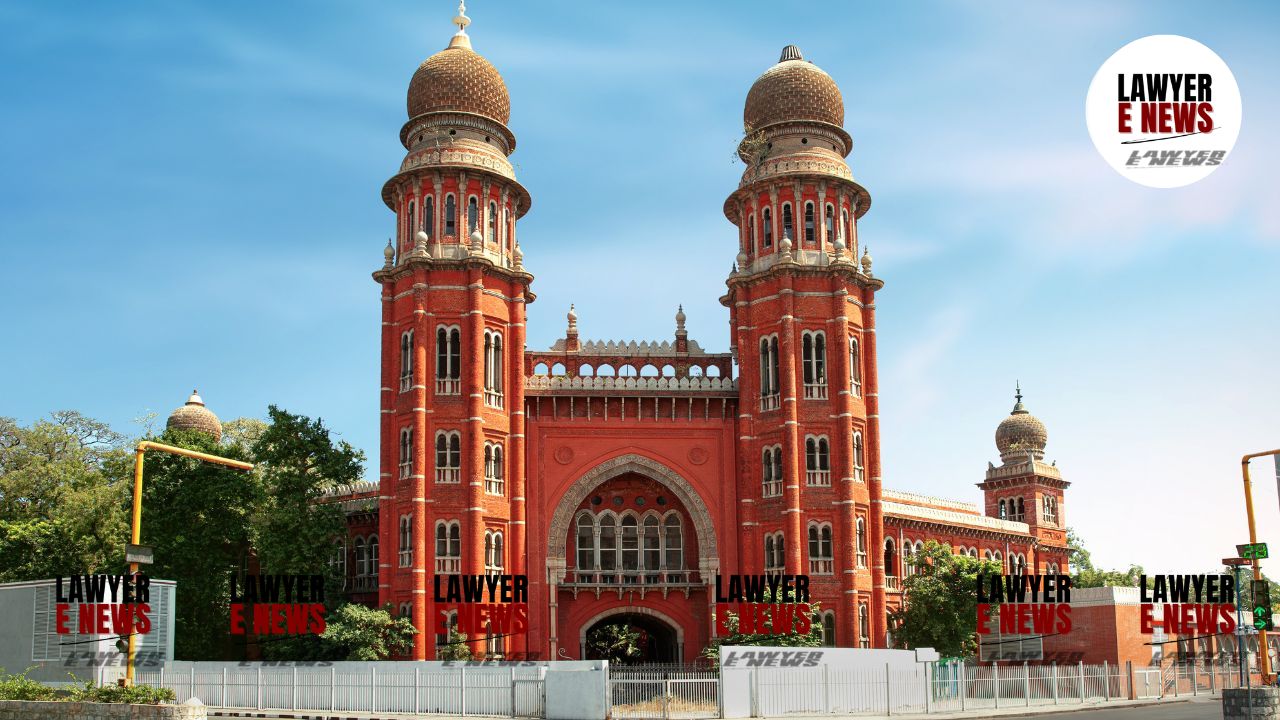
“He Had Been Excluded Owing to the Community He Comes From, Not Because He Was Not Qualified” – Madras High Court delivered a scathing verdict in the case of N. Mani v. Pondicherry University, condemning the “arbitrary” and “mala fide” rejection of a highly qualified Scheduled Caste (SC) candidate for the post of Professor at the Centre for the Study of Social Exclusion and Inclusive Policy. The Court held that the rejection was not only unjustified but deeply ironic, considering the very mission of the Centre.
Justice C.V. Karthikeyan observed: “He had been excluded owing to the community he comes from and not because he was not qualified.”
Calling the exclusion “deliberate” and “systemic,” the Court directed the University to immediately appoint the petitioner and grant him all consequential benefits from the date of rejection, i.e., 18 December 2023.
The petitioner, N. Mani, a veteran academic with 32 years of teaching experience, applied for the post of Professor reserved for SC candidates at Pondicherry University in response to Advertisement No. PU/RC/2019/34 dated 05.08.2019. Despite being the only candidate who attended the interview held on 21.11.2022, the University rejected his application, citing “none found suitable.”
Justice Karthikeyan noted the disturbing context: “From the time of commencement of the said Centre, the post of Professor had always been kept vacant and the backlog vacancy had been carried forward.”
The petitioner was eventually informed that no candidate was found suitable, without any reasons or transparency. This led to the filing of a writ petition challenging the non-appointment.
The core legal issues revolved around:
The opaque and unexplained rejection of a sole eligible candidate.
The distinction between “eligibility” and “suitability,” and the limits of judicial review over academic selections.
Whether the Selection Committee’s process conformed to UGC guidelines and constitutional principles under Article 16.
The Court was particularly troubled by how the Selection Committee functioned. Initially, only five members attended the interview and declared the candidate unsuitable. Nearly three months later, two absent members were asked to “authenticate” the decision via email. Justice Karthikeyan held: “Their signatures had been obtained subsequently nearly after three months… They were never in a position to assess the suitability of the petitioner… This certainly invites the allegation of mala fide…”
Highlighting the irony of exclusion from an institution meant to address systemic social discrimination, the Court said: “The first respondent has deliberately ensured exclusion of a Schedule Caste candidate from being appointed as Professor in the Centre for Study of Social Exclusion and Inclusive Policy. The name of the Centre makes the rejection of the petitioner extremely ironical.”
Justice Karthikeyan laid bare the petitioner’s exceptional qualifications: “The petitioner had an API score of 397, while the UGC prescribes only 120. He had guided nine Ph.D. scholars when the norm is one. He had published 13 books, 17 journal articles, and contributed to several national and international conferences.”
The University’s reasoning – or lack thereof – did not hold up to constitutional scrutiny. The Court invoked Article 16 of the Constitution and declared:
“This deliberate attitude is against the object enunciated in the Constitution wherein Article 16 provides for Equality of Opportunity in matters of Public Employment.”
Quoting the Supreme Court’s ruling in Food Corporation of India v. Kamdhenu Cattle Feed Industries, the Court emphasized: “Failure to consider and give due weight to [legitimate expectations] may render the decision arbitrary, and this is how the requirement of due consideration of a legitimate expectation forms part of the principle of nonarbitrariness.”
The Court further held: “The rejection of the petitioner and failure to give due weightage to his experience and educational qualifications renders the decision of the Selection Committee arbitrary and subject to judicial scrutiny.”
Ultimately, the Court issued a binding direction: “A direction is issued to the first respondent to issue an order of appointment to the petitioner… within a period of two weeks from this date. The petitioner is entitled for service and monetary benefits on and from 18.12.2023.”
This judgment by the Madras High Court sends a strong message against camouflaged discrimination and tokenistic inclusion in academic institutions. Justice Karthikeyan’s sharp observations expose the structural hypocrisy behind denial of opportunity under the guise of “suitability.” By ensuring the appointment of a long-ignored SC candidate in a Centre ironically named for social inclusion, the Court upholds both the constitutional mandate and academic integrity.
Date of Decision: 02.06.2025