-
by sayum
28 August 2026 10:07 AM







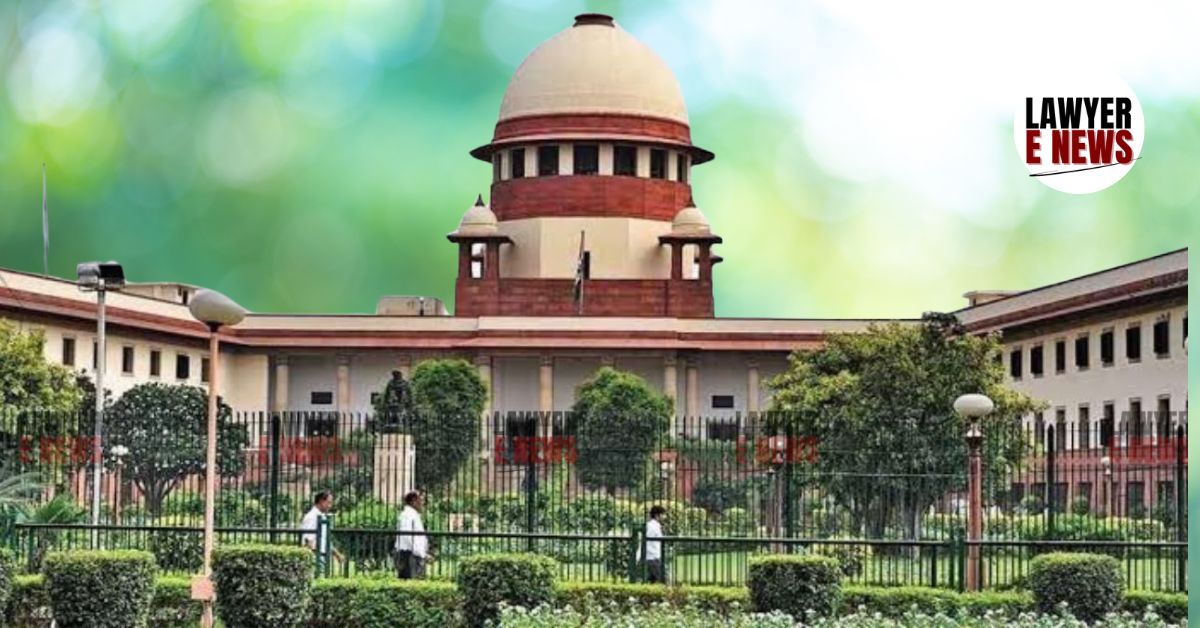
Supreme Court of India reversed the Bombay High Court’s denial of anticipatory bail to a self-proclaimed spiritual leader accused of rape and unnatural sex under Sections 376(1) and 377 IPC. Emphasising the suspicious delay in lodging the FIR and the need to uphold personal liberty until guilt is proven, the Bench comprising Justice B.V. Nagarathna and Justice Prashant Kumar Mishra held, “Considering the circumstances on record, in our view, the appellant is entitled to the relief claimed under Section 438 of the CrPC.” The Court allowed the appeal and directed that the appellant be released on anticipatory bail subject to strict conditions.
“Liberty Not to Be Sacrificed on Unsubstantiated Claims of Exploitation”: Supreme Court Cautions Against Denying Bail in Absence of Immediate Custodial Need
Granting relief to a religious figure accused of exploiting a married woman and others under the guise of spiritual mentorship, the Supreme Court noted that while the allegations were grave, the complaint appeared to be entangled in layers of personal complexity, delayed reporting, and alleged conspiratorial motives. The appellant had asserted that the complainant’s husband had deliberately recorded videos of her meetings with the appellant to fabricate false evidence. The Court observed, “The entire endeavour of the complainant and her husband is only to create false evidence… for oblique purposes,” and took note of the fact that interim protection had already been granted earlier, which had not been misused.
In a case that tested the limits of anticipatory bail in the context of serious allegations cloaked in claims of religious exploitation, the Supreme Court on 4th September 2025 granted anticipatory bail to Dyanoba Mugaji Karhale, also known as Mauli Maharaj Mudekar—a self-styled godman accused of sexually assaulting a married woman. The FIR, lodged in August 2024 at Gangakhed Police Station in Maharashtra, led to a slew of accusations under IPC Sections 376(1), 377, and 354A. However, noting that the FIR was lodged after considerable delay and amidst questionable circumstances, the Supreme Court set aside the Bombay High Court’s denial of bail and held that custodial interrogation was not necessary.
The Court issued its ruling under Section 438 of the CrPC, reinforcing that anticipatory bail remains a constitutional shield against unjustified pre-trial incarceration.
The appellant, a religious figure in the Parbhani district of Maharashtra, faced accusations from a married woman who alleged that she had been sexually exploited under the pretext of spiritual guidance. The FIR included grave charges under Sections 376(1) (rape), 377 (unnatural offences), and 354A (sexual harassment) of the IPC.
The appellant contended that the allegations were not only false but part of a calculated scheme involving the complainant and her husband, who allegedly created compromising video recordings for purposes of extortion and public humiliation. The FIR, filed long after the alleged incidents, was argued to be a strategic and belated move to fabricate a narrative.
In May 2025, the Supreme Court granted interim protection to the appellant pending a full hearing. After hearing both sides in September, the Court found no compelling justification to deny anticipatory bail.
The legal question before the Court was whether a person accused of heinous sexual offences—who claims false implication, delay in FIR, and lack of any custodial necessity—can be granted anticipatory bail when interim protection has already been granted and complied with.
The complainant’s counsel had argued that the accused had a pattern of misusing his religious authority to exploit women and that granting bail would endanger the integrity of the investigation. The State supported this view, citing multiple alleged victims and the sensitive nature of the case.
However, the Court took a balanced view. It acknowledged the seriousness of the charges but stressed that the procedural fairness and right to liberty could not be overlooked merely due to public perception or the nature of accusations. The Court recorded the appellant’s plea that, “the FIR is not only belated but also concocted,” and that, “allegations as against the appellant are frivolous and made with an oblique motive.”
Crucially, the Court noted that the complainant was an adult and married, and that the circumstances surrounding the accusation—particularly the use of video recordings—raised questions that could not be ignored at the stage of bail. It held that the High Court erred in refusing protection solely on the basis of allegations without addressing these contextual factors.
Allowing the appeal, the Supreme Court granted anticipatory bail with specific conditions. The order of the Bombay High Court dated 24.04.2025 rejecting Anticipatory Bail Application No. 1473 of 2024 was set aside. The Court directed:
“In the event of his arrest, the Arresting Officer shall release the appellant on bail subject to furnishing cash security in the sum of Rs. 25,000/- with two like sureties.”
The Court further instructed that:
“The appellant shall extend complete cooperation in the investigation. The appellant shall not misuse his liberty and shall not in any way influence the witnesses or tamper with the material on record.”
The Court also issued a strong warning that “any breach or infraction of the aforesaid conditions may entail cancellation of anticipatory bail.”
With these conditions, the criminal appeal was allowed, and pending applications were disposed of.
The judgment in Dyanoba Mugaji Karhale v. State of Maharashtra reinforces a recurring principle in bail jurisprudence—that liberty is not contingent on public sentiment or seriousness of accusations alone, but on the legal and factual matrix that informs the necessity of pre-trial detention. The Supreme Court’s decision to grant anticipatory bail in a case involving grave charges against a spiritual leader may raise eyebrows, but it underscores that even the most serious allegations must not override the presumption of innocence and the procedural safeguards guaranteed by law.
By setting aside the High Court's rejection, the Court reaffirmed that a delayed and suspicious FIR, a claim of false implication, and previous compliance with interim protection together present a strong case for anticipatory relief. The ruling offers a nuanced approach to the law of bail—one that does not trivialize sexual assault claims, but also refuses to treat accusations as convictions.
Date of Decision: 4 September 2025