-
by sayum
26 August 2026 10:38 AM







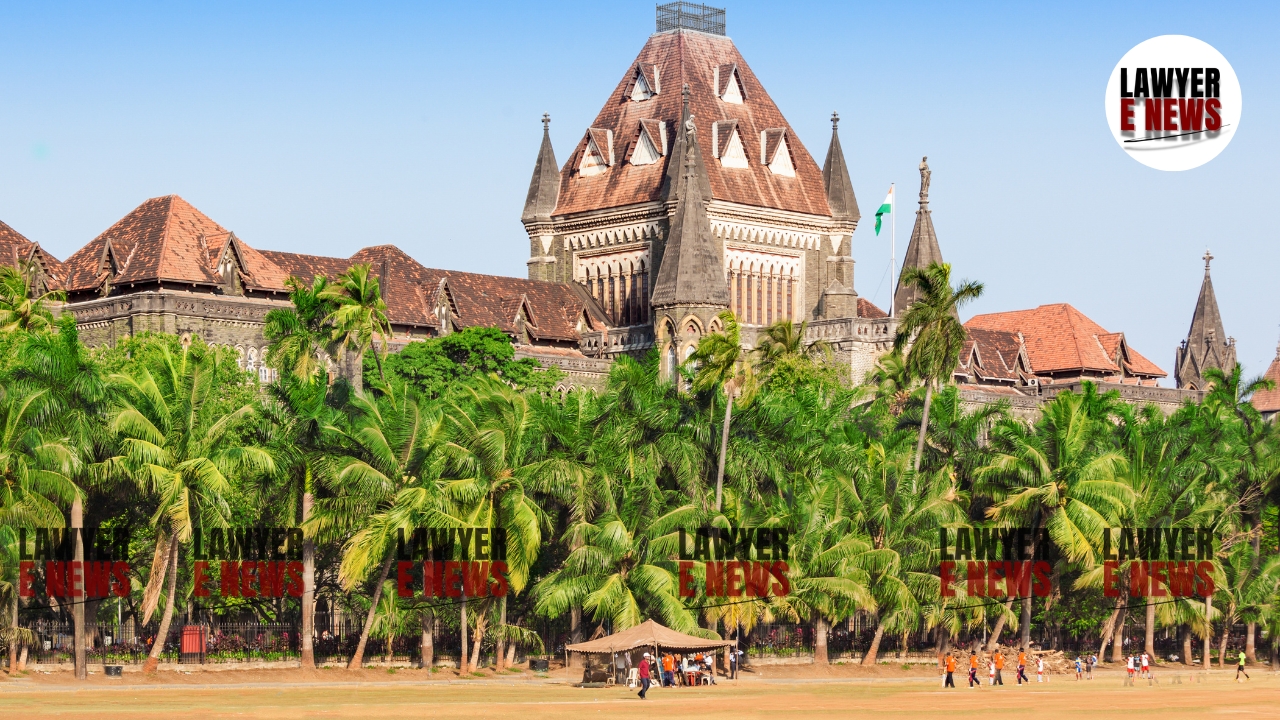
“The conduct of eyewitnesses is wholly unnatural; their silence for over two months after witnessing a murder is fatal to the prosecution’s case” – In a landmark judgment that underscores the sacrosanct principle of proof beyond reasonable doubt, the Bombay High Court (Nagpur Bench) acquitted two men convicted of murder, holding that the trial court had relied on “inadmissible and contradictory evidence” and “built a case on suspicion rather than legal proof.”
Setting aside the conviction and life sentence imposed on Rahul Devidas Mahapure and Vitthal Ramkisan Dhanwate by the Sessions Court at Buldana, a Division Bench of Justice Anil L. Pansare and Justice Raj D. Wakode observed:
“The learned Sessions Court convicted the appellants on the basis of strong suspicion… however, it is a long-standing principle settled by the Hon’ble Supreme Court that suspicion, however strong, cannot take the place of proof.”
“Delay of Over Two Months in Eyewitness Disclosure is Inexplicable and Erodes the Core of the Prosecution’s Case”
The alleged incident took place on the night of March 31, 2016, when Vinod @ Bablu Sadashiv Mahapure was found hanging from a tree in Amdapur’s Cotton Market. At the time, the police treated the case as suicide, and an ADR was registered. It was only on June 9, 2016, after a fresh complaint, that the case was converted into a murder investigation, and both appellants were arrested.
The prosecution’s entire case rested on the testimony of two so-called eyewitnesses—PW-6 Gajanan Chopade and PW-10 Ravindra Pakhare—who claimed to have seen the accused hang the deceased from a neem tree around 1:30 AM. But these witnesses did not report the murder to anyone—not to the police, not even to the deceased’s family during his funeral.
The Court remarked:
“It is not the case that the witnesses were unaware of the identity of the accused or the victim. Their inexplicable silence, even when questioned, defies natural human conduct.”
Adding further, the Court noted:
“Their statements were first recorded on 09.06.2016—more than two months after the incident—and supplementary statements were taken even later, on 04.10.2016. This conduct irreparably damages their credibility.”
“The Sequence of Events Narrated by Eyewitnesses Is Contradictory, Their Presence at the Scene Appears Unnatural, and the Source of Light Is Unverified”
Apart from the delay, the Court found material contradictions in how both eyewitnesses described the alleged murder. PW-6 claimed the accused first climbed on the bonnet, then hanged the victim, then drove ahead, returned and pulled his legs. PW-10’s version was entirely different—describing the victim being hanged while standing, without ever mentioning a vehicle being used to aid the act.
The Court observed:
“There is a serious variance in the sequence of events narrated by the two witnesses. The improvements and omissions raise grave doubts about their reliability.”
Further, PW-6 had claimed to witness the incident from a distance of 1200 metres, relying solely on the headlights of the accused’s vehicle. However, the Investigating Officer admitted that he did not even check whether the vehicle’s headlights were functional.
“In the dead of night, viewing such an act from 1200 metres, with no independent source of light, is simply beyond the realm of plausibility,” the Court noted.
Adding to this, neither witness could produce a hotel bill to confirm their reason for being in the area. The hotel owner was not examined, and the alibi for their midnight presence at the crime scene remained unsubstantiated.
“Homicidal Death Alone Is Not Sufficient—Prosecution Must Prove the Accused Committed the Crime”
While the High Court did concur with the medical opinion of PW-18 Dr. Mina Kasare, who ruled out suicide and confirmed the death was homicidal, it emphasized:
“Merely proving that the death was homicidal does not suffice. The prosecution must prove that the appellants are the perpetrators beyond reasonable doubt.”
Interestingly, although the prosecution alleged that the deceased was sedated with Lorazepam mixed into an omelette before being hanged, no trace of the sedative was found in the postmortem. The doctor who conducted the postmortem did not smell or observe any signs of tranquilizers.
“The medical evidence does not corroborate the theory of sedation. The entire sedation narrative remains speculative,” the Court held.
The alleged confession under Section 27 of the Evidence Act, regarding the rope and tablet, was also dismissed as insufficient:
“Recovery of a rope and tablet, without forensic linkage or corroboration, cannot be the basis for conviction.”
“Motive Grounded in Alleged Property Dispute Found to Be Weak and Unsubstantiated”
The prosecution claimed that Rahul Mahapure had paid Rs. 8 lakhs to the deceased for a property deal, which allegedly went sour, providing the motive for murder. But this theory quickly collapsed under scrutiny.
PW-5, the deceased’s wife, admitted that her husband and the accused had not spoken in 18 years. The investigating officer also conceded that no document, receipt, or witness was produced to support the alleged transaction.
“This so-called motive is speculative and lacks documentary or testimonial support,” the Court stated. “The Sessions Court’s reliance on this weak and unproven motive was legally unsustainable.”
“The Conviction Was Based on Strong Suspicion, Not Legal Proof—This Is a Grave Error of Law”
In a scathing conclusion, the Bombay High Court emphasized that while the prosecution managed to raise suspicion, it failed completely to prove the appellants’ guilt beyond reasonable doubt, as required under criminal law.
“We find that the Sessions Court committed a serious error in convicting the appellants based on suspicion and uncorroborated evidence,” the judgment read. “Such a conviction is legally untenable.”
Acquittal Ordered, Conviction Set Aside
The High Court quashed the trial court’s judgment dated October 4, 2021, acquitted both accused of all charges under Section 302 read with 34 IPC, and ordered the immediate release of Vitthal Dhanwate, if not wanted in any other case. The bail bond of Rahul Mahapure, who had earlier been released on bail, was cancelled.
“The present criminal appeals are allowed. The conviction is set aside. The accused are acquitted,” the Court declared.
This judgment is a powerful reiteration of the foundational principles of criminal jurisprudence—that a person’s liberty cannot be compromised on conjecture, and no conviction can rest on suspicion, no matter how grave the offence may be. The Bombay High Court’s clarity in sifting suspicion from evidence, and highlighting procedural lapses, serves as a judicial milestone in protecting due process and the presumption of innocence.
Date of Decision: 17 December 2025