-
by sayum
05 June 2026 9:42 AM







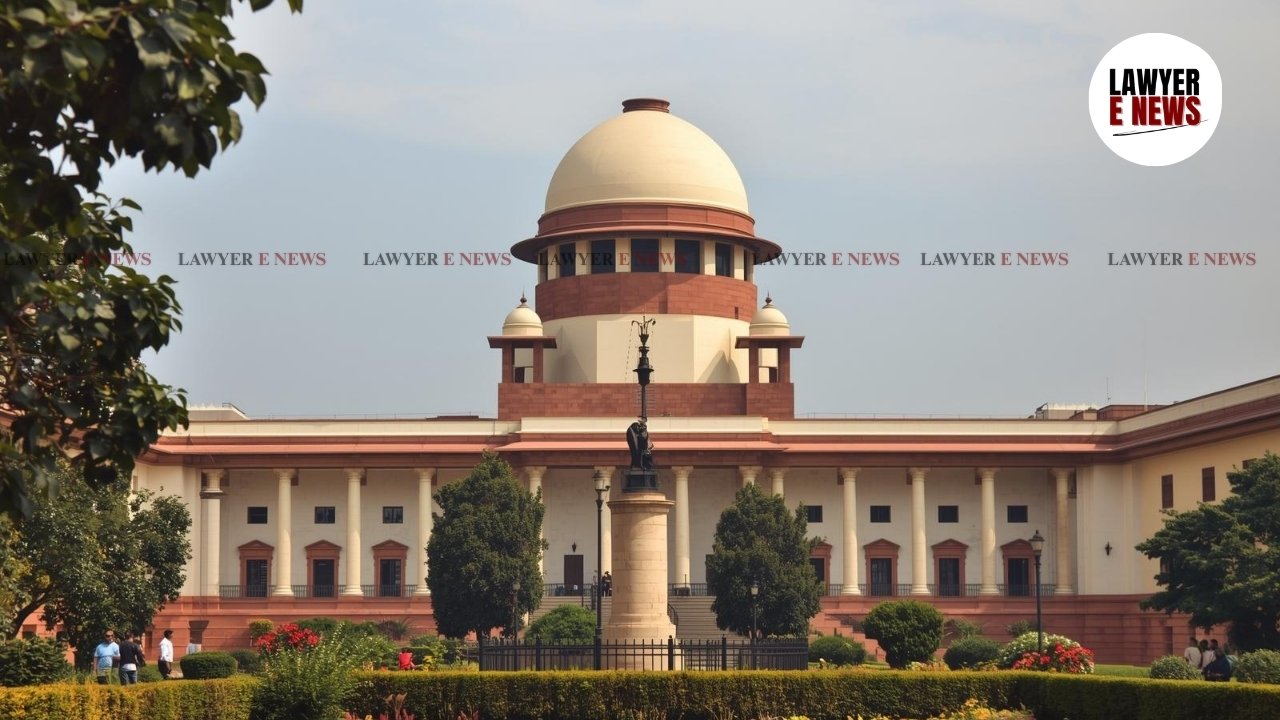
"Right to life and personal liberty guaranteed under Article 21 of the Constitution is not confined to the expeditious conduct of a trial. It extends to every stage of the proceeding and is as much violated by such delay in pronouncing a reserved judgement as by a denial of the right to be heard," Supreme Court, in a landmark ruling, held that the persistent delay in pronouncing reserved judgments by High Courts violates the fundamental right to life and liberty under Article 21 of the Constitution.
A bench of CJI Surya Kant and Justice Joymalya Bagchi observed that such delays render legal reliefs nugatory and issued a comprehensive set of binding guidelines under Article 142 to ensure timely delivery of justice. The Court emphasized that the weight of this delay falls with particular severity on those held in custody, for whom every day without a verdict is a day of continued confinement.
The proceedings originated from several Writ Petitions, including a lead petition filed by convicts in Jharkhand who had served over a decade in custody while their criminal appeals remained reserved for judgment since early 2022. Recognizing a systemic "pan-India scenario" where judgments remained unpronounced for months or even years, the Supreme Court expanded the scope of the case to address the broader constitutional issue affecting the administration of justice. Although the original petitioners were released during the pendency of these proceedings, the Court kept the matter alive to formulate uniform guidelines for all High Courts.
The primary question before the Court was whether the indefinite delay in pronouncing reserved judgments constitutes a violation of the right to a speedy trial and personal liberty under Article 21. The Court was also called upon to determine the appropriate administrative and procedural framework required to ensure that High Courts adhere to reasonable timelines for judgment delivery.
Delay In Judgment Delivery Violates Fundamental Rights
The Court observed that the interval between the hearing and the pronouncement significantly affects the quality of adjudication. A judgment bears the imprint of the arguments that preceded it, and it reflects them most faithfully when it follows them closely. The bench noted that courts are institutions of trust, and the regularity with which they speak after reserving judgment is a vital component of that trust.
The bench further underscored the human dimension of the problem, noting that each delayed judgment represents a litigant whose fate hangs in the balance. The right to an expeditious trial is not a mere procedural nicety but a condition on which citizens’ confidence in the justice delivery system rests. Delay in pronouncing a reserved judgment is as much a violation of constitutional mandates as the denial of the right to be heard itself.
"A convict whose appeal has been reserved, or an accused who has sought bail and is awaiting the court’s decision, cannot be expected to accept the court’s silence with equanimity."
Mandatory Three-Month Timeline For Reserved Judgments
Exercising its jurisdiction under Article 142 of the Constitution, the Supreme Court issued binding directions to all High Courts to address the statutory lacuna regarding pronouncement timelines. The Court directed that in matters where a judgment is reserved, the High Court shall endeavour to pronounce a reasoned judgment promptly, within a maximum period of three months from the date of reservation. This timeline is intended to provide a structured framework for consistent discharge of constitutional responsibilities.
Priority For Personal Liberty And Bail Matters
The Court mandated extra promptitude in matters concerning personal liberty, such as regular bail, anticipatory bail, and death references. As soon as a bail application is heard, the order should preferably be pronounced and uploaded on the same day. In cases where the order is reserved, it must be pronounced and uploaded by the next day. The Court also ordered that acquittal or bail orders must be communicated to jail authorities on the same day to ensure the immediate release of the individual.
Accountability Mechanism And Role Of The Chief Justice
To ensure compliance, the Court established an accountability framework involving the Chief Justices of the High Courts. At the end of every month, an automated email must be sent to the Chief Justice specifying all reserved judgments pending in that month. If a judgment is not pronounced within two months, the Chief Justice may confidentially circulate the list of such cases among the judges of the High Court to draw their attention to the pending matters.
"In the event the reserved judgment is not delivered within 3 months, the Registrar General shall place the matters before the Chief Justice for orders, and the Chief Justice shall bring it to the notice of the concerned Bench."
Re-assignment Of Cases After Excessive Delay
The Supreme Court introduced a strict measure for cases where delays exceed the extended period. If a judgment remains unpronounced after the Chief Justice has granted an additional two-week window following the initial three-month delay, the Chief Justice is empowered to withdraw the case from the concerned Bench. Such matters should then be assigned to another Bench for fresh arguments and a prompt decision. This ensures that the litigation does not remain in a state of indefinite limbo.
Remedies Available To Litigants
The guidelines also empower litigants to seek early pronouncement. Upon the expiry of three months from the date of reservation, any party to the case is entitled to file an application for early judgment, which must be listed within two days. If the judgment is still not pronounced within three and a half months, the party may move the Chief Justice to withdraw the case and make it over to another Bench for a fresh hearing.
Transparency In Digital Records And Certified Copies
To increase transparency, the Court directed that every certified copy of a judgment must explicitly mention the date of reservation, the date of pronouncement, and the date of uploading. High Court websites must also reflect the status of reserved judgments. If only the operative part is pronounced in open court, the website must clearly state that the reasoned judgment is awaited. Reasoned judgments must be uploaded within 24 hours of pronouncement in open court.
"The Registrars General of the High Courts are directed to place these guidelines before the Chief Justices of their respective High Courts so that appropriate steps are taken to incorporate necessary amendments into the High Court Rules."
The Supreme Court concluded that while High Courts face "mammothian obligations" and severe institutional pressures, the implementation of these measures is necessary to facilitate the effective discharge of constitutional responsibilities. The Court clarified that these directions are intended to assist the High Courts and should not be construed as adverse remarks against the conduct of any individual judge. By establishing these timelines, the Court sought to ensure that the legitimate expectations of litigants are not rendered illusory by the mere passage of time.
Date of Decision: May 29, 2026