-
by sayum
29 August 2026 3:15 PM







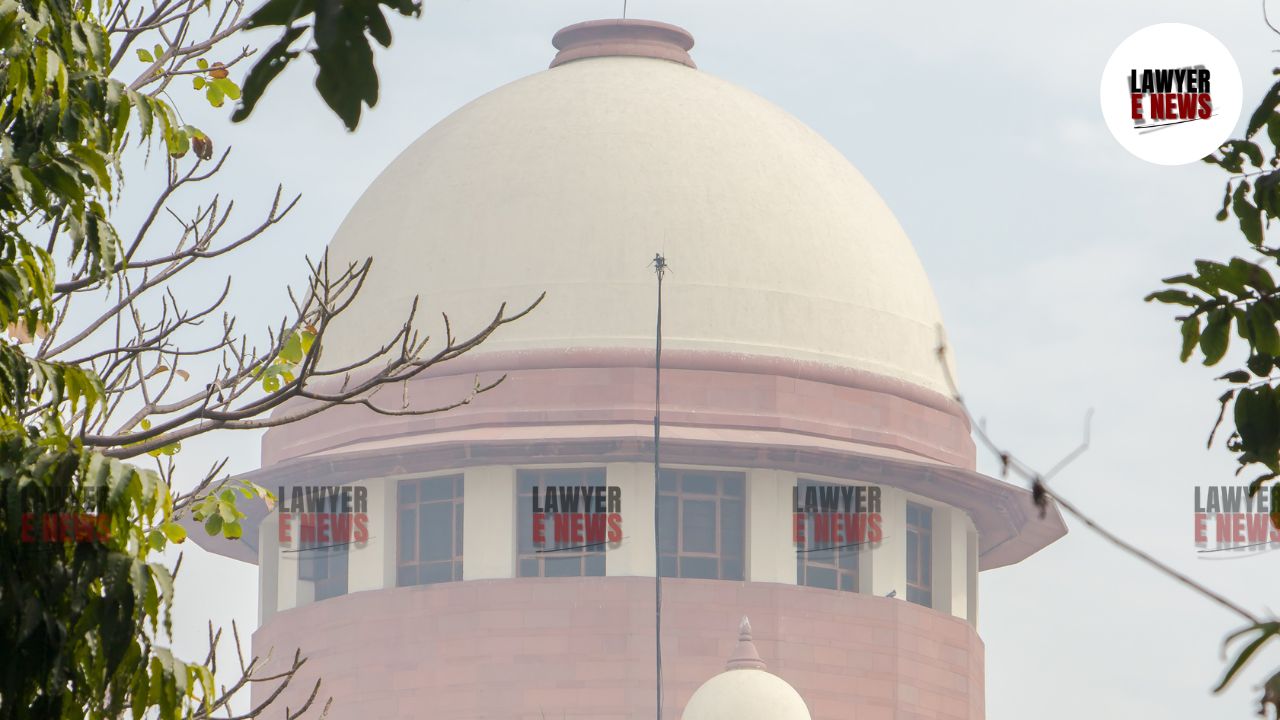
“Contempt Is Not A Substitute For Remedy”, In a judgment delivered the Supreme Court of India declined to hold the respondents guilty of civil contempt for non-compliance with a Supreme Court order dated 17.01.2018, which directed the release of retirement dues within three months.
While refusing to invoke contempt jurisdiction, the Court nevertheless recognized the inordinate delay in compliance and awarded ₹3,00,000 as compensatory relief to the widow of the deceased employee, bringing final closure to a litigation that had persisted since the 1980s. The Court also clarified that new claims such as pension cannot be agitated in contempt proceedings.
A.K. Jayaprakash, a former Manager with Nedungadi Bank Ltd., was dismissed in 1985 for alleged irregularities. His dismissal was ultimately set aside by the Deputy Commissioner of Labour, and his reinstatement was upheld by the Madras High Court, though with 60% back wages. After Nedungadi Bank merged with Punjab National Bank, the Bank challenged the decisions before the Supreme Court, which dismissed the appeals on 17.01.2018 and directed:
“It is made clear that the outstanding amount be paid within a period of three months.”
However, the dues were released only in 2019, prompting the filing of Contempt Petitions (Civil) Nos. 1002-1003 of 2023. The petitioner passed away during the pendency, and his legal heirs continued the proceedings, now seeking both contempt action and pensionary benefits.
“Contempt Jurisdiction Is Not A Forum To Raise New Claims”
A central issue was whether non-payment of pensionary benefits could be raised in contempt proceedings. The Court firmly rejected this attempt:
“Contempt jurisdiction is not a forum for asserting new claims or seeking substantive reliefs which were neither raised nor granted earlier.” [Para 19]
Relying on Jhareswar Prasad Paul v. Tarak Nath Ganguly, the Court held that: “Contempt proceedings cannot be used to circumvent proper adjudication mechanisms.”
Since no prayer for pension was made in the civil appeals and no direction was passed in that regard, the prayer for pension was rejected outright.
“Mens Rea Is The Sine Qua Non For Civil Contempt”
The petitioners alleged wilful disobedience of the Court's clear directive to pay dues within three months. However, the Supreme Court held that mere delay, without deliberate or contumacious intent, does not amount to contempt:
“The material placed on record do not demonstrate that the delay in compliance was borne out of any wilful or contumacious intent.” [Para 18]
The Court acknowledged that while there was undeniable delay, the Bank's explanation — administrative hurdles following the merger, and difficulty in retrieving legacy records — provided mitigating context. Citing Ashok Paper Kamgar Union v. Dharam Godha and Rama Narang v. Ramesh Narang, the Court reiterated: “In a case of civil contempt, the breach must be deliberate and intentional.”
Despite finding no wilful disobedience, the Court did not overlook the suffering caused by the years-long delay. The Petitioner, who was dismissed in 1985, retired in 2006, and secured final relief in 2018, still had to wait until 2019 for partial disbursement, and up to 2023 for full PF dues.
The Court recorded: “Retirement dues lawfully accruing to him remained undisbursed for over a decade… despite successive directions at various stages of the litigation.” [Para 20]
Taking note of this prolonged injustice, the Bench comprising Chief Justice B.R. Gavai and Justice Augustine George Masih held:
“We are of the considered view that a reasonable lump sum payment is warranted… to bring a quietus to future litigation.” [Para 20]
Accordingly, the Court disposed of the contempt petition with the following binding directions: “The respondent-Bank shall pay a sum of ₹3,00,000/- (Rupees Three Lakhs only) to Smt. Vimala Prakash, the widow of the deceased Petitioner, within a period of eight weeks.” [Para 21(iii)]
“In case of default, interest @ 8% shall be payable till date of disbursement.” [Para 21(iii)]
Additionally, the Court made it clear: “No further proceedings shall be entertained in relation to the present subject matter on compliance.” [Para 21(iv)]
This judgment strikes a delicate balance — it reaffirms the strict procedural limitations of contempt jurisdiction, while also recognizing that delays in compliance with court orders, though not wilful, can still result in real hardship.
The Court’s refusal to expand the scope of contempt into a forum for fresh claims preserves judicial discipline, while its award of compensation ensures that justice is not reduced to formalism. As the Court aptly summarized:
“Contempt is intended to uphold the majesty of law, not to settle personal grievances.”
By closing the chapter with equitable relief, the Court has ensured that legal finality does not come at the cost of human fairness.
Date of Decision: August 19, 2025