-
by sayum
29 August 2026 9:28 AM







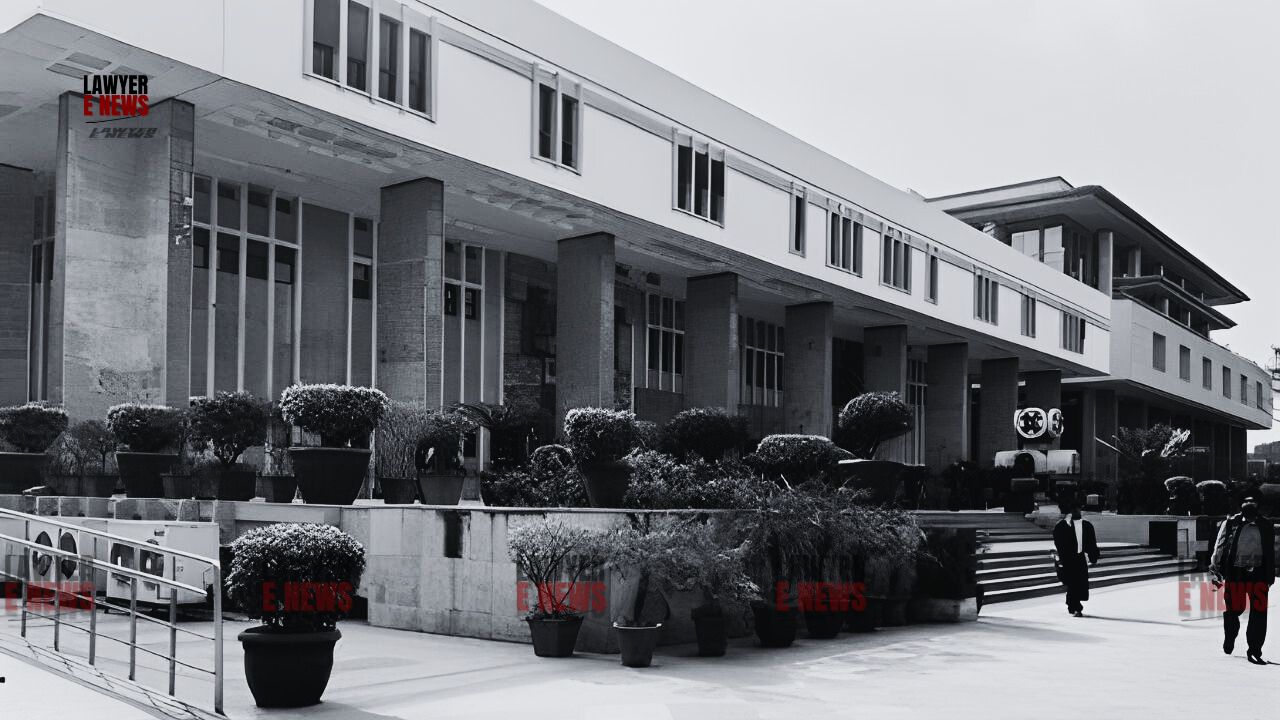
“Releasing an Accused Linked to ISIS at a Crucial Stage Would Impede Investigation and Risk Destruction of Evidence” – Delhi High Court upheld the trial court’s decision to extend custody under Section 43D(2) of the UAPA and reject the appellant’s plea for default bail under Section 167(2) Cr.P.C.
The Division Bench of Justice Subramonium Prasad and Justice Harish Vaidyanathan Shankar held that the trial court’s order was not “mechanical” but was based on “specific, detailed, and credible material” supplied in a 90-page Public Prosecutor’s report. The allegations involved active ISIS membership, procurement of arms and explosives, recruitment of youth, and coordination of cross-border terrorist activities.
The chain of events began on 17 July 2023 with an FIR in Pune under the IPC, Arms Act, and Maharashtra Police Act against three individuals. Subsequent investigation revealed experiments with explosives and links to ISIS, leading to the addition of UAPA provisions and transfer to the ATS, and then to the NIA as RC 05/2023/NIA/MUM (“Mumbai case”).
On 18 September 2023, Delhi Police Special Cell registered a separate FIR after information that wanted accused Shahnawaz Alam and Rizwan (the appellant) were conspiring to commit terrorist acts in Delhi. NIA took over, re-registering it as RC 29/2023/NIA/DLI (“Delhi case”).
Raids on 30 September and 1 October 2023 led to the arrest of the appellant and others, along with seizures of arms, explosives, large sums of cash, encrypted communications, and ISIS propaganda literature.
Custody was extended several times: first, a 60-day extension on 9 December 2023 under Section 43D(2)(b) UAPA, and later, on 24 February 2024, a further extension of 25 days. On 11 March 2024, the trial court rejected the appellant’s default bail plea.
The appellant contended that the trial court acted mechanically, merely repeating prosecution claims without individual assessment of his role. He argued that much of the investigation was already complete, especially given overlaps with the Mumbai case, and that the prosecution failed to meet the threshold of “compelling reasons” for continued detention.
The Court rejected these claims, emphasising that the Public Prosecutor’s report “was not a perfunctory or general request, but a detailed, chronological account of investigative progress, pending tasks, and specific grounds for further custody”.
The Bench observed: “The report… details the extracted data from digital devices containing huge numbers of images, videos, and files related to ISIS, the analysis of which is still underway… The mechanism of fund raising for ISIS is under investigation… Certain accused/suspects are absconding… The trial court has gone through the report carefully and is satisfied that the grounds warrant approval.”
National Security and Necessity of Continued Detention
The High Court underscored that the material indicated the appellant was an active ISIS member, engaged in reconnaissance of cities like Delhi, Mumbai, Ahmedabad, and Surat, handling explosives, receiving ISIS magazines for translation, and maintaining encrypted contact with handlers abroad.
The Bench cautioned: “Releasing the appellant at a crucial stage would impede investigation and risk destruction of evidence.”
It noted ongoing analysis of seized devices, tracing of fund trails (including links to Maldives), verification of documents, and identification of associates across jurisdictions.
Default Bail under Section 167(2) Cr.P.C. and UAPA Framework
Reiterating settled law, the Court held: “The statutory right to default bail arises only if the charge-sheet is not filed within the prescribed or extended period… Under UAPA, custody can be extended up to 180 days upon a valid Public Prosecutor’s report.”
The trial court’s decision was within statutory limits, and the gravity of the offence—while irrelevant to the legal entitlement for default bail—remained relevant for assessing whether further detention was necessary.
The High Court concluded that the trial court’s extension order was “not as a matter of routine” but based on concrete investigative requirements. It affirmed that the safeguards outlined in Zeeshan Qamar v. State (2023) were satisfied.
Holding the appellant’s continued custody lawful under Section 43D(2) UAPA, the Court dismissed the appeal along with pending applications.
Date of Decision: 24 July 2025