-
by sayum
11 August 2026 2:00 PM







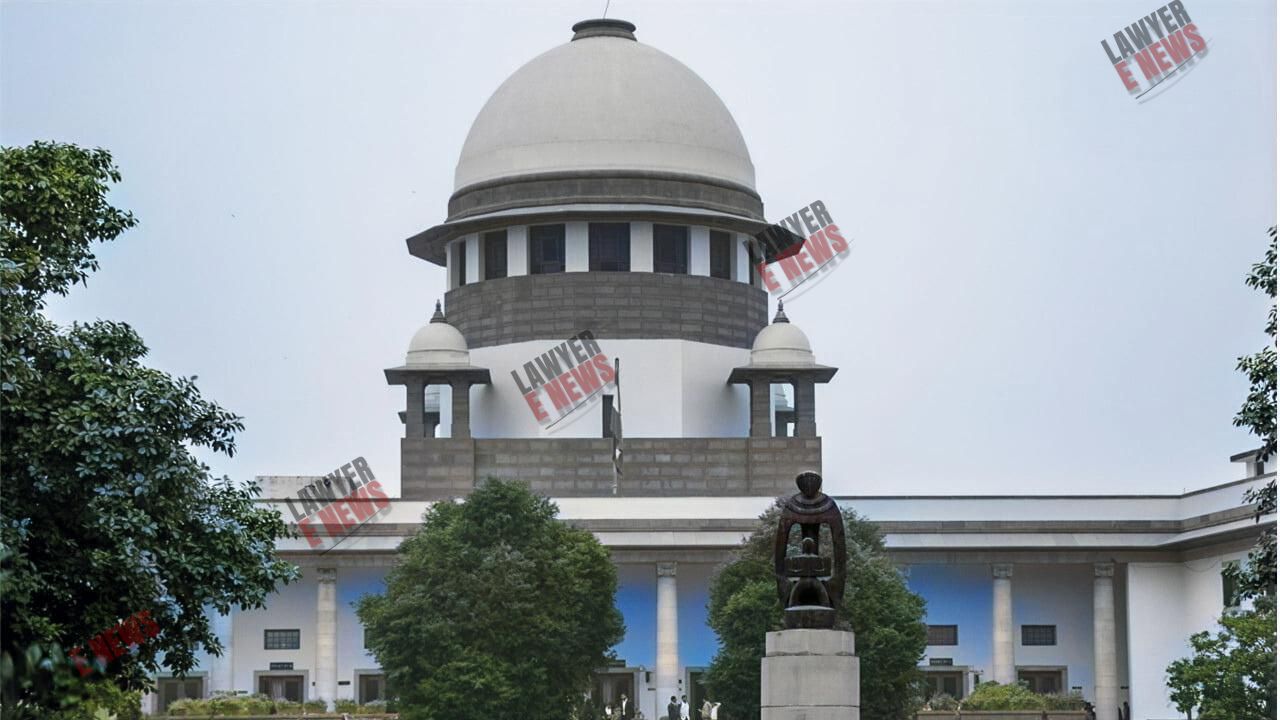
“Proceedings under Section 11(3) of MOFA are of a summary nature… the competent authority cannot conclusively and finally decide questions of title”, - In a pivotal ruling Supreme Court of India clarified the limited scope of the powers of the Competent Authority under Section 11(3) and 11(4) of the Maharashtra Ownership Flats Act (MOFA), 1963. The Court upheld the order granting deemed conveyance in favour of a co-operative society of flat purchasers but made it subject to the rights of the appellant as a perpetual lessee, holding that the authority cannot decide complex title disputes in such proceedings.
Justice Abhay S. Oka, writing for the bench, observed, “The competent authority, while following the summary procedure, cannot conclusively and finally decide the questions of title… the aggrieved parties can always file a civil suit for establishing their rights.”
The case revolved around Final Plot No. 61, admeasuring 2814.38 sq. meters, in Vile Parle (West), Mumbai, originally owned by Champaben Hiralal Shah and later brought into a partnership firm by her and her sons. Upon dissolution of the firm in 1987, the land was divided into two parts — the ‘Lalbhai Plot’ and the ‘Arun Plot’ — with each being allotted to separate branches of the family.
While the developer (10th respondent) constructed buildings and sold flats on the Lalbhai Plot, the Avon Arcade Co-operative Housing Society, formed in 2005, filed a consumer complaint and subsequently, a deemed conveyance application in 2020, claiming the entire larger plot including the Arun Plot. The Competent Authority allowed this ex parte, directing that a lease be executed in favour of the appellant (Arun HUF) for the Arun Plot. The appellant challenged this before the Bombay High Court, which upheld the order — leading to the appeal before the Supreme Court.
The Court was called upon to examine the scope of jurisdiction of the Competent Authority under Section 11(3) of MOFA, particularly whether it could issue deemed conveyance over land where title is disputed and which was not covered under the flat purchase agreements.
The Court clarified that: “Though quasi-judicial powers are conferred, the proceedings are of a summary nature… even cross-examination is prohibited. Therefore, the competent authority cannot conclusively decide title.”
It emphasized that the MOFA was enacted as beneficial legislation to protect flat purchasers, and that Section 11(3) provides a summary mechanism to obtain conveyance where promoters have failed to act. However, it cannot be a tool to extinguish or override established property rights or co-ownership claims.
On the question of registration under Section 11(5), the Court held: “The registering officer has no power to sit in appeal over the order of the competent authority… registration can only be refused on limited procedural grounds such as lack of statutory permissions or stamp duty compliance.”
A critical aspect was the deed of dissolution of 1987, which explicitly carved out the Arun Plot as a separate parcel, to be held and developed independently by the appellant. The same deed contained a provision that a perpetual lease would be executed in favour of the appellant for the Arun Plot at a nominal rent.
The Court affirmed the binding nature of this arrangement: “Sub-clause (h) of clause 8 of the deed of dissolution provides for the execution of a lease… and the appellant’s rights as a perpetual lessee remain protected notwithstanding the deemed conveyance.”
The judgment made it clear that the deemed conveyance does not extinguish or override the perpetual lease rights arising from the dissolution deed or the earlier registered lease of 1991.
Dismissing the appeal, the Court upheld the deemed conveyance order with one key caveat:
“The registration of the certificate issued under the impugned order… shall be subject to the condition of the first respondent executing a permanent lease in favour of the appellant… even if such a lease is not executed, the appellant’s rights as a perpetual lessee shall remain unaffected.”
This ruling is a significant restatement of the legal limits of summary proceedings under MOFA. It confirms that while the legislation protects homebuyers’ interests, it cannot be used to defeat pre-existing proprietary rights or encroach upon separate titles.
Justice Oka concluded: “In writ jurisdiction, the court should not interfere with orders granting deemed conveyance unless they are manifestly illegal… the remedy to file a civil suit remains open to the aggrieved party.”
Date of Decision: April 21, 2025