-
by sayum
05 August 2026 3:07 PM







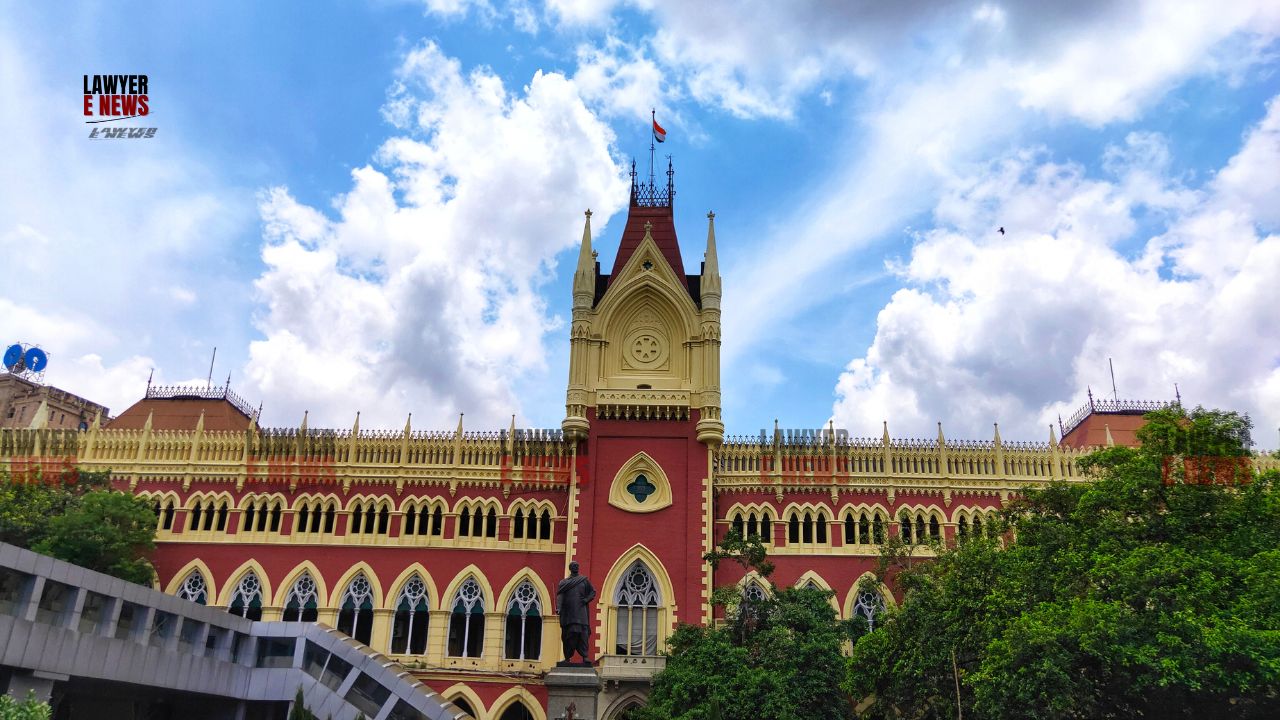
“Irregular But Not Illegal—Municipal Workers Have a Right to Fairness Under Article 14”, In a significant pronouncement Calcutta High Court delivered a decisive verdict in the matter of Goutam Kumar Jha & Others versus State of West Bengal & Others, W.P.A. 719 of 2020 and connected matters, bringing justice to long-neglected municipal workers. The Court held that appointments made prior to the codification of recruitment rules, based on municipal resolutions and administrative necessity, were not illegal but at most irregular. Justice Rajarshi Bharadwaj declared, “Appointments not made through the backdoor but through formal municipal processes cannot be invalidated solely due to absence of State approval.” The judgment has far-reaching consequences for hundreds of similarly situated workers across West Bengal.
At the heart of the dispute was the continued denial of regularisation to municipal workers who had served uninterruptedly since 2006 in Raiganj Municipality, despite the Municipality itself repeatedly recommending their absorption. The controversy intensified after the Municipality issued a fresh recruitment notice in 2019, ignoring the claims of these long-serving employees. The Court noted that the fresh recruitment was stayed by a coordinate Bench and no steps were taken to contest the stay, displaying, according to the Court, “clear arbitrariness and abdication of constitutional responsibility.”
Justice Bharadwaj began by acknowledging the decades-long dedication of the petitioners, stating, “The petitioners have rendered continuous and indispensable service for nearly two decades without break, forming the backbone of the functioning of Raiganj Municipality.” The Court highlighted that the appointments were made “pursuant to formal resolutions of the Board of Councillors at a time when the West Bengal Municipal Employees’ Recruitment Rules, 2005 were not in operation.”
The State had argued that the appointments violated Labour Department guidelines and were done without prior approval. Dismissing this contention, the Court said, “The absence of codified recruitment rules at the time of appointment cannot retroactively transform legitimate engagements into illegal appointments.” The Court was categorical in differentiating between “irregularity” and “illegality”, observing, “Appointments which are not the product of fraud, nepotism, or malice, but arise from administrative necessity and formal municipal resolutions, are merely irregular and not illegal.”
The judgment placed heavy reliance on the Constitution’s guarantee of equality under Article 14 and Article 16. Justice Bharadwaj declared, “It would be the very antithesis of equality and fairness to allow the State to deny regularisation to these workers who have been exploited on temporary terms for decades.” The Court quoted approvingly from the Supreme Court’s landmark ruling in State of Karnataka v. Uma Devi (2006) 4 SCC 1, emphasizing, “Where engagement is made without sanctioned posts and without a selection process, the appointments are illegal. But where engagement is in response to administrative necessity, against existing vacancies, and not in violation of any binding rules, the appointments are irregular and amenable to regularisation.”
The Court drew particular attention to the fact that similarly situated workers had already been regularised by the State following the decision in Prasanta Kumar Das v. State of West Bengal, observing, “This Court finds compelling parallels with Prasanta Kumar Das where long-serving municipal workers were granted regularisation. It is a travesty of equality if identically placed workers are denied the same relief.”
Slamming the conduct of the Municipality in issuing fresh recruitment notices, Justice Bharadwaj noted, “Recruitment to municipal posts can only be conducted by the West Bengal Municipal Service Commission and not by the Chairman of the Municipality. The issuance of the recruitment notice by the Chairman not only violated the recruitment norms but also sought to displace employees whose services had been indispensable for decades.”
Quoting the Supreme Court’s decision in Jaggo v. Union of India (2024), the Court reiterated, “Where workmen have sustained the public institution through long service, their employment cannot be discarded through a sterile technical lens. The humanitarian consideration, read with constitutional fairness, demands their absorption.” Justice Bharadwaj added, “In the present case, there is no iota of evidence of misconduct, no complaints of inefficiency, and no allegation of malafide. The only fault of these petitioners was to have served the Municipality with dedication.”
Referring to the State’s argument about the lack of sanctioned posts, the Court rejected the contention, remarking, “The State cannot deny regularisation on the excuse of sanctioned posts when it had an opportunity to regularise similarly situated employees but deliberately chose not to consider these petitioners. Equity demands similar treatment for similar cases.”
Delivering a strong message to administrative authorities, the Court concluded, “The sustained service of these petitioners coupled with municipal endorsements creates an enforceable legitimate expectation of regularisation. The constitutional mandate of fairness forbids arbitrary exclusion of any class of employees without cogent justification.”
In its operative part, the Court ordered, “The petitioners’ services shall be regularised with immediate effect and all consequential benefits be extended to them without further delay. The recruitment notice of 28.12.2019 remains stayed, and any recruitment process that seeks to replace these petitioners without adjudicating their rights first, shall be deemed invalid.”
With this verdict, Justice Bharadwaj reinforced the principle that public employment is not merely a bureaucratic formality but a matter of constitutional right when seen through the prism of fairness, non-arbitrariness, and legitimate expectation.
The judgment serves as a wake-up call to State authorities and municipal administrations across West Bengal, reminding them that long years of faithful public service cannot be nullified by administrative inertia or selective application of procedural rules. The Court has restored not just the livelihoods but the dignity of municipal employees who have sustained the essential functions of urban governance for nearly two decades.
Date of Decision: 14th July 2025