-
by sayum
05 August 2026 3:07 PM







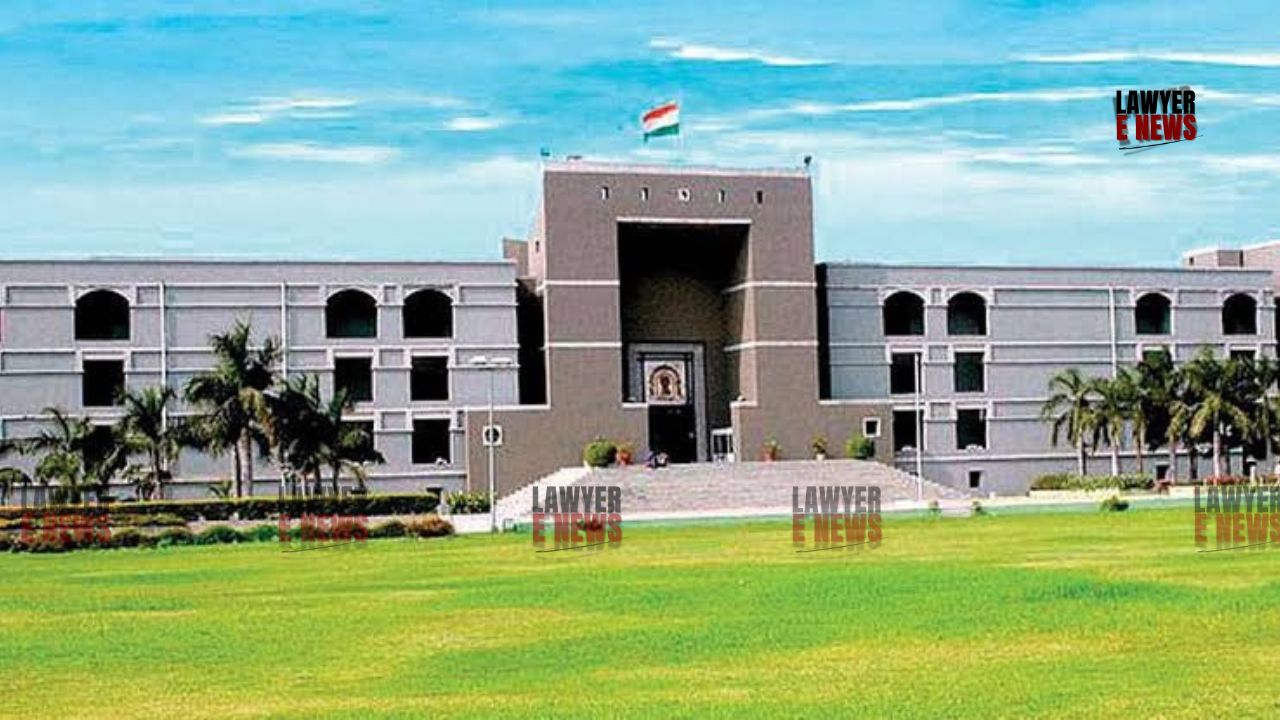
“Anticipatory Bail Not a Refuge for Law Evaders, Especially When State Agents Violate Their Duty”: In a significant pronouncement Gujarat High Court firmly rejected the anticipatory bail application of Ranvir Sinh Jagdish Sinh Zala, a police officer facing grave allegations of abduction, extortion, and corruption under IPC and the Prevention of Corruption Act. Justice Divyesh A. Joshi held that Zala’s conduct of deliberately evading arrest and defying lawful court orders disentitled him from the extraordinary discretionary relief under Section 482 of the Bharatiya Nagarik Suraksha Sanhita, 2023 (BNSS).
Observing on the custodial necessity of the applicant, the Court declared: “When an officer, entrusted with public duty, chooses to operate outside the boundaries of law, indulging in abduction and extortion, custodial interrogation is not only justified but essential for the effective administration of justice.”
“Right to Personal Liberty Does Not Shield Those Who Trample Law and Evade Process”
The core of the judgment rested on the blatant defiance by the applicant of lawful court directives. The Court highlighted how the applicant remained absconding despite issuance of non-bailable warrants under Section 70 CrPC and subsequent proclamation under Section 82 CrPC, with attempts to quash these orders having already been dismissed. Justice Joshi underscored:
“The applicant’s persistent evasion of arrest, disregard for lawful process, and strategic non-compliance disentitles him from invoking the protection of anticipatory bail, a remedy reserved for bona fide claimants fearing wrongful persecution—not fugitives.”
“No Bail Where Personal Liberty is Weaponised Against Justice”: Court Cites Supreme Court’s Stringent Position on Anticipatory Bail in Serious Offences
Drawing extensively from binding Supreme Court authorities, including State v. Anil Sharma [(1997) 7 SCC 187], P. Chidambaram v. Directorate of Enforcement [AIR 2019 SC 4198], and Pratibha Manchanda v. State of Haryana [(2023) 8 SCC 181], the Court reiterated the settled legal principle:
“Anticipatory bail is not a shield for those undermining criminal investigations. Where grave accusations involve breach of public trust, personal liberty cannot be allowed to obstruct the truth-finding process.”
Justice Joshi categorically ruled: “The applicant, being a police officer, owes a higher duty to uphold the law; his alleged participation in the kidnapping of a citizen, illegal detention, and extortion of ₹3.75 crores aggravates the seriousness of the offence beyond an ordinary criminal accusation.”
Delay in FIR No Ground for Bail When Evidence Corroborates Conspiracy and Custodial Involvement
Rejecting the defence argument that there was an unexplained delay in lodging the FIR, the Court noted:
“Delay in registration is outweighed by substantial material collected during investigation corroborating the direct involvement of the applicant in abduction, extortion, and criminal conspiracy, making custodial interrogation crucial to recover proceeds of crime and vehicles used in commission.”
“Anticipatory Bail Cannot Reward Manipulative Abscondence”: Court Reiterates Judicial Duty to Deny Relief to Law Defaulters
Referring to the doctrine from Srikant Upadhyay v. State of Bihar [AIR 2014 SC 1600], Justice Joshi clarified that anticipatory bail cannot be weaponised by those evading justice:
“Pre-arrest bail exists to protect individuals from arbitrary detention, not to facilitate an accused person’s calculated avoidance of law and investigative processes.”
Anticipatory Bail Application Dismissed; Court Emphasizes Gravity of Offence, Public Interest, and Abscondence Conduct
In conclusion, the Court dismissed the application, holding:
“In the absence of any exceptional or mitigating circumstance, and in light of the applicant’s abscondence and the gravity of economic and custodial offences, anticipatory bail is rejected. Public interest and faith in justice system demand custodial interrogation in this case.”
Justice Joshi also clarified that these observations are limited to the bail proceedings and would not prejudice the trial.
Date of Decision: 14 July 2025