-
by sayum
30 August 2026 7:03 AM







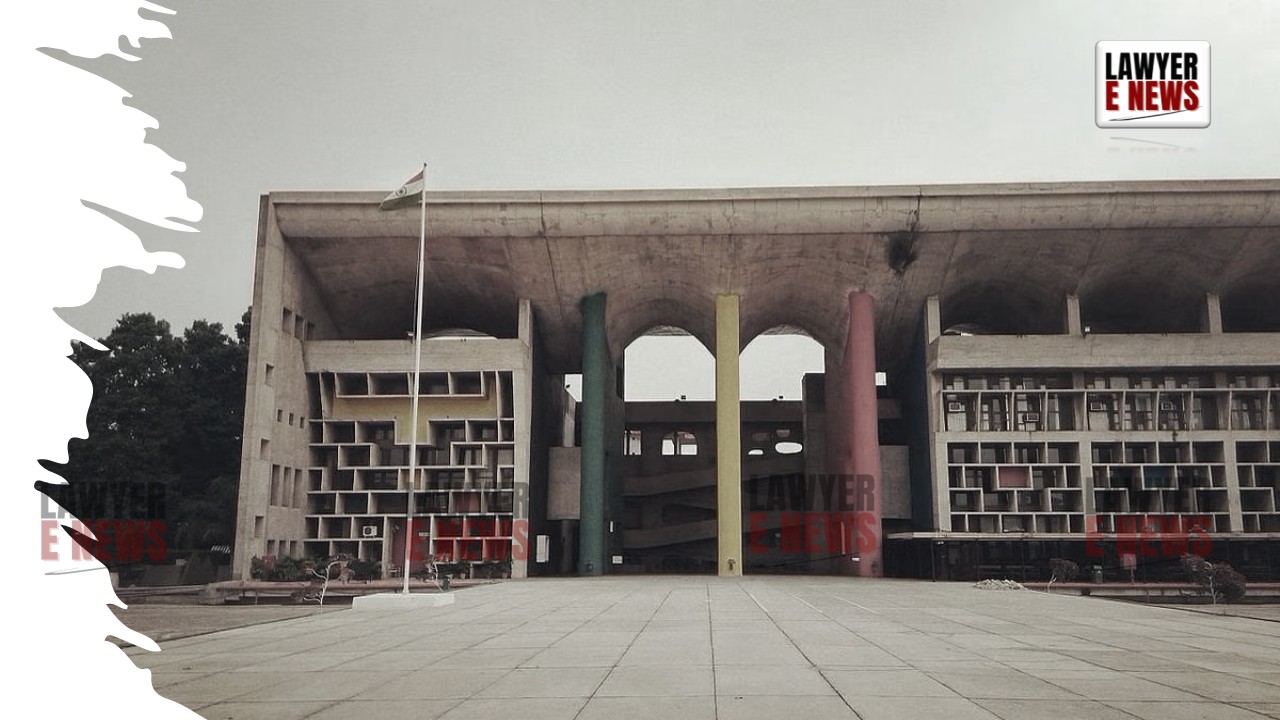
“The Prerogative of the Investigating Agency Cannot Supersede Fundamental Rights of the Accused”, Punjab and Haryana High Court delivered a searing rebuke to prosecution practices under the Central Goods and Services Tax Act, 2017. In a judgment with wide-ranging implications for bail in economic offences, Justice Harpreet Singh Brar declared that “curtailing liberty in the name of investigation, without concluding trial, is antithetical to justice.” The decision marks a significant affirmation of the constitutional right to liberty and speedy trial for accused persons in so-called “white collar” cases.
The petitioners, Manish Kumar and Amit Kumar Goyal, stood accused of orchestrating one of the largest GST frauds in recent history. According to investigators, the brothers created 27 fake firms, allegedly fabricating GST invoices worth Rs. 700 crore and availing input tax credit amounting to Rs. 107 crore. The probe, triggered by a Suspicious Transaction Report from the Financial Investigation Unit, revealed “substantial cash withdrawals to the tune of Rs. 4,938.63 crore” and a sprawling network of shell entities. Both men were arrested following searches and seizures of a staggering array of evidence—from dozens of cheque books and ATM cards to electronic devices brimming with data.
Yet, as the High Court meticulously recounted, the machinery of prosecution ground to a halt once the arrests were made. “The involvement of the criminal justice system in cases pertaining to the CGST Act seemingly begins at the stage of arrest and ends when a bail is secured,” Justice Brar observed, highlighting an alarming “systemic problem” where “securing a conviction and concluding the trial is not a matter of priority for the respondent as all its energy is devoted towards curtailing liberty of the prospective accused.” Notably, the Court cited data showing that since the inception of GST in Punjab, Haryana, and Chandigarh, only a solitary conviction had been secured despite an avalanche of criminal cases.
The legal issue at the heart of the petitions was whether an accused could be kept in custody merely because the investigation had not yet concluded against other co-accused. The prosecution contended that bail should be denied on account of the ongoing probe and the grave nature of the alleged fraud. But the Court, relying on a string of Supreme Court authorities, including Sanjay Chandra v. CBI and Radhika Aggarwal v. Union of India, took a contrary view.
“The matter of bail must be decided qua each accused individually, based on the specific role attributed to them,” Justice Brar wrote. Quoting the Supreme Court in Prahlad Singh Bhati v. NCT of Delhi, the judgment reiterated that while considering bail, “the Court has to keep in mind the nature of accusations, the nature of evidence in support thereof, the severity of the punishment… the character, behaviour, means and standing of the accused,” and above all, “reasonable grounds for believing” in the prosecution case, rather than evidence “beyond reasonable doubt.”
Here, the High Court found that the charge-sheet (final report) had already been filed against the petitioners, all evidence was in documentary or electronic form and in the hands of the authorities, and there was “no scope of tampering with the evidence or influencing the witnesses.” As Justice Brar reasoned, “it is against objective standards of reason and justice to deny bail to those accused against whom final report has been presented merely on the ground that the investigation is under progress qua a co-accused.” The “prerogative of the investigating agency cannot supersede fundamental rights of the accused,” he emphasized.
The Court was especially scathing about the pattern of “abrupt arrests, driven by some inexplicable urgency rather than necessity,” yet “the respondent does not pursue the trial with the same urgency.” This, the Court warned, was a violation of the right to speedy trial under Article 21 of the Constitution, a “fundamental concept in criminal jurisprudence and a sine qua non for proper administration of justice.”
In conclusion, the High Court ordered the release of both petitioners on regular bail, subject to stringent conditions to ensure their cooperation with the trial and prevent any interference with evidence. “It is not in the interest of justice that accused should be in jail for an indefinite period… We are of the view that the appellants are entitled to the grant of bail pending trial on stringent conditions,” the judgment declared, echoing the Supreme Court’s observations in Sanjay Chandra v. CBI and Vineet Jain v. Union of India.
In a telling final note, Justice Brar made clear: “Nothing observed hereinabove shall be construed as expression of opinion of this Court on merits of the case lest it may prejudice the trial.” The message was unmistakable—the criminal justice system cannot serve its purpose if the right to liberty and a fair, speedy trial are sacrificed at the altar of endless investigation.
Date of Decision: 28 July 2025