-
by sayum
29 August 2026 9:28 AM







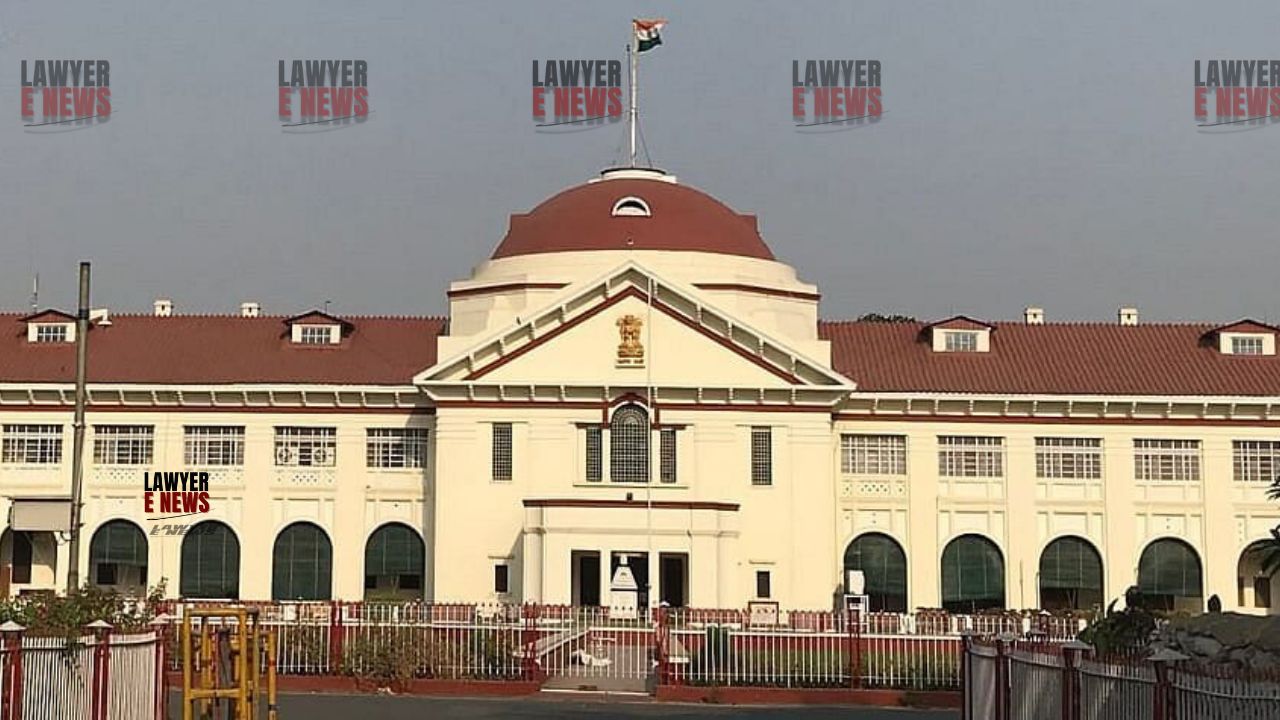
“No Specific Instances of Cruelty, No Evidence of Adultery—General Allegations Cannot Justify Dissolution of Marriage” - Patna High Court delivered a significant ruling underlining the strict evidentiary threshold required to dissolve a marriage on grounds of cruelty and adultery. A Division Bench comprising Acting Chief Justice P. B. Bajanthri and Justice S. B. P. Singh allowed the wife's appeal, setting aside the Family Court’s decree of divorce that had favored the husband.
The High Court held that vague, generalized, and uncorroborated allegations of cruelty and adultery could not form the legal basis for granting divorce under Section 13(1)(ia) of the Hindu Marriage Act, 1955. It ruled that the Family Court had erred in accepting unsubstantiated claims without satisfying the evidentiary burden imposed by law.
“Trivial Irritations, Normal Wear and Tear of Married Life Not Legal Cruelty”
The case stemmed from a matrimonial dispute where the respondent-husband, Akhilesh Mishra, was granted divorce by the Principal Judge, Family Court, Gopalganj, via judgment dated 25.02.2019. The court had accepted his claim that the wife, Kiran Devi, had treated him with cruelty and deserted him, also awarding Rs. 2,50,000/- as permanent alimony.
However, in appeal, the Patna High Court found glaring insufficiencies in the husband's case. The Bench observed:
“Respondent-husband has deposed in his evidence that appellant-wife always used to quarrel with him and his family members but no specific instance or date has been mentioned either in the plaint or in his testimony.”
Relying on the Supreme Court precedent in Samar Ghosh v. Jaya Ghosh, (2007) 4 SCC 511, the High Court reiterated that cruelty, to justify divorce, must be of a sustained and grave nature, affecting physical or mental well-being, and not mere “normal wear and tear of marital life.”
Quoting Dastane v. Dastane, AIR 1975 SC 1534, the Court emphasized:
“It is no function of a court inquiring into a charge of cruelty to philosophise on the modalities of married life... The question is not whether the conduct would be cruel to a reasonable person, but whether it would have that effect upon the aggrieved spouse.”
The Court held that no such impact or conduct was established by the husband.
“Adultery Allegations Must Be Proven by Cogent Evidence—Suspicion Not Enough”
On the charge of adultery with co-respondent Ashok Sharma, the High Court delivered a categorical finding:
“The respondent-husband has not brought on record any cogent and reliable evidence which could show that the appellant and respondent No. 2 were living in adultery.”
The Court further noted that essential elements of adultery — voluntary sexual relationship and physical intimacy — must be proven with credible evidence, such as independent witness testimony or circumstantial proof. None was produced in this case.
It added that the adultery accusation appeared to have been levelled “only in order to make a legal ground in the divorce case,” without any supporting material.
“Repeated Divorce Petitions on Same Allegations Reflect Lack of Bonafide”
A critical point weighed by the Bench was that the husband had previously filed an earlier divorce petition (M.M. Case No. 62 of 2009) based on the same allegations, which had been settled through compromise. The current petition, M.M. Case No. 176 of 2011, was a repetition of those same grounds.
The Court expressed disapproval of such repetitive matrimonial litigation:
“Filing of a second divorce case on identical allegations without any new cause of action reflects absence of bona fide and an attempt to abuse the judicial process.”
“Wife's Readiness to Resume Matrimonial Life Undermines Desertion Claim”
The Court further held that the allegation of desertion by the wife was wholly unsustainable. On the contrary, the evidence showed that she was ready to resume matrimonial life.
“The appellant is still ready to live with the respondent-husband. Furthermore, alleged certain flimsy acts or omissions... cannot be a justified ground for taking divorce.”
Moreover, the husband never initiated proceedings under Section 9 of the Hindu Marriage Act for restitution of conjugal rights, indicating his unwillingness to resume cohabitation.
Divorce Decree Set Aside, Appeal Allowed
The High Court concluded that the Family Court had passed the divorce decree without proper scrutiny of evidence or application of legal principles:
“It is crystal clear that respondent-husband has failed to prove the cruel behaviour of the appellant... nor any cogent evidence of adultery has been placed on record.”
Accordingly, the Court allowed the appeal, setting aside the divorce decree dated 25.02.2019 and dismissed M.M. Case No. 176 of 2011. All pending interlocutory applications were also disposed of.
Date of Decision: 01 September 2025