-
by sayum
08 August 2026 1:54 PM








“Accused Were Owners, Not Trustees — No Entrustment, No Misappropriation, No Cheating”, In a pivotal decision Supreme Court of India quashed a criminal case arising out of a property transaction, ruling that “no criminal offence was made out even prima facie”.
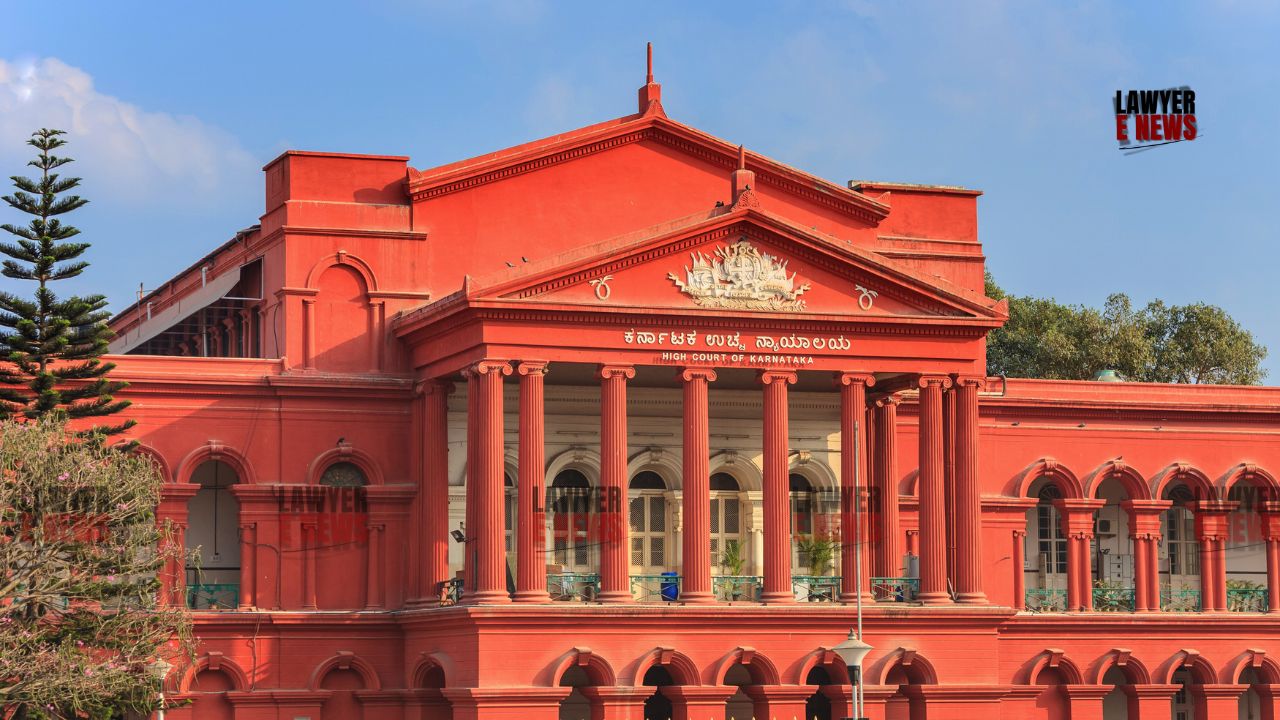
The bench comprising Justice Sudhanshu Dhulia and Justice Ahsanuddin Amanullah held that the FIR, chargesheet and cognizance order for alleged cheating and breach of trust must be quashed, because the dispute was “purely civil in nature” and “continuation of the criminal proceedings would amount to abuse of process of court”.
The Court categorically ruled: “There is no criminal aspect in the allegations ex-facie… The complainant has already filed a civil suit, and the allegations do not attract the ingredients of Sections 406 or 420 IPC.” [¶41]
The litigation stemmed from a 2015 Agreement to Sell (ATS) and a General Power of Attorney (GPA) executed by the accused-appellants, owners of land in Bhoopasandra, Bengaluru, in favour of the complainant, Keerthiraj Shetty, acting as nominee of one Ravishankara Shetty.
According to the complainant, he had agreed to help the appellants clear legal encumbrances on the property — which had been caught in land acquisition and de-notification battles involving the Bangalore Development Authority (BDA) — in exchange for the right to purchase it for ₹3.5 crore. Despite obtaining a favourable order from the High Court in 2016 and regularisation of title, the appellants allegedly reneged on the deal, revoked the GPA, and executed a gift deed transferring the property to one of the co-accused.
The complainant filed a civil suit seeking specific performance. Simultaneously, he filed a private complaint, which led to the registration of FIR No. 260/2023 under multiple IPC provisions including Sections 406, 420, 120B, and others. The appellants’ plea for quashing the FIR was rejected by the Karnataka High Court, prompting the present appeal.
“Can civil breaches of contract amount to criminal cheating?”
The Supreme Court dissected the FIR and chargesheet, concluding that no criminal intent at inception could be inferred. The Court observed: “The accused were the titleholders of the land. There was no entrustment of property to them. Hence, the very foundation for invoking Section 406 IPC falls to the ground.” [¶39]
On the charge of cheating: “The complainant’s own pleadings defeat the claim of dishonest inducement. Clause 6 of the ATS postulates that possession would be handed over only upon execution of the sale deed. That possession was never delivered contradicts the narrative of inducement.” [¶40]
Citing precedents including G. Sagar Suri v State of U.P. and V P Shrivastava v Indian Explosives Ltd., the Court reiterated the principle that subsequent failure to perform a contract, without dishonest intent at inception, cannot attract criminal liability.
“Where the element of criminality is absent, continuation of criminal proceedings would amount to an abuse of process of court.” [¶42]
The Court echoed its earlier view in Paramjeet Batra v State of Uttarakhand that:
“If a civil remedy is available and has in fact been adopted, the High Court should not hesitate to quash the criminal proceedings.”
On the Alleged Criminal Conspiracy under Section 120B IPC
Dismissing allegations of conspiracy, the Court held: “There is no material to show that the appellants entered into any illegal agreement or shared criminal intent to deceive the complainant. Hence, Section 120B IPC is not attracted.” [¶38]
Priyanka Srivastava Compliance: Filing of Affidavit Treated as Curable
The appellants argued that the complaint violated mandatory guidelines laid down in Priyanka Srivastava v State of U.P., as the supporting affidavit was filed belatedly. However, the Court clarified:
“The affidavit was submitted before the Magistrate passed the referral order under Section 156(3) CrPC. The defect, therefore, stood cured.” [¶45]
Adding further clarity, the Court stated:
“The directions in Priyanka Srivastava are mandatory but operate prospectively. Non-filing of the supporting affidavit is a curable defect, if corrected before any substantive order is passed.”
Suo Motu Relief Extended to Non-Appellant Co-Accused
In an equitable gesture, the Court extended relief to co-accused Vidyasree V.S., who had not joined the appeal:
“All the accused stand on the same footing. In the interest of justice, the benefit of this judgment will enure to Vidyasree V.S. also.” [¶48]
The Court invoked precedents such as Pawan Kumar v State of Haryana and Javed Shaukat Ali Qureshi v State of Gujarat, reaffirming its power to grant parity-based relief suo motu.
Disturbing Findings Against BDA: “Judicial Conscience Is Ill at Ease”
While allowing the appeal, the Court made scathing observations against the conduct of the BDA, terming its actions “collusive” and “a miscarriage of justice”:
“The BDA, surprisingly (nay, shockingly), having filed intra-court appeals against the order declaring acquisition as lapsed, withdrew the same later.” [¶52]
Noting that the subject property had been allotted to citizens under a development scheme, the Court expressed grave concern:
“Common citizens have been denied benefits of acquisition due to collusive litigation. This Court cannot turn a blind eye to such blatant misuse of law.” [¶54]
Though the Court contemplated taking suo motu cognizance under Article 142 of the Constitution, it ultimately deferred deeper intervention in view of SLP (C) Nos. 10134-10135/2025 filed by BDA, which are pending before a Coordinate Bench.
To preserve the status quo, it directed:
“No third-party rights will be created or given effect to in the subject property until further orders in the pending SLP.” [¶60]
The Supreme Court’s verdict offers a clear reaffirmation of the boundaries between civil and criminal law, cautioning against the tactical use of criminal process in private contractual disputes:
“We do not find any criminal aspect in the allegations ex-facie… FIR, chargesheet, and cognizance order are hereby quashed.” [¶47]
The judgment also reflects the Court’s vigilance against collusion by public bodies and its proactive use of Article 142 to ensure parity and justice.
Date of Decision: July 31, 2025