-
by sayum
11 August 2026 2:00 PM







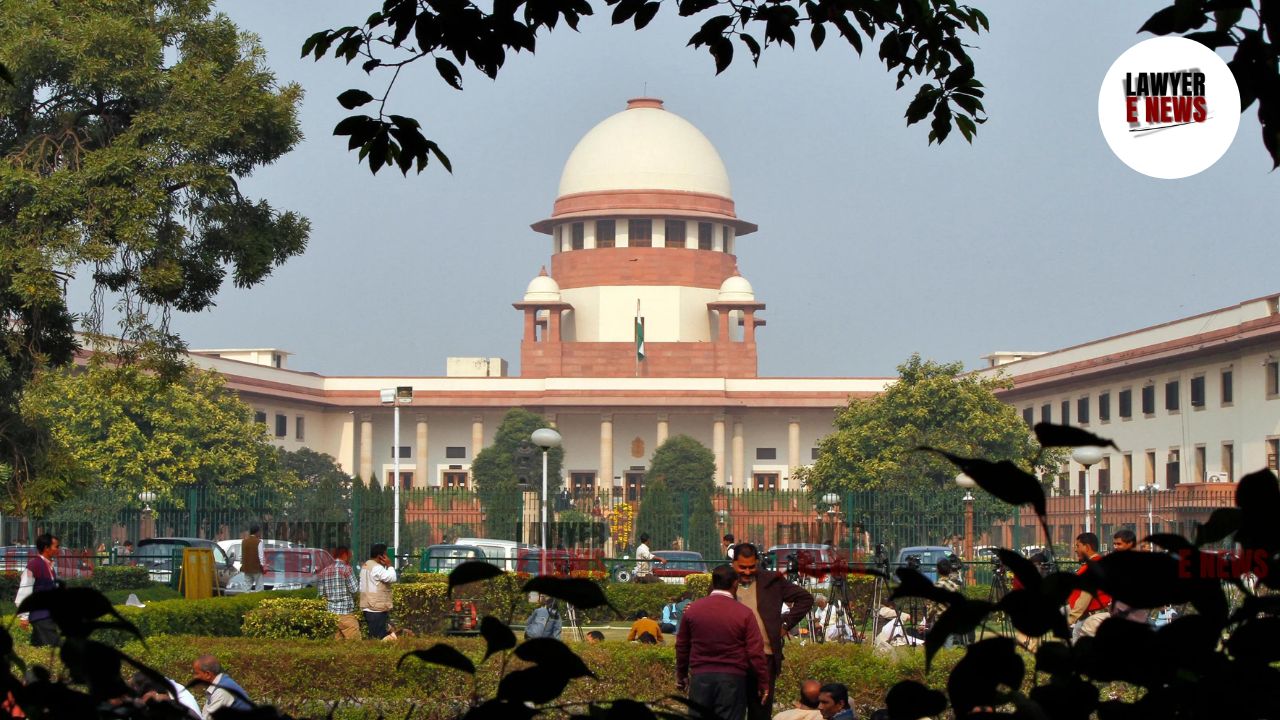
“CBI’s Pursuit of a Settled Commercial Dispute is Abuse of Process — Criminal Prosecution Must Not Outlive Settlement” - In a remarkable reaffirmation of the distinction between civil liability and criminal prosecution, the Supreme Court held that continuing with criminal proceedings after full and final settlement of a commercial dispute would amount to “great oppression and prejudice” and cause “extreme injustice.” The Court quashed the FIR and chargesheet filed by the CBI, asserting that the allegations—arising out of a loan default—had “an overwhelming and pre-dominant civil character” and prosecution under such facts would be “an abuse of the legal process.”
Between 1998 and 2005, the Bank of Maharashtra sanctioned several credit facilities to the companies run by the appellants. However, after adverse market conditions and the 2004 Surat floods, the loans turned into NPAs. The bank initiated recovery proceedings before the Debt Recovery Tribunal, where a One-Time Settlement was agreed upon. The appellants paid a total of ₹19.67 crore against a principal of ₹14.20 crore. The Bank issued a No Dues Certificate on 11.04.2011 and confirmed that the appellants' names were removed from defaulters' lists.
Despite this, the CBI registered an FIR in 2008, alleging cheating and forgery under Sections 420, 467, 468, and 471 of the IPC, and initially under the Prevention of Corruption Act. However, upon investigation, the CBI dropped all charges under the PC Act and found no evidence against the bank officials, particularly the Branch Manager.
“Where the Entire Commercial Dispute Has Been Resolved, Criminal Law Cannot Be Weaponized”
Rejecting the arguments of the prosecution, the Supreme Court observed,
“The dispute cannot be said to be having criminal overtures or aspects relatable to a crime. It is purely a commercial transaction… the basic requirements of forgery, as provided under the statute, are missing.”
The Court took note of the fact that the Bank had not only initiated recovery proceedings but also fully settled the dispute through compromise.
“No wrongful loss has been caused to the Bank. Not only the principal amount has been returned but an amount over and above thereto has been received by the Bank.”
“CBI’s Insistence to Prosecute Was Misplaced — No Complaint by Bank, No Allegation Sustained Against Bank Officials”
The Court strongly criticised the CBI's unilateral action, noting: “The aggrieved party, if any, would have been the Bank, which has no grievance against the appellants.”
It further pointed out that the CBI dropped charges against the bank manager and omitted provisions under the PC Act, indicating lack of criminal intent.
“The allegations against the appellants are that of forgery. The basic requirements thereof are missing. Nothing has come forth which would lead to such a conclusion.”
“The Power to Quash Criminal Proceedings Exists to Prevent Futility and Injustice”
Referring to a long line of precedents, including Gian Singh, Narinder Singh, and the recent K. Bharthi Devi v. State of Telangana (2024), the Court reiterated that in cases of financial or commercial disputes where the parties have amicably settled and no public interest is involved, prosecution should not continue.
“The criminal case which has been sought to be projected and proceeded with against the appellants has an overwhelming and pre-dominant civil character arising out of pure commercial transaction where the parties have resolved their entire dispute amongst themselves.”
The Court also emphasised the timing of the settlement, observing that it had occurred before the chargesheet was filed: “In such cases, the High Court may be liberal in accepting the settlement to quash the criminal proceeding… the proceedings for settlement were finalised before the filing of the chargesheet.”
Striking down the Gujarat High Court and Sessions Court orders which had refused to quash the case, the Supreme Court declared: “The continuation of criminal proceedings after full settlement of commercial liabilities and receipt of No Dues Certificate is not only unjustified but also oppressive.”
Holding that the prosecution was rooted in a commercial dispute that had been entirely resolved, the Court concluded: “Extreme injustice would be caused to them by not quashing the criminal proceedings.”
The judgment draws a clear boundary between legitimate criminal prosecution and overreach in matters of civil finance, sending a strong message that criminal law must not be used to stigmatize failed but honest commercial ventures.
Date of Decision: April 16, 2025