-
by sayum
09 August 2026 6:50 AM








“To compel such individuals who have maintained an unblemished record... to undergo the ordeal of a criminal trial in the absence of prima facie material would not subserve the ends of justice” – Supreme Court - In a powerful affirmation of judicial intervention against misuse of criminal proceedings, the Supreme Court of India on July 28, 2025, delivered a landmark ruling in Chirag Sen and Another Etc. v. State of Karnataka and Another, quashing criminal proceedings alleging age-fraud against Indian badminton players Chirag Sen, Lakshya Sen, their parents, and coach U. Vimal Kumar. The Court held that continuing such proceedings amounted to “manifest injustice” and an abuse of process, especially where the charges were grounded in "vindictive intent" and lacked any evidentiary basis.
The origin of the controversy traces back to a complaint dated June 27, 2022, lodged by Shri Nagaraja M.G., accusing the players and their family of falsifying birth records to illegally qualify for under-13 and under-15 badminton tournaments. The complaint further alleged a conspiracy involving their coach and parents, asserting that forged documents helped the players gain national selections and government benefits.
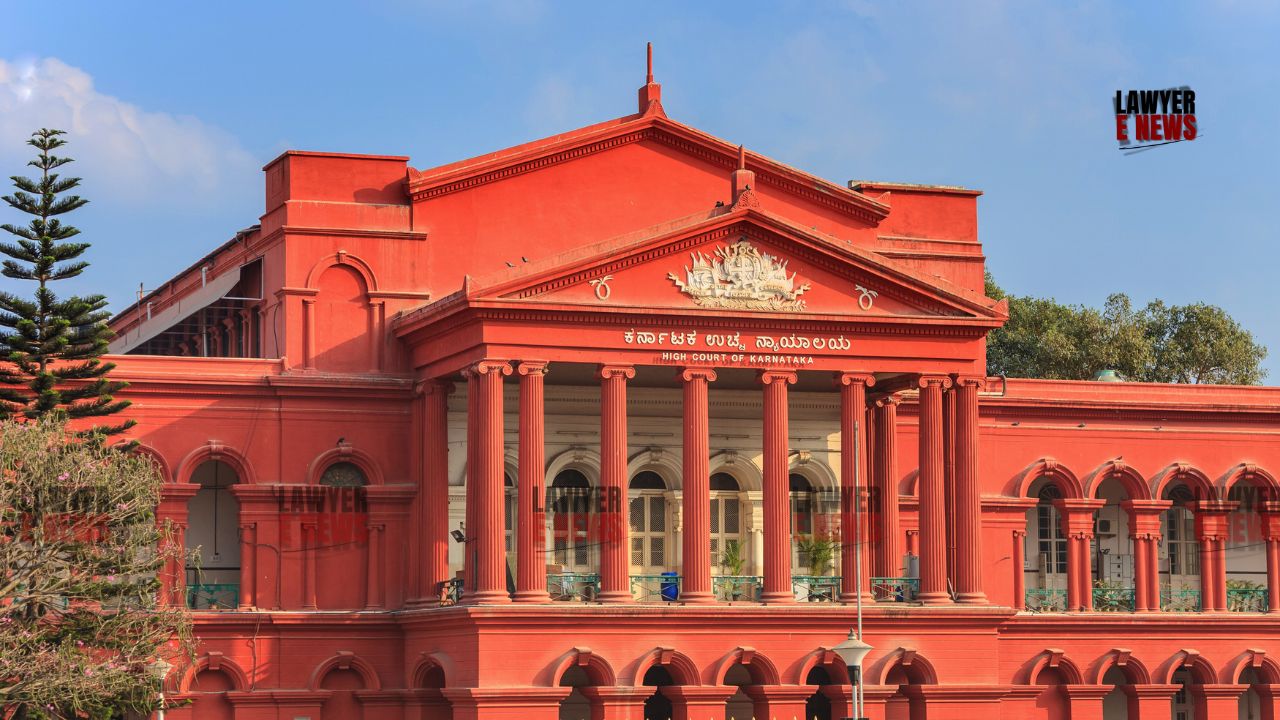
After police inaction, the complainant filed a private complaint under Section 200 Cr.P.C., resulting in an order for investigation under Section 156(3). Subsequently, FIR No. 194/2022 was registered under Sections 420, 468, 471, and 34 of the IPC. Challenging the same, the accused approached the High Court of Karnataka, which refused to quash the FIRs. This led to the appeals before the Supreme Court.
“Allegations Are Based on Conjecture, Not Criminality”
The Supreme Court took strong exception to the lack of substance in the accusations, holding that:
“The entire edifice of the complaint is built upon a solitary document, the 1996 GPF nomination form — which is not only bereft of authentication, but also fails to establish any fraudulent intent or act attributable to the appellants.”
The Court emphasized that none of the statutory documents reflecting the players' date of birth had ever been challenged. Instead, it found that the complaint relied solely on a “speculative and unauthenticated” form filled by the players’ father, which did not even mention one of the accused (Lakshya Sen) since he wasn’t born in 1996.
In a striking conclusion, the Court declared:
“The allegations are based on conjecture and surmises, and are manifestly intended to malign the appellants.”
“A Vindictive Complaint Filed Years After Institutional Closure”
One of the most telling observations of the Court concerned the timing and intent of the complaint. It noted that:
“The complainant’s grievances commenced only after his daughter was denied admission to the academy in 2020.”
Describing the FIR as an act of “vindictiveness”, the Bench pointed to the fact that the same allegations had already been scrutinized and closed by competent authorities, including the Sports Authority of India, Badminton Association of India, and the Central Vigilance Commission as far back as 2016.
“No fresh evidence has come to light that would justify reopening what had already been closed upon due enquiry.”
The Court was unequivocal in stating that reopening such settled matters — particularly without any allegations of fraud or suppression in earlier investigations — was “wholly unwarranted.”
“No Criminal Offence Made Out Under IPC Sections 420, 468 or 471”
In a detailed legal analysis, the Court found that the basic elements of cheating, forgery, and use of forged documents under the IPC were entirely absent. It stated:
“There is no allegation that any of the appellants forged or fabricated a document, or that they knowingly used a forged document as genuine.”
“Even taking the [1996] form at face value, it is neither demonstrated how the players… or their coach had any role in its preparation, nor shown that the document was ever used to obtain a benefit under false pretence.”
Reinforcing that criminal law cannot proceed in the absence of specific material or intent, the Bench observed:
“When the Court specifically posed a question to counsel for Respondent No. 2 to clarify the nature of involvement… no satisfactory explanation was offered.”
“Criminal Process Cannot Be a Weapon of Harassment”
The judgment strongly reinforced long-established jurisprudence, quoting precedents such as Pepsi Foods Ltd. v. Special Judicial Magistrate (1998) and State of Haryana v. Bhajan Lal (1992). The Bench underscored:
“This Court has repeatedly cautioned against permitting the criminal law to be used as a weapon of harassment.”
In perhaps the most powerful passage of the ruling, the Court held:
“To compel such individuals who have maintained an unblemished record and brought distinction to the country through sustained excellence, to undergo the ordeal of a criminal trial in the absence of prima facie material would not subserve the ends of justice.”
“Criminal Law Cannot Be Used to Achieve Collateral Objectives”
Summarizing the broader implications, the Court warned that frivolous prosecutions in the sporting context not only harm the individuals involved but also erode faith in judicial and investigative systems. It stated:
“The invocation of criminal law in such circumstances would amount to an abuse of process, which this Court cannot countenance.”
Final Verdict
The Supreme Court allowed the appeals, setting aside the High Court’s refusal to quash the proceedings, and declared:
“FIR No. 194/2022 dated 01.12.2022… and all further proceedings in pursuance thereof, including P.C.R. No. 14448/2022, stand quashed.”
Date of Decision: July 28, 2025