-
by sayum
29 August 2026 3:15 PM







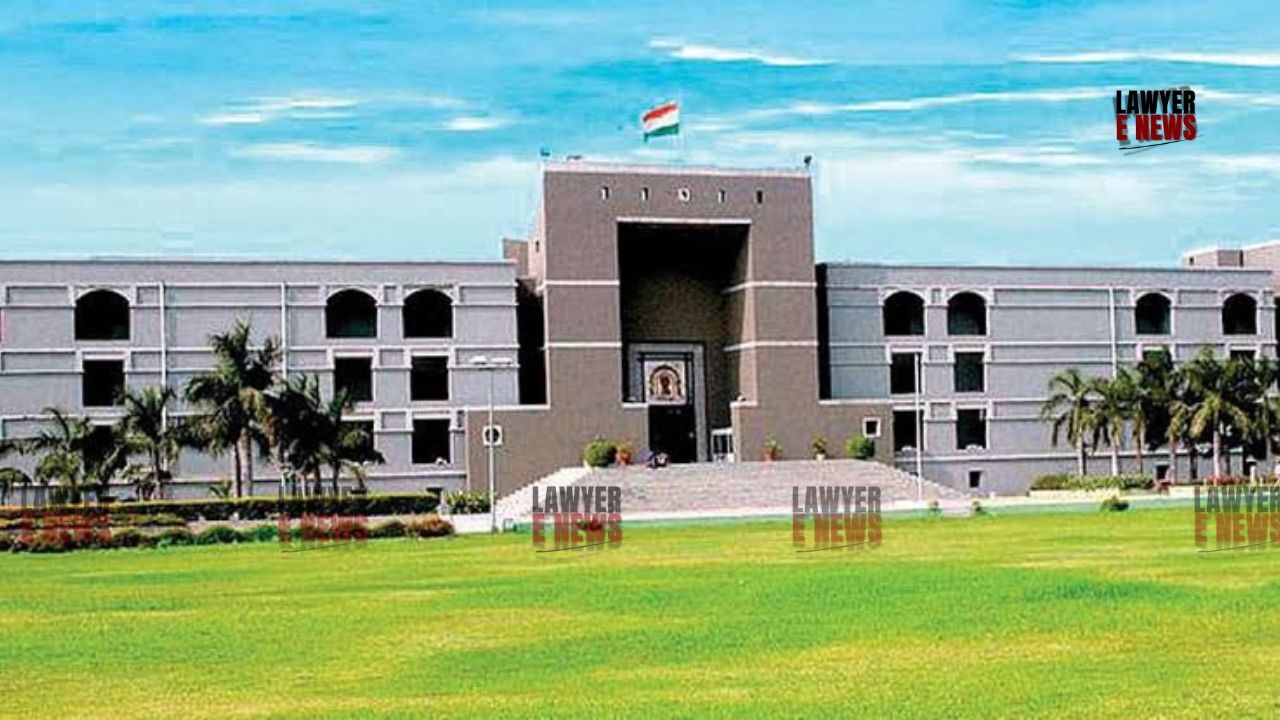
“Application for Substitution Inherently Carries Prayer for Setting Aside Abatement”, Gujarat High Court delivered a detailed and reportable judgment . Exercising its supervisory jurisdiction under Article 227 of the Constitution, the Court set aside the Trial Court’s rejection of a substitution application in a suit for specific performance and restored the 1983 suit to be decided on merits.
The core controversy revolved around whether the legal heirs of the deceased plaintiffs could be substituted despite a considerable delay and without filing separate applications for condonation of delay and setting aside of abatement. The Trial Court had dismissed the substitution plea on this technical ground, resulting in abatement of the entire suit. Justice Maulik J. Shelat, however, emphatically held:
“A simple prayer for bringing the legal representatives on record, though not couched in express words for setting aside abatement and condoning delay, shall be read in substance as such a prayer. To adopt a hyper-technical view in such matters is to deny justice itself.”
The litigation traces back to 1983, when the original plaintiffs filed a suit for specific performance of an agreement to sell executed by the father of defendant Nos. 1 to 9. The suit was dismissed in 1996, though many issues were decided in favour of the plaintiffs. Only Plaintiff No. 2 pursued the matter further by filing a first appeal.
During the pendency of appellate proceedings, Plaintiff No. 1 passed away in 1999. One of his heirs, Petitioner No. 1.3, applied before the appellate court to be joined as a legal heir and was allowed as Appellant No. 2 in 2006. This order attained finality. In 2012, the appeal was partly allowed; the matter was remanded to the Trial Court, particularly to decide afresh on issues relating to non-joinder and entitlement to relief.
Thereafter, Plaintiff No. 2 also passed away in 2014, leaving behind a registered Will in favour of Petitioner No. 2.1. In 2015, the petitioners moved the Trial Court for substitution and for setting aside abatement. The Trial Court, however, rejected the plea, holding that separate applications for condonation of delay and for setting aside abatement were mandatory, and disposed of the suit as abated.
Maintainability of Writ Petition – “Technical Alternative Remedy Cannot Defeat Substantive Justice”
Respondents argued that the petitioners had an alternative statutory remedy under Order 43 Rule 1(k) CPC and therefore the writ petition was not maintainable. Justice Shelat disagreed, noting that the nature of the application was composite and could not be treated stricto sensu under Order 22 Rule 9 CPC. The Court remarked:
“At first blush, the argument of alternative remedy may appear attractive, but on deeper scrutiny, it fails. The matter has been admitted by this Court since 2015 and the lis itself dates back to 1983. To relegate the petitioners at this stage would be to add another layer of injustice.”
Thus, the writ petition was held maintainable.
Liberal Interpretation of Delay and Abatement – “Hyper-Technicality Cannot Shut the Doors of Justice”
The High Court drew extensively from Supreme Court precedents such as Mithailal Dalsangar Singh v. Annabai Devram Kini, Bhagmal v. Kunwar Lal, and Om Prakash Gupta v. Satish Chandra (2025). Justice Shelat underlined the principle that substitution, delay condonation, and abatement must be read together in the interests of justice.
Citing the apex court, the judgment reiterated: “Abatement results in denial of hearing on merits; therefore, it must be construed strictly. Conversely, prayer for substitution must be construed liberally. Courts must guard against adopting a pedantic approach which forecloses adjudication on merits.”
The Trial Court’s insistence on separate formal applications was castigated as “a fallacy in law and contrary to settled principles.”
Effect of Substitution in Appeal – “One Heir on Record Keeps the Suit Alive”
An important facet of the case was that one heir of Plaintiff No. 1 had already been brought on record in the appellate stage. The High Court observed that this substitution enures to the benefit of the suit even after remand. Quoting the Supreme Court’s decision in Rangubai Kom Shankar Jagtap v. Sunderabai Bharatar Sakharam Jedhe (AIR 1965 SC 1794), the Court observed:
“If legal representatives are brought on record in one stage of the proceedings, it shall enure for all subsequent stages of the suit. The introduction of a party at one stage is an introduction for all stages.”
Accordingly, the Trial Court erred in holding that the suit had abated with respect to Plaintiff No. 1.
Right to Sue and Representation under Will – “Cause of Action Survives, Trial Court Must Decide on Merits”
Petitioner 2.1 claimed substitution as the legatee under a registered Will of Plaintiff No. 2. While allowing his substitution, the High Court clarified that defendants would retain their right to dispute the validity of the Will at trial. Justice Shelat stressed:
“The right to sue survives in favour of legal representatives. Denying them entry into the lis on procedural grounds would be to extinguish substantive rights without adjudication.”
“Trial Court Must Decide the Suit on Merits, Not Bury it under Technicalities”
The Court quashed the impugned orders dated 01.10.2015 (below Exh. 190 and Exh. 1), restored the suit to file, and ordered the petitioners to be substituted as plaintiffs. It directed the Trial Court to decide the long-pending 1983 suit on merits, preferably by 30 September 2026.
Concluding, Justice Shelat observed: “While adjudicating applications under Order 22 CPC, the endeavour must always be to allow legal heirs to come on record so that the lis is determined on merits. Procedural law is meant to regulate justice, not to sanctify miscarriage of justice.”
The Gujarat High Court has once again reminded that procedural rules are meant to serve justice, not to thwart it. By restoring a 42-year-old suit and directing substitution of the rightful heirs, the Court ensured that the dispute will be adjudicated on substance rather than buried under the weight of procedural rigidity.
Date of Decision: 19 August 2025