-
by sayum
05 August 2026 3:07 PM







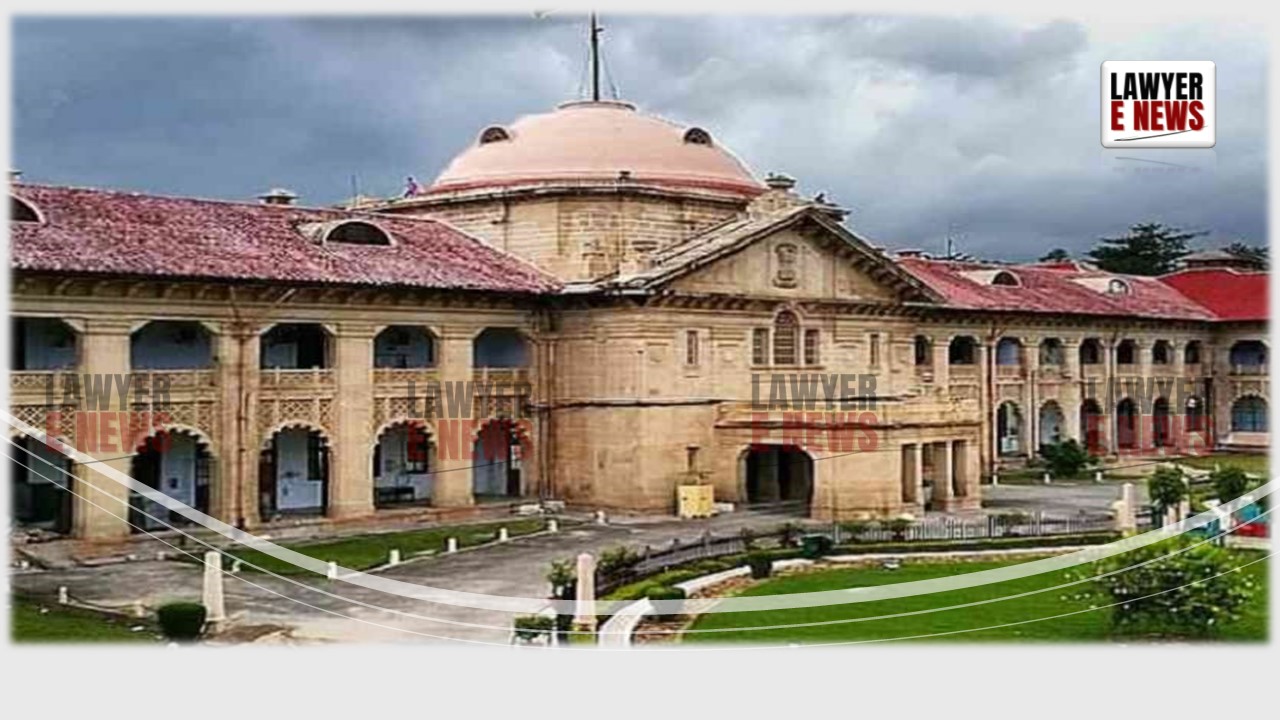
“Service Before Regularization as Daily Wager Has No Legal Sanctity for Pension—20 Years of Regular, Substantive Service Is the Threshold,” In a significant ruling Allahabad High Court, through Justice Saurabh Shyam Shamshery, dismissed the claim of a retired daily wage employee, asserting that pension under the Uttar Pradesh Development Authorities Non-Centralized Services Retirement Benefits Rules, 2011 cannot be claimed unless an employee completes “twenty years of regular service.” The Court held that inclusion of daily wage service before regularization for pension qualification “would be contrary to law and tantamount to indirectly regularizing services from inception.”
Justice Shamshery underlined that, “Pension is a reward of regular and substantive service under a pensionable establishment—not a mere consequence of long presence in service without regularization.”
From Daily Wager to Retired Employee Without Pension Entitlement
The petitioner, Rambachan Yadav, worked as a daily wager Chowkidar in the Gorakhpur Development Authority since 1988. After being retrenched in 1993, he succeeded in litigation that culminated in his reinstatement in 2003. Eventually, in 2010, he claimed regularization and continued in service until his retirement in April 2024. He moved the High Court claiming pension benefits, asserting that his total service—including daily wage tenure—should count under the Retirement Rules, 2011.
However, Justice Shamshery pointed out that even after reinstatement, the petitioner’s regular service stood at “13 years and 4 months—far below the legally mandated 20 years required to qualify for pension under Rule 2(i) of the 2011 Rules.”
Why Daily Wage Service Cannot Be Counted
The Court dissected the definition of “qualifying service” under Rule 2(i) of the 2011 Rules, observing: “Qualifying service means substantive, regular, permanent service paid by the Authority—service as daily wager is excluded both in letter and spirit.”
Justice Shamshery rejected the petitioner’s reliance on the Supreme Court’s landmark ruling in Prem Singh vs. State of U.P. (2019), clarifying that it applied only to “work-charged employees under the 1961 Rules—not to daily wage employees governed by the 2011 Rules.”
Crucially, the Court invoked the Supreme Court’s recent authoritative clarification in Uday Pratap Thakur vs. State of Bihar (2023), noting that:
“Counting daily wage service for pension would be legally impermissible as it effectively amounts to treating a non-regular employee at par with a regularized, substantively appointed employee.”
“20 Years of Regular Service Is a Statutory Threshold That Cannot Be Relaxed Judicially”—Court Refuses to Rewrite Law
Justice Shamshery highlighted the limits of judicial power by remarking: “Without a challenge to the vires of the Rules, this Court cannot read down or rewrite the statutory scheme to artificially count ineligible service towards pension.”
The Court showed judicial restraint because a similar legal issue is pending before a Division Bench in Kanhai Ram vs. State of U.P., which involves the broader question of pension entitlement for employees with ad hoc or non-regular service histories.
“When an issue is under authoritative consideration before a larger Bench, an individual bench must refrain from granting conflicting relief,” the Court observed.
No Pension for Less than 20 Years of Regular Service—But Remedy Remains Open
The Court concluded by firmly rejecting the pension claim while keeping the door open for future legal recourse:
“Since the petitioner’s regular service is less than 20 years, he fails to meet the threshold under the 2011 Rules. However, depending on the outcome of the reference in Kanhai Ram, the petitioner remains free to pursue legal remedies.”
With this ruling, the Allahabad High Court reinforced the principle that pension is a legal right arising out of qualifying, regular service—not a compassionate allowance for unregularized tenure.
Date of Decision: 17th July 2025