-
by sayum
30 August 2026 4:28 AM







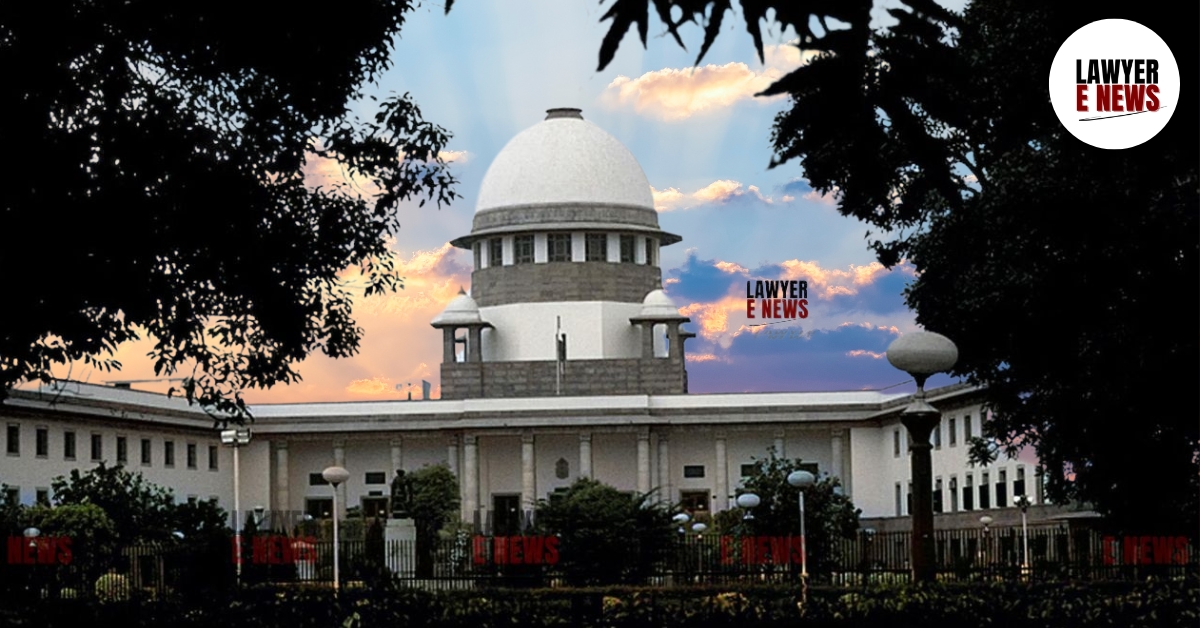
“Refusal to Act on the Testimony of a Victim of Sexual Assault Is Adding Insult to Injury”, Supreme Court of India delivered a resounding judgment underscoring that the sole and credible testimony of a rape survivor is sufficient to sustain conviction, even in the absence of medical corroboration. The Bench comprising Justice N.V. Anjaria and Justice Sudhanshu Dhulia dismissed the appeal against conviction for rape and house-trespass, upholding the findings of both the trial court and the Chhattisgarh High Court. In doing so, the Court sent a strong message that technicalities, minor discrepancies, or lack of physical injuries cannot be allowed to defeat the cause of justice where the victim’s evidence inspires confidence.
“Sole Testimony of the Prosecutrix—If Trustworthy—Needs No Corroboration”
Addressing the core argument, the Supreme Court was categorical:
“The conviction can be sustained on the sole testimony of the prosecutrix, if it inspires confidence. The conviction can be based solely on the solitary evidence of the prosecutrix and no corroboration be required unless there are compelling reasons which necessitate the courts to insist for corroboration of her statement.”
The Court went further, citing its earlier precedents:
“Refusal to act on the testimony of a victim of sexual assault in the absence of corroboration as a rule, is adding insult to injury. Why should the evidence of the girl or the woman who complains of rape or sexual molestation be viewed with the aid of spectacles fitted with lenses tinged with doubt, disbelief or suspicion?” (Bharwada Bhoginbhai Hirjibhai v. State of Gujarat)
The case arose from a harrowing incident on 3rd April 2018. The prosecutrix, aged just 15, and her younger brother were alone at home when the accused, their neighbour, entered the house, sent the boy away, and forcibly raped the minor on the cot in the porch. The victim, traumatized but resolute, immediately informed her cousin and, through her, alerted her parents. The police complaint was lodged the same day, followed by a prompt investigation and medical examination.
At trial, the prosecutrix’s clear and unwavering account was fully corroborated by her younger brother (an 11-year-old child witness) who returned to witness the aftermath, and by the immediate and natural conduct of the victim post-incident.
“Absence of Injuries or Medical Corroboration—Not Fatal to Prosecution”
The appellant’s counsel urged that the lack of injuries or definitive medical evidence should raise doubt. The Court emphatically rejected this line, observing:
“Merely because in the medical evidence, there are no major injury marks, this merely cannot a be a reason to discard the otherwise reliable evidence of the prosecutrix. It is not necessary that in each and every case where rape is alleged there has to be an injury to the private parts of the victim… Absence of injuries on the private parts of the victim is not always fatal to the case of the prosecution.” (Lok Mal alias Loku v. State of Uttar Pradesh)
The Court relied on a line of authorities, including State of Punjab v. Gurmit Singh and State of Himachal Pradesh v. Manga Singh, reiterating:
“The evidence of the victim does not suffer from any basic infirmities and the factor of probability does not render it unworthy evidence. The conviction could base solely on the evidence of the prosecutrix.”
“Minor Contradictions Are the Hallmark of Truth”
Another argument—highlighting minor discrepancies in the accounts of the prosecutrix and her brother—was swiftly dismissed. The Court held:
“Minor variation in the accounts of the witnesses are often the hallmark of the truth of their testimony and the discrepancies are found to be of minor character not going to the root of the prosecution story, they need not be given undue importance.”
Further, it was underscored:
“In criminal jurisprudence, the evidence of prosecutrix in case of rape is of the same value as that of an injured witness and conviction can be made on the basis of the sole testimony of the prosecutrix.”
“Victim’s Minority Was Established Beyond Doubt”
The Supreme Court also gave short shrift to the appellant’s contention challenging the victim’s age, finding the school certificate and oral testimonies of both parents clear and reliable.
“There was cogent and reliable evidence in the nature of 8th standard marksheet of the victim which showed her date of birth to be 09.10.2002. The said marksheet was obtained by the investigating officer from the mother of the victim and he had testified about it in his evidence.”
“Court Must Remain Sensitive to the Plight of the Helpless Victim”
In a stirring reminder of the broader context, the Court echoed earlier jurisprudence:
“An unmerited acquittal encourages wolves in the society being on the prowl for easy prey, more so when the victim of crime are helpless females.” (State of Rajasthan v. N.K. The Accused)
And:
“The rapist not only violates the victim’s privacy and personal integrity, but inevitably causes serious psychological as well as physical harm in the process. The rape is not merely a physical assault and subsequently destructs the whole personality of the victim.” (Gurmit Singh)
Affirming the conviction and sentence, the Supreme Court concluded:
“Victim’s evidence was entirely probable, natural and trustworthy who with lucidity narrated the whole incident about commission of offence against her by the accused. There exists no reason, much less compelling reasons, to disbelieve and discard her testimony. Her brother Mayank’s testimony as a child witness was rationally and logically supportive of what the prosecutrix narrated.”
Dismissing the criminal appeal, the Court set an unwavering precedent for all courts dealing with sexual offences: the testimony of a credible victim must be the fulcrum of justice—“Corroboration is not a requirement of law, but a guidance of prudence under the given facts and circumstances.”
Date of Decision: 5th August 2025