-
by sayum
05 August 2026 3:07 PM







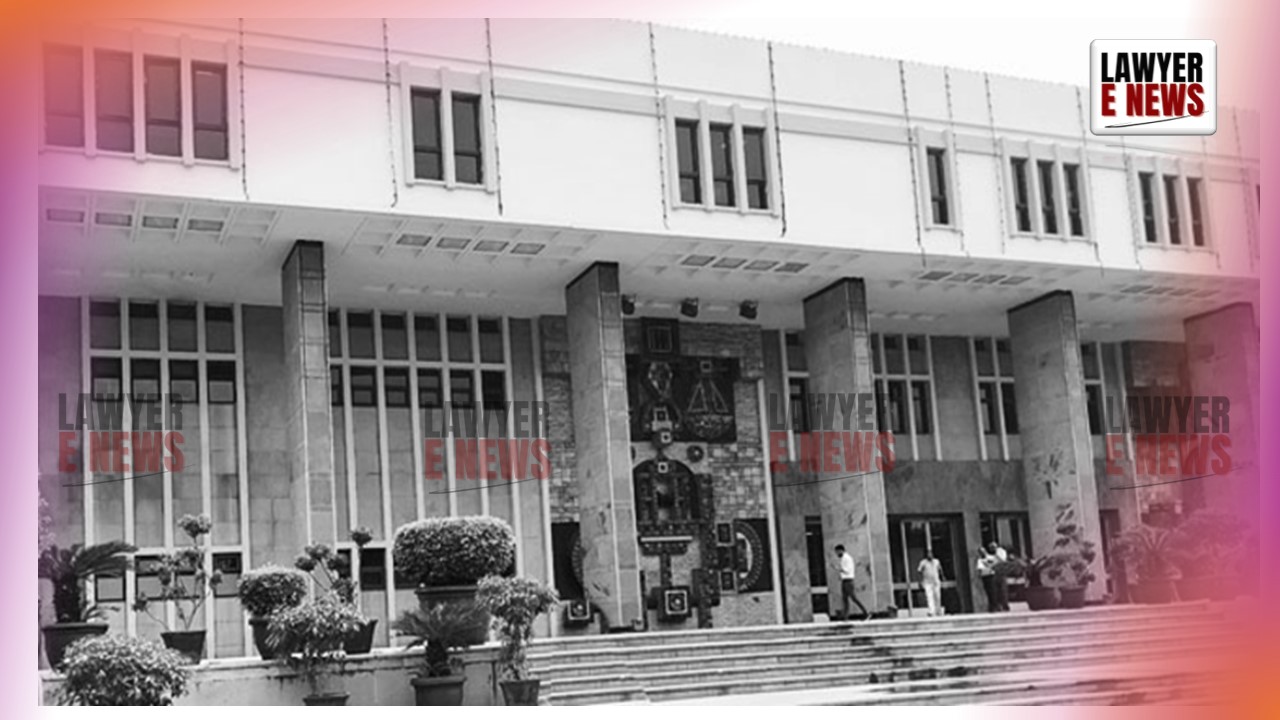
“Coal Block Cases Form a Distinct Class with Wider Public Ramifications”: Delhi High Court declined to stay the conviction of industrialist Ramesh Kumar Jayaswal under Sections 120B, 420, and 471 of the Indian Penal Code. The judgment, delivered by Justice Amit Sharma, addressed a critical question: whether disqualification under Section 196(3)(d) of the Companies Act, 2013, arising from a conviction, constitutes an “exceptional circumstance” justifying a stay of conviction under Section 389(1) CrPC. While the Court suspended the sentence, it categorically held that no such relief can be granted against the conviction itself.
“The disqualification under Section 196(3)(d) is statutory. The fact that it flows from a conviction does not, by itself, make the case exceptional for the purposes of stay under Section 389(1), CrPC.”
The appellant, Ramesh Kumar Jayaswal, was convicted on December 9, 2024, by the Special Judge (PC Act), CBI, in Case No. CBI-41/2020, arising from the infamous coal block allocation scam. Along with his brother Manoj Kumar Jayaswal (Convict No. 1) and Abhijeet Infrastructure Pvt. Ltd. (Convict No. 3), Jayaswal was found guilty of conspiracy, cheating, and forgery to fraudulently secure allocation of the Brinda and Sisai coal blocks.
The conviction was based on findings that Jayaswal had repeatedly misrepresented himself as a Director or Joint Managing Director of AIPL after his formal resignation in 2002. The prosecution alleged that such misrepresentations continued during key meetings of the 18th to 24th Screening Committees, where forged documents were presented before the Ministries of Coal and Steel.
“The accused misrepresented his official status and presented forged documents to mislead the Screening Committee... His presence and participation are established through records and correspondence that contradict his claimed dissociation from the company.”
He was sentenced to rigorous imprisonment for three years for each offence with a cumulative fine of ₹20 lakh. The sentences were ordered to run concurrently.
At the heart of the application was the plea for suspension of conviction under Section 389(1) of the CrPC. Jayaswal urged the Court to consider the “irreversible consequences” of disqualification under Section 196(3)(d) of the Companies Act, 2013, which prohibits appointment or continuation as Managing Director if a person is convicted and sentenced to over six months.
The appellant argued that his disqualification would severely damage the operations of M/s Jayaswal Neco Industries Limited (JNIL), a public company employing over 9,500 people and backed by global investors. He cited Afzal Ansari v. State of Uttar Pradesh and Rama Narang v. Ramesh Narang in support of his plea, asserting that his case involved “irreparable harm.”
However, the Court firmly rejected this contention.
“The legislative intent behind Section 196(3)(d) is unambiguous. The use of the word ‘shall’ makes the disqualification mandatory... The removal of the condition of ‘moral turpitude’ under the 2013 Act is self-explanatory.”
Justice Sharma emphasized that the mere loss of corporate position, though impactful, does not automatically elevate the case to one of exceptional hardship:
“Conviction-related disqualification under the Companies Act alone does not amount to exceptional hardship. Such consequence is statutory and not extraordinary in the present context.”
The Court further noted that the appellant was also facing separate prosecution in another coal block allocation case involving his role in JNIL.
“The fact that the appellant is facing trial in another coal block matter as key functionary of M/s JNIL cannot be ignored... The wider public interest involved in these cases outweighs the individual hardship claimed.”
Coal Scam Cases: “Not Ordinary Criminal Prosecutions”
The judgment heavily relied on the Supreme Court's pronouncements in Girish Kumar Suneja v. CBI and Manohar Lal Sharma v. Principal Secretary, wherein coal block allocation cases were categorised as a “distinct class.”
“The Coal Block Allocation cases form one identifiable category of cases that are distinct from other cases since they have had a massive impact on public interest... It is necessary to treat these cases differentially.”
In that context, the Court observed: “These are not ordinary criminal prosecutions. The nature and extent of the public trust betrayed warrants a heightened standard of scrutiny.”
Even the appellant’s contention that his participation in the 24th Screening Committee meeting was limited and that the key decisions were taken by his brother (Convict No. 1) was rejected.
“He failed to establish that someone else responded on behalf of AIPL before the Screening Committee. In fact, his own correspondence demonstrates deep knowledge and active engagement.”
Suspension of Sentence Granted on Parity with Co-Convict
While denying the prayer to stay the conviction, the Court accepted the plea for suspension of sentence. Manoj Kumar Jayaswal’s sentence had already been suspended by a coordinate Bench on December 23, 2024. Considering the appellant’s age, health, compliance record, and lack of misuse of bail, the Court extended similar relief.
“In the totality of facts and circumstances, the sentence of the appellant is suspended. He shall be released on bail upon furnishing a personal bond of ₹1,00,000 with one surety.”
Additional conditions were imposed, including travel restrictions and mandatory disclosure of mobile numbers to the Investigating Officer.
Justice Amit Sharma’s judgment strikes a careful balance between individual hardship and public interest. While recognizing the economic and social contributions of the appellant, the Court reaffirmed the principle that statutory disqualifications, even if consequential, cannot override the gravity of corruption in public resource allocation.
“No case is made out for stay of conviction. The magnitude of corruption and the wider social impact take this case out of the category of exceptions.”
Thus, the application was partly allowed—conviction stands, sentence suspended.
Date of Decision: August 1, 2025