-
by sayum
23 August 2026 2:56 PM







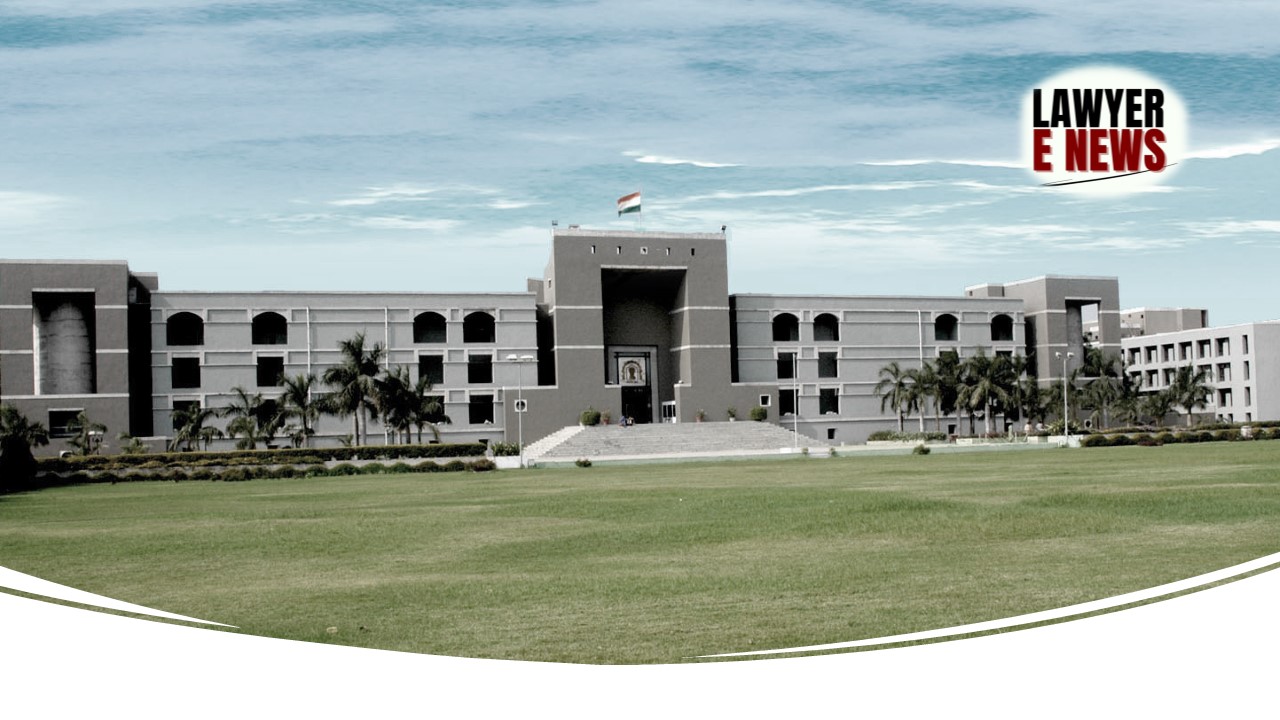
“In an appeal against acquittal, the double presumption of innocence cannot be lightly displaced” — In a significant ruling reinforcing the sanctity of acquittals in criminal jurisprudence, the Gujarat High Court on December 5, 2025, dismissed a 25-year-old appeal filed by the State of Gujarat challenging the acquittal of four individuals accused of attempt to murder and offences under the Scheduled Castes and Scheduled Tribes (Prevention of Atrocities) Act, 1989. The Bench comprising Honourable Justice S.V. Pinto and Honourable Justice Devan M. Desai observed that the prosecution’s version was riddled with “glaring contradictions, investigative lapses, and absence of crucial corroboration,” thereby upholding the trial court’s order of acquittal as a “reasonable and legally sound view.”
“Every acquittal carries a reinforced presumption of innocence—interference is permissible only in cases of manifest perversity or miscarriage of justice”
Delivering a detailed oral judgment in State of Gujarat vs. Sanjaykumar Vinayakrav Patil & Others, Criminal Appeal No. 226 of 2000, the Division Bench held that the trial court’s judgment acquitting the accused in Atrocity Case No. 89 of 1996 was not only “possible” but “the only just conclusion in light of the evidence on record.”
The Court began its analysis by firmly anchoring its findings in the bedrock principles of criminal appellate review. “It is now too well settled to require repetition that appellate courts must tread cautiously while considering appeals against acquittal,” the Court observed, citing the authoritative dictum in Chandrappa v. State of Karnataka (2007) 4 SCC 415.
“In case of an acquittal, the presumption of innocence is not only available but is reinforced, reaffirmed and strengthened,” the Bench stated, further relying on recent precedents including P. Somaraju v. State of Andhra Pradesh, 2025 LawSuit (SC) 1423 and Babu Sahebagauda Rudragaudar v. State of Karnataka, 2024 INSC 320.
“The story put forth by the prosecution is neither credible nor consistent”
The case stemmed from an alleged assault on July 24, 1996, wherein complainant Manharbhai Jethwa and his wife Savitriben were purportedly attacked near their STD booth in Vadodara by the accused using an iron pipe and a knife, allegedly over a confrontation that began when accused no.1 urinated outside their shop. The complainant claimed that after he objected, the other accused arrived and launched a violent attack. Charges were framed under Sections 323, 324, 326, 307, 294, 506(2), and 114 IPC, along with Section 3(1)(2) of the Atrocities Act and Section 135 of the Bombay Police Act.
However, the High Court noted that “the complainant’s own testimony does not inspire confidence.” It pointed out that although he claimed to know the accused for four years, he did not name them in the FIR and referred to accused no.1 merely as “the driver of rickshaw no. GJ-6-V-860.” The Court found it “deeply concerning” that such identification came only nine days later.
“Such delay and lack of clarity on the identity of the accused strikes at the root of the prosecution’s claim,” the Court observed.
“Non-examination of a natural eyewitness is not a trivial lapse—it undermines the foundation of the prosecution case”
What weighed heavily against the prosecution was the unexplained non-examination of Kamal, the complainant’s son, who was present at the scene and would have been a natural eyewitness.
“The prosecution’s failure to produce its most natural and direct witness, namely the complainant’s son Kamal, is a glaring omission and casts a serious shadow over the credibility of the version advanced,” the Court remarked.
It further noted that although the complainant and his wife claimed a prior incident of harassment by the accused at around 5:00 p.m. that day, no report, proof or witness testimony was produced to corroborate this narrative. The trial court had rightly rejected this “subsequent embellishment,” and the High Court found no fault in that approach.
“Medical evidence contradicted the prosecution’s claims—such contradictions cannot be brushed aside”
The High Court found that the complainant’s claim that his wife was admitted as an indoor patient for two days was false. The medical officer clearly stated that both complainant and his wife were treated as outdoor patients and not admitted.
Furthermore, while the complainant alleged that he was attacked with an iron pipe, the medical officer noted that the injuries were more consistent with a stick, and that no internal injuries or fractures were observed.
“Medical evidence must align with the ocular version. When the two diverge, and the divergence is not explained, the benefit must go to the accused,” the Court held.
The Court also noted the prosecution failed to examine the surgeon who supposedly treated the grievous injury on Savitriben. “Such non-examination is fatal, especially in a case where the allegation is of grievous injury by a deadly weapon,” the Bench declared.
“The investigation was perfunctory and prejudicial—serious lapses dilute the prosecution’s credibility”
The Court was scathing in its observations on the conduct of investigation. It noted that the weapons recovered were not sent to the Forensic Science Laboratory for analysis. No blood-stained clothes were seized. There was no explanation for how the injured reached the hospital, with contradictions between the witnesses and the police officer.
Even more critically, the prosecution failed to establish that the accused were aware of the complainant’s caste, a necessary element for sustaining a charge under Section 3(1)(2) of the Atrocities Act.
“In absence of any caste-related abuse or proof of knowledge of caste identity, the invocation of the Atrocities Act stands on no legal footing,” the Court stated.
It further added, “The Investigating Officer’s admission that there was no use of caste-based slurs and no attempt to investigate the alleged earlier harassment exposes the casualness with which the matter was handled.”
“Trial Court’s view is not only possible—it is the most reasonable conclusion on the facts of this case”
Affirming the trial court’s findings, the High Court concluded that the acquittal was not based on any misappreciation of law or evidence. Rather, it was founded upon sound legal reasoning and proper assessment of glaring weaknesses in the prosecution’s case.
“When serious inconsistencies permeate the prosecution evidence, and the investigation itself suffers from grave defects, the only lawful result is acquittal,” the Bench held.
“In a criminal trial, suspicion, however grave, can never substitute for proof. The prosecution’s case in this matter rests on a fractured narrative and unexplained gaps, which the trial court rightly refused to gloss over,” the Court noted.
The High Court finally held that “no compelling or substantial reason has been demonstrated to interfere with the judgment of acquittal.”
The appeal filed by the State was dismissed in its entirety. The impugned judgment and order dated 04.11.1999 passed in Atrocity Case No. 89 of 1996 by the Additional Sessions Judge, Vadodara, was confirmed. The bail bonds stood cancelled and the record directed to be returned to the Trial Court.
Date of Decision: 05 December 2025