-
by sayum
05 August 2026 3:07 PM







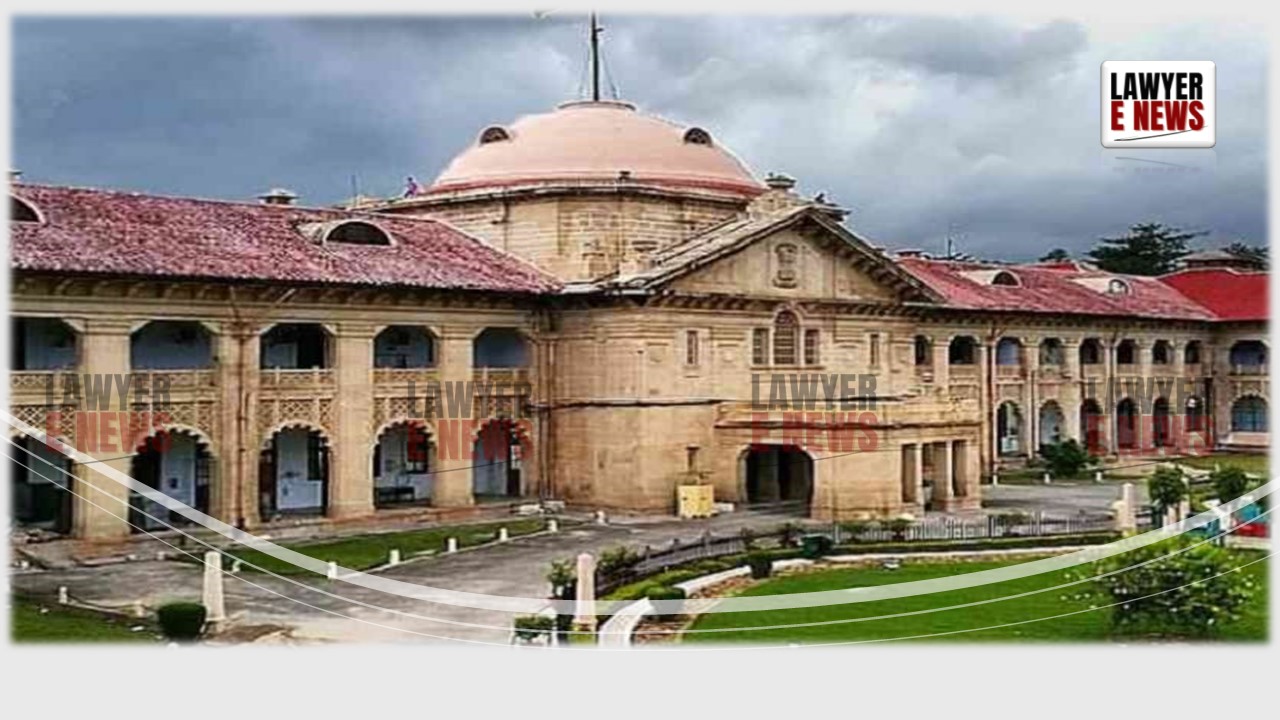
“Judicial Review Under Article 226 Is Not a Second Appeal”, Allahabad High Court dismissing the writ petition filed by a former Cooperative Society Secretary who challenged his dismissal after allegations of financial embezzlement. Justice Saurabh Shyam Shamshery observed, “Where serious allegations of embezzlement are substantiated by evidence, the punishment of dismissal is not shockingly disproportionate”, affirming the disciplinary authority's decision and restricting judicial intervention under Article 226 of the Constitution.
The case arose from a long-standing disciplinary dispute involving the petitioner, Ramesh Chandra Gupta, who served as Secretary of the Sadhan Sahkari Samiti, Karaura, Bulandshahar. Gupta was dismissed from service on multiple occasions due to persistent findings of financial misappropriation. His earlier dismissal in 2006 was quashed by the High Court in 2010 for violating principles of natural justice, with clear directions to conduct a fresh inquiry after supplying all necessary documents.
Following the High Court’s 2010 judgment, Gupta was reinstated temporarily but was again suspended, served with fresh charge sheets, and subsequently dismissed on 15th January 2011. His appeals before statutory bodies failed, and the matter landed back before the High Court, raising questions of procedural fairness, legality of inquiry post-retirement, and proportionality of punishment.
The Court was called upon to decide three core legal issues: compliance with natural justice, the legality of disciplinary proceedings after superannuation, and the scope of judicial review under Article 226.
Justice Shamshery began by addressing the first contention that the inquiry violated natural justice. The Court rejected this argument, stating, “It was not a case of no opportunity or no hearing. The petitioner was supplied with charge sheets and called to appear for hearings, but deliberately abstained” (Para 17). Despite multiple written communications, the petitioner avoided participation and sought to delay proceedings through repeated, unnecessary applications.
On the second issue concerning the continuation of proceedings after retirement, the Court cited binding judicial precedent and concluded unequivocally, “It is well settled that inquiry initiated before retirement may continue even after retirement” (Para 20). The Court referred to Section 68(2) of the U.P. Cooperative Societies Act, 1965 and the U.P. Cooperative Societies Employees Service Regulations, 1975, confirming the inquiry's legality.
The third and most crucial issue pertained to the scope of the High Court’s intervention under Article 226. The Court extensively cited judgments including State of Rajasthan vs. Bhupendra Singh, 2024 SCC OnLine SC 1908, and reiterated the fundamental rule:
“The High Court is not constituted as an appellate forum over disciplinary proceedings. Its jurisdiction is confined to ensuring procedural compliance and fairness, not to re-appreciate evidence” (Para 15).
Justice Shamshery further clarified that judicial interference is only justified if there is “procedural illegality, perversity, or violation of natural justice”, none of which were established in the present case (Para 21).
The High Court undertook a thorough review of the disciplinary record and found ample evidence substantiating the charges. The inquiry revealed that Gupta engaged in repeated acts of embezzlement, including misappropriation of funds exceeding ₹2.20 lakh, non-deposit of collections, manipulation of accounts, and destruction of financial records.
Justice Shamshery noted, “The petitioner, entrusted with financial responsibilities, indulged in grave misconduct causing direct financial loss to the Cooperative Society. The evidence is robust and the disciplinary procedure unblemished by procedural flaws” (Para 19).
Addressing the proportionality of punishment, the Court was unequivocal: “In cases involving misappropriation of public money, where the trust reposed in an employee is gravely breached, dismissal cannot be termed as shockingly disproportionate” (Para 21).
Furthermore, the Court observed, “Repeated misappropriation and sustained manipulation of accounts over years reflect serious financial dishonesty. Any lesser punishment would dilute accountability in public employment”.
In a strongly reasoned judgment, the Allahabad High Court upheld the dismissal, dismissing the writ petition with a firm endorsement of limited judicial review in service matters. Justice Shamshery concluded,
“The disciplinary proceedings were fair, the charges were proved, the inquiry continued lawfully even after retirement, and the penalty was proportionate to the gravity of misconduct. This Court finds no basis for interference” (Para 22).
This decision reinforces established legal principles on service jurisprudence, emphasizing that the High Court under Article 226 is not an appellate authority to re-assess evidence but a constitutional guardian of procedural fairness.
Date of Decision: 15th July 2025