-
by sayum
05 August 2026 3:07 PM







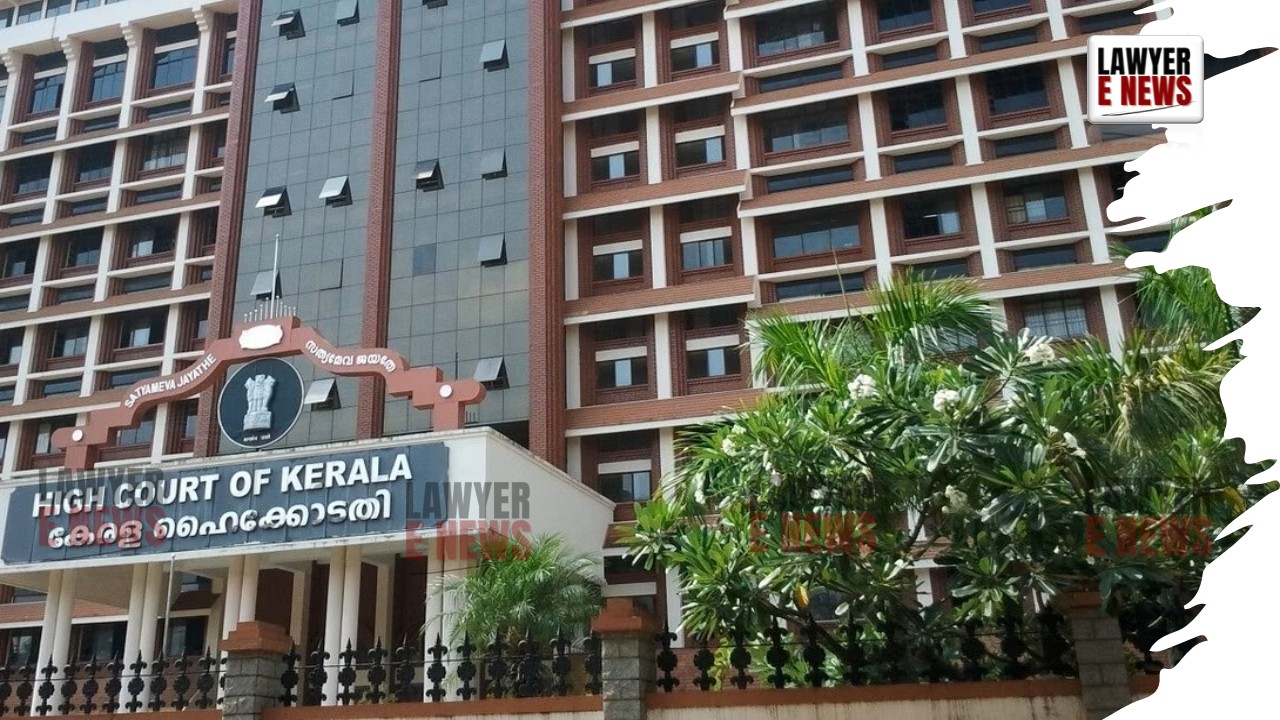
“Once a Sale is Completed through Registered Deeds, the Prior Agreement Merges into It and Cannot Be Used to Claim Balance Price”, Kerala High Court, comprising Justice Sathish Ninan and Justice P. Krishna Kumar, rejecting a belated claim for ₹1.16 crore as unpaid sale consideration based on an earlier sale agreement.
Dismissing the appeal, the Court reaffirmed that once a registered sale deed records payment of full consideration, no party can subsequently fall back on an earlier agreement to allege non-payment, especially in the absence of any challenge to the validity of the sale deeds.
“The plaintiff cannot rely on an earlier agreement to contradict the registered sale deeds. Section 92 of the Indian Evidence Act bars such contradiction. The registered documents speak for themselves.” [Para 11]
The dispute revolved around a plantation property for which the late K.T. Thomas (plaintiff) had entered into a sale agreement (Ext.A1) dated 23.11.1987 with Late Chettiyappan, predecessor of defendants 1 to 6. The agreed price was ₹1.32 crores, which was to include liabilities such as agricultural income tax dues, bank loans, PF arrears, and other statutory encumbrances.
Only ₹75,000/- was paid upfront as advance. The purchaser later advanced further amounts totaling ₹16 lakhs and took security over the seller’s Bangalore property. Eventually, using a Power of Attorney, Chettiyappan executed 37 sale deeds in 1991 in his own favour.
However, in 1993, the original plaintiff executed cancellation deeds, asserting that only ₹16 lakhs was paid and that no further consideration had been received. Eight years later, a suit for recovery of the balance sale consideration was filed by the plaintiff’s legal representatives, seeking to recover the unpaid amount, charging the same on the property.
Registered Sale Deeds Prevail Over Prior Agreements
The plaintiff sought to rely on the original sale agreement (Ext.A1) to claim that the consideration was ₹1.32 crores, out of which only ₹16 lakhs was paid. However, the registered sale deeds (executed through Power of Attorney) recorded full payment of consideration, part of which was used to clear existing liabilities.
Referring to Section 92 of the Indian Evidence Act, the Court held: “Parties to a registered document cannot adduce oral or documentary evidence to contradict the contents of the document. Thus, the claim based on Ext.A1 is legally unsustainable.” [Para 11]
Citing its own precedent in Vasu Bhaskaran v. Parukutty Amma, the Division Bench reiterated that a registered sale deed is conclusive as to the consideration mentioned therein, and no oral evidence or prior agreement can override it.
Sale Was Free of Encumbrances – Not “Subject to Liabilities”
The plaintiff claimed that the liabilities on the property were to be paid over and above the agreed sale price, and thus the full ₹1.32 crores was payable to him independently.
The Court rejected this reading of the agreement. Though Ext.A1 mentioned existing liabilities and permitted the buyer to rescind if liabilities exceeded the price, it clearly stated:
“The estate shall be sold free from encumbrances.” [Para 14]
The Court observed that the purchaser, Chettiyappan, was required to pay liabilities from the total sale consideration, not in addition to it. This was also evidenced by the fact that:
“The vendor received ₹16 lakhs in advance and was required to provide security for the same, which would not have been necessary if the liabilities were to be independently borne by the purchaser.” [Para 15]
The Bench emphasized that under Sections 55(4)(b) and 55(5)(b) of the Transfer of Property Act, if the sale is free of encumbrance, then the vendor is responsible to clear dues, and the price is presumed to include that burden unless otherwise agreed.
No Unpaid Sale Consideration Established
The plaintiff failed to prove any unpaid amount under the sale deeds. The deeds themselves recorded clearance of various liabilities, including payments made to the plaintiff. The Court noted:
“Bank transfers of ₹19 lakhs, tax clearance certificates, PF and gratuity settlement records all demonstrate that substantial parts of the consideration were used to wipe off encumbrances.” [Para 16]
The plaintiff’s own witness admitted that all major liabilities — agricultural income tax, PF dues, back wages, sales tax, electricity charges — existed and were to be cleared. Yet, the plaintiff produced no evidence to prove that he was owed anything more than what was already paid or adjusted.
“The sale deeds recite consideration was paid. The burden was on the plaintiff to show otherwise. He failed to discharge it.” [Para 16]
The Court also pointed out the delay in filing the suit — 8 years after executing cancellation deeds — and noted that no challenge was ever made to the sale deeds themselves, further weakening the plaintiff’s position. [Para 17]
The Kerala High Court conclusively held that the plaintiff’s attempt to revive a prior agreement to claim unpaid consideration was barred both legally and evidentially.
“Once the sale is completed by execution of registered sale deeds, the agreement merges into it. No claim can be entertained based on a contrary understanding unless the sale deeds are set aside.”
This judgment reinforces core principles under Section 92 of the Evidence Act and Sections 55(4)(b) & 55(5)(b) of the T.P. Act, cautioning that parties cannot bypass registered documents through subsequent claims based on older negotiations or alleged oral understandings.
The appeal was dismissed with no order as to costs.
Date of Decision: 2 July 2025