
-
by sayum
29 August 2026 3:15 PM







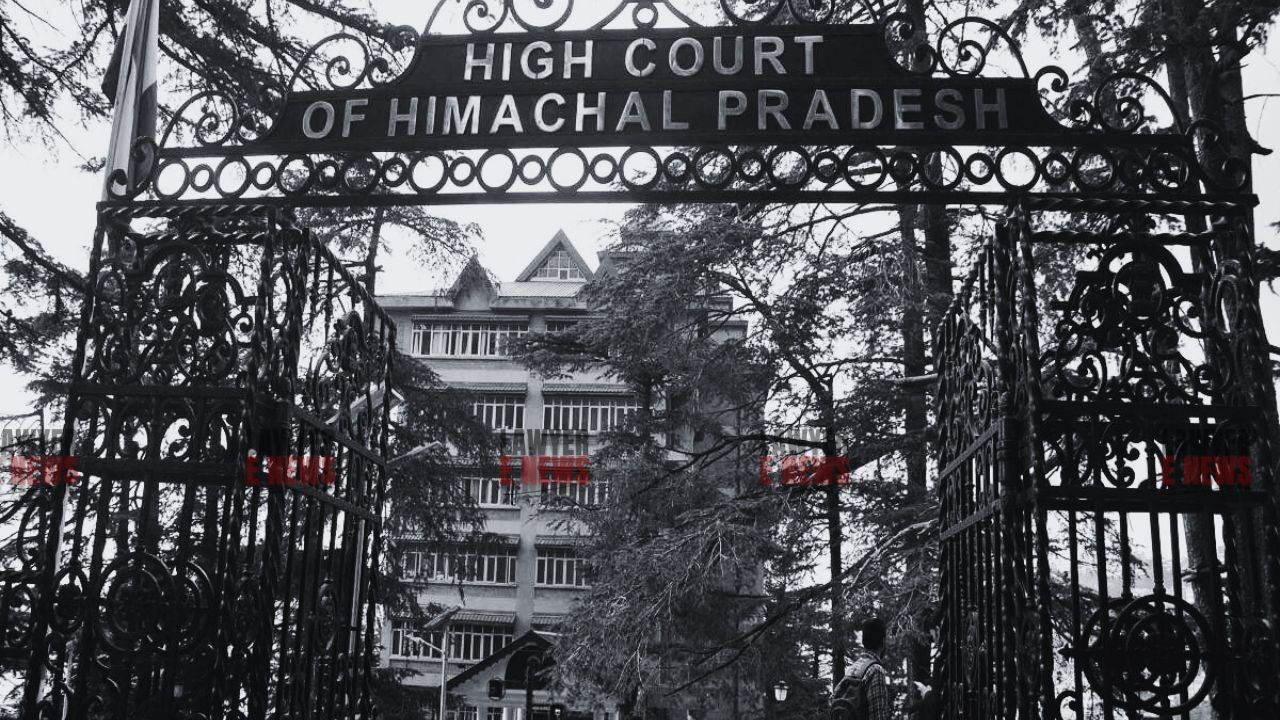
"Conduct of the Seller Reflects His Intent to Backtrack From the Agreement" — High Court of Himachal Pradesh at Shimla upheld a decree of specific performance in favour of a bona fide purchaser, while denouncing a collusive compromise in execution proceedings as an invalid method to defeat vested contractual rights.
The Court held that “a compromise is not a lawful mode of transfer of immovable property”, and refused to allow a third party, not privy to the original contract, to defeat a decree based on a valid agreement to sell. The ruling reaffirms the legal sanctity of agreements executed in good faith and condemns misuse of execution proceedings to prejudice rightful claims.
The plaintiff, Isrial, had filed a suit for specific performance based on an agreement to sell dated 10.04.2006, executed by defendant Hassan Deen (D-1) for 1 bigha 06 biswas of land. An advance of ₹25,000 out of the total consideration of ₹50,000 had been paid on the date of execution.
The land in question was previously part of a larger parcel measuring 3 bighas 12 biswas, ownership of which was finally decreed in favour of Hassan Deen by a civil court decree dated 02.07.2002, affirmed in appeal and further upheld by the High Court in RSA No. 43/2003.
Despite the final decree, revenue entries were not updated, and Hassan Deen subsequently transferred half the land to Jalal Deen (D-2) via mutation No. 446 dated 25.02.2004.
Thereafter, the remaining portion of the land was contracted to be sold to Isrial under the agreement in question. However, when Hassan Deen failed to execute the sale deed, Isrial issued a legal notice, and upon receiving no response, filed a suit for specific performance and permanent injunction.
Breach of Contract Through Collusion and Compromise
The plaintiff alleged that Hassan Deen, in collusion with Jalal Deen, withdrew the execution petition filed for correcting revenue entries, based on a compromise. The High Court noted that:
“The compromise...was a method adopted by Hassan Deen (D-1) and Jalal Deen (D-2) to prejudice the rights of plaintiff Isrial arising from agreement to sell dated 10.04.2006.”
The Trial Court declined the decree for specific performance, holding that correction of revenue records was a condition precedent to executing the sale deed. However, it did grant a decree of permanent injunction in favour of the plaintiff, finding him to be in possession.
First Appellate Court Rectifies Legal Error and Grants Specific Performance
On appeal, the District Judge, Chamba, reversed the findings of the Trial Court, declaring:
“The agreement could not be said to have been frustrated merely because the revenue entries were not corrected. The conduct of the seller shows he withdrew the execution petition only to defeat the rights of the purchaser.”
The Court found that possession had already been delivered to the plaintiff in part performance of the agreement and held that the terms of compromise entered into between D-1 and D-2 were not binding on the plaintiff.
It was specifically held that: “The stipulation in the agreement that sale deed would be executed within three months of revenue correction cannot be termed as a condition precedent. At most, it had relevance for limitation.”
High Court’s Final Verdict: Collusive Compromise Cannot Override Valid Contractual Rights
In the second appeal, only Jalal Deen (D-2) approached the High Court, even though he was not a party to the agreement.
The High Court found no merit in his appeal, observing: “The locus standi of Jalal Deen (D-2) to challenge the validity of concurrent findings... becomes highly questionable.”
The Court noted that the title of the plaintiff was already established by virtue of a judicial decree, and the transfer made thereafter by Hassan Deen in favour of Jalal Deen was legally unsustainable.
Further, rejecting the reliance placed by the appellant on the Supreme Court decision in N.K. Rajgarhia v. Mahavir Plantation, the Court held: “In N.K. Rajgarhia... there was no involvement of rights of a third party. Here, the compromise cannot defeat the rights of a bona fide purchaser arising from a prior agreement.”
Criticising the approach of the Trial Court, the High Court held: “The decree... was not sustainable as it was based on assumed defences under the Specific Relief Act, without any contest from the defendants.”
The Court also found it significant that Hassan Deen never contested the suit, appeal, or second appeal, thus implying tacit admission.
Finally, the High Court affirmed the decree of specific performance and made it clear:
“The step taken by Hassan Deen (D-1) was obstructed by his voluntary act itself, and could not be considered an impediment in granting specific performance.”
The Himachal Pradesh High Court’s ruling in Jalal Deen vs. Isrial stands as a strong rebuke to collusive practices aimed at defeating valid contractual obligations. It protects the sanctity of agreements executed in good faith and safeguards the interests of bona fide purchasers from being usurped by fraudulent compromises.
The Court’s observation that “a compromise is not a lawful mode of transfer of immovable property” sends a clear signal — any attempt to override judicial decrees or contractual rights through indirect means will be struck down.
Date of Decision: 19th August 2025