-
by sayum
28 August 2026 10:07 AM







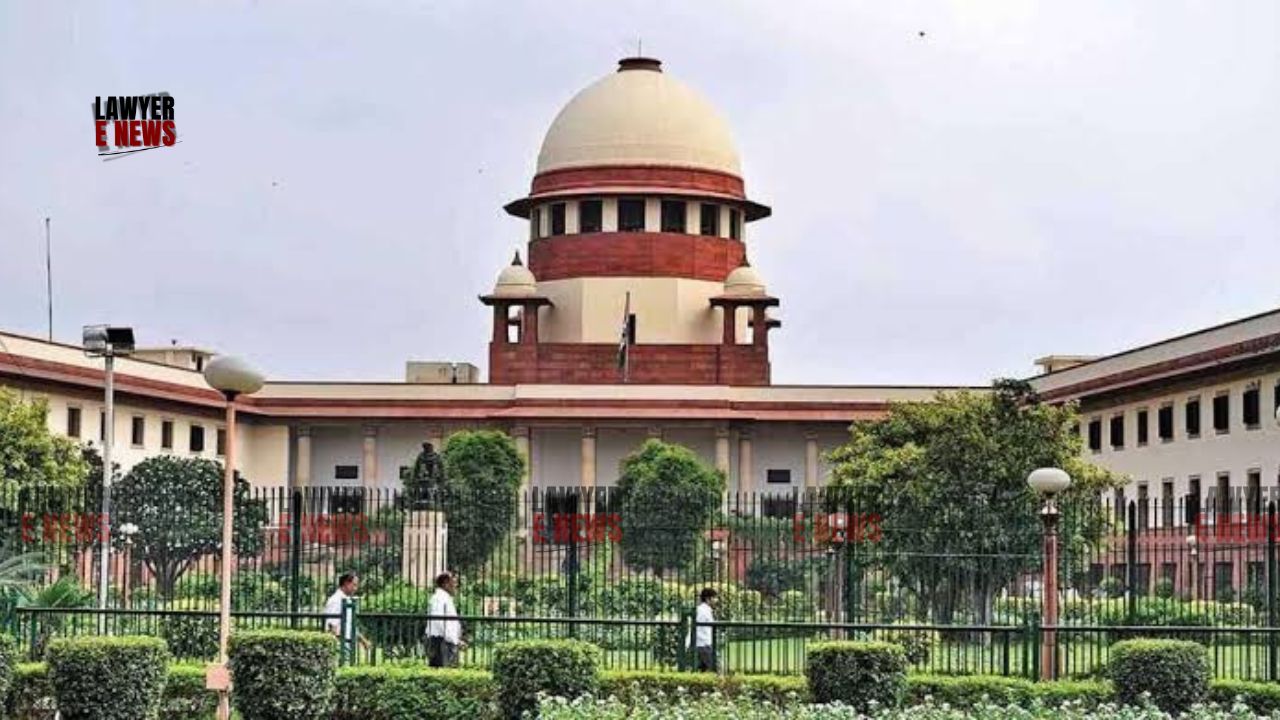
In a significant order Supreme Court of India set aside the Delhi High Court’s refusal to grant regular bail to the 21-year-old appellant, who was accused of multiple sexual offences under the IPC, including Sections 376 and 377. The Court observed that “allegations appear doubtful prima facie”, especially considering the nature of the relationship, the considerable age disparity between the parties, and prolonged pre-trial incarceration. The Bench comprising Justice B.V. Nagarathna and Justice Prashant Kumar Mishra held that continued custody was unwarranted and directed the release of the appellant on regular bail, subject to conditions to be imposed by the Sessions Court.
“Charges Not Yet Framed, Interim Bail Already Granted—No Justification to Keep Appellant in Further Custody”: Supreme Court Weighs Bail Factors Beyond Allegations
The Apex Court’s order focused not merely on the gravity of charges but on the broader context surrounding the complaint. While acknowledging the serious accusations under IPC Sections 376, 377, 384, 323, 328, and others, the Court emphasized that the “appellant has been in jail since 07.08.2024” and that “charges have not yet been framed.” The Court noted that interim bail had already been granted on 28.05.2025, and the complainant failed to appear before it despite service of notice. Observing that there had been “no appearance on behalf of the second respondent-complainant which is due to obvious reasons,” the Court held that there was no reason to prolong the appellant’s custody.
In Harash Kumar v. State Government of NCT Delhi & Anr., decided on 4th September 2025, the Supreme Court granted regular bail to a 21-year-old man accused of multiple serious offences including rape, unnatural sex, blackmail, and assault, under several provisions of the Indian Penal Code. The judgment marks an important reflection on how courts must evaluate consensuality, personal dynamics, and pre-trial custody in the context of bail, especially in cases where the factual narrative is disputed and charges are yet to be framed.
This appeal arose from the Delhi High Court’s judgment dated 30.04.2025 rejecting regular bail to the appellant. Setting aside that decision, the Supreme Court directed the appellant’s release upon his appearance before the concerned Sessions Court on 19.09.2025, subject to conditions to be imposed by that Court.
The case originated from FIR No. 406/2024, registered at Police Station Subzi Mandi, District North (Delhi), following allegations by a 42-year-old woman who accused the appellant, then 21 years old, of rape, assault, blackmail, and other offences. The charge sheet eventually invoked multiple sections of the IPC, including Sections 376 (rape), 377 (unnatural offences), 384 (extortion), 328 (causing hurt by poison), 509 (insulting modesty), and others.
The appellant had been in judicial custody from 7th August 2024 until the Supreme Court granted him interim bail on 28th May 2025. Despite multiple adjournments and service of notice, the complainant failed to appear before the Supreme Court during these proceedings. The counsel who initially appeared for her informed the Court that he no longer had a vakalatnama or instructions from the complainant.
The appellant, through his counsel, asserted that the allegations were fabricated and motivated by failed business transactions, and that the relationship was entirely consensual. The considerable age difference—the complainant being twice the appellant’s age—was cited to challenge the plausibility of the coercion narrative. He also emphasized the absence of any framed charges even after a year of custody.
The primary legal issue before the Court was whether pre-trial detention could be justified in a case where the charges were yet to be framed, the relationship was allegedly consensual, and the complainant was avoiding judicial scrutiny.
The Court observed:
“Having regard to the totality of the facts and circumstances of this case and the allegations against the appellant herein being frivolous and false, the appeal may be allowed by granting regular bail to the appellant herein.”
The Court did not venture into a conclusive adjudication on the factual matrix of the relationship but acknowledged that:
“The second respondent-complainant is about forty-two years of age, whereas the appellant is half her age being only twenty one years; the allegations as against the appellant herein are wholly frivolous.”
It further noted that there had been:
“no appearance on behalf of the second respondent-complainant which is due to obvious reasons.”
While the State, represented by the Additional Solicitor General, argued that the appellant had blackmailed the complainant and that the consensuality of the relationship was “debatable”, the Court held that these were matters for trial and could not justify continued custody.
The Supreme Court formally allowed the appeal and set aside the High Court’s decision, stating:
“We, therefore, allow this appeal and direct as under: The appellant shall appear before the concerned Sessions Court on 19.09.2025, who shall release him on regular bail subject to the terms and conditions to be imposed on the appellant herein.”
The Court took note of the prolonged incarceration, the grant of interim bail, the non-appearance of the complainant, and the absence of charge-framing as cumulative grounds justifying release. It did not express any opinion on the veracity of the allegations, leaving those questions open for trial. All pending applications were disposed of.
The Supreme Court’s ruling in Harash Kumar v. State NCT of Delhi reiterates that liberty cannot be sacrificed at the altar of untested allegations, especially in the pre-trial stage. The Court emphasized that where charges are not even framed and there is a discernible pattern of non-prosecution by the complainant, continued incarceration becomes excessive and unjustified.
By observing that “allegations appear doubtful prima facie” and that there was “no justification to keep appellant in further custody,” the Court applied a constitutional lens of proportionality and fairness to the question of bail. The case reflects how age disparity, nature of relationship, and prosecutorial conduct can become relevant considerations in evaluating bail applications in sensitive criminal matters.
Date of Decision: 4th September 2025