-
by sayum
28 August 2026 8:44 AM







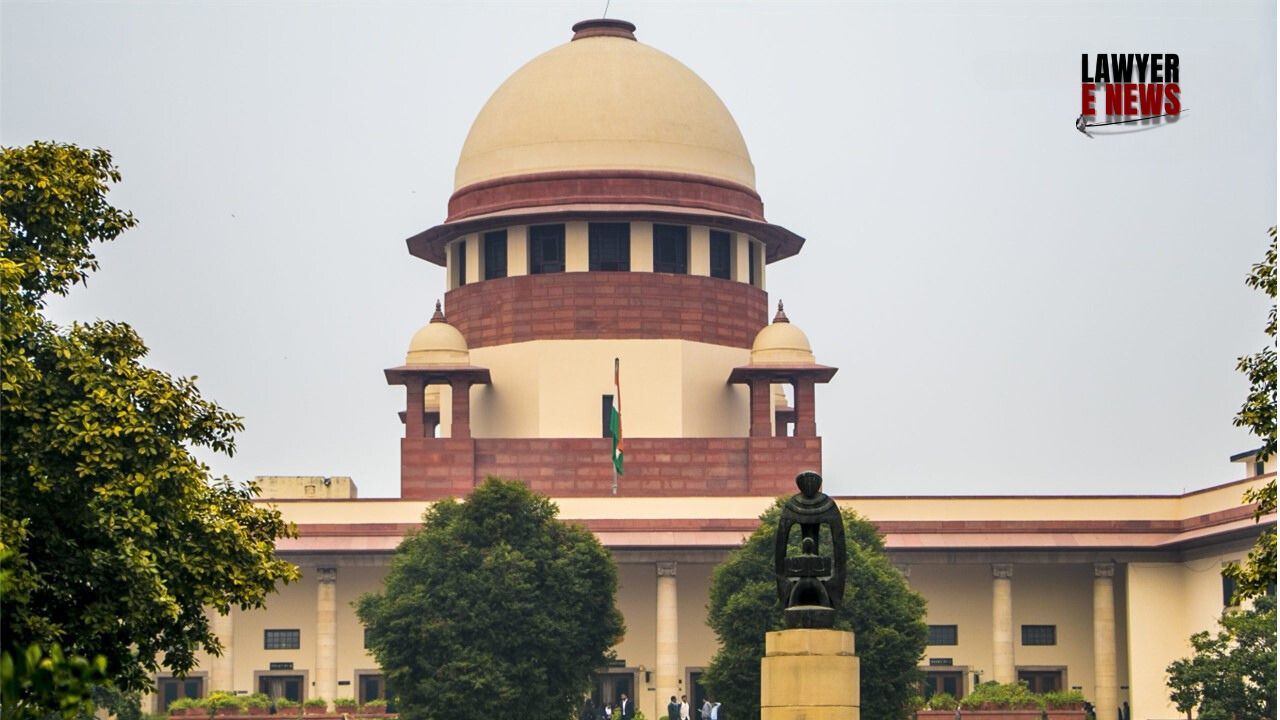
“Unless a Specific Act or Omission is Attributed to the Member, She Cannot Be Removed Merely Because the System Failed” – Supreme Court of India, exercising its Advisory Jurisdiction under Article 317(1) of the Constitution, delivered a significant ruling in In Re: Mepung Tadar Bage, Member, Arunachal Pradesh Public Service Commission. The Court declined to recommend the removal of Ms. Mepung Tadar Bage, observing that the charges against her failed to prove “misbehaviour” as required under the constitutional mandate.
The decision draws a vital constitutional line — that high constitutional office holders cannot be removed simply by association with institutional failure. The Court remarked that “removal must be based on concrete acts of misbehaviour, not inferred culpability.”
“Public Confidence Demands Individual Accountability, Not Vague Allegations” – Court Insists on Rigorous Proof Under Article 317
The proceedings stemmed from the infamous leakage of question papers for the Assistant Engineer (Civil) Mains Examination conducted by the Arunachal Pradesh Public Service Commission (APPSC) in August 2022. Amidst public outcry, resignations, and criminal probes, Ms. Mepung Tadar Bage — then a member of the APPSC — became the subject of a Presidential reference for removal.
The charges alleged that Ms. Bage had failed in her collective and individual duties to safeguard the sanctity of the Commission’s processes. However, the Court decisively ruled that:
“In absence of any specific act or omission relating to misbehaviour on the part of the Member, she cannot be deemed liable merely on grounds of collective responsibility.”
Inquiry Origin: Collapse of Examination Integrity and Chain Reaction
The factual roots of the case lie in a police complaint filed by a candidate who exposed the advance leakage of the question paper. The scandal eventually drew in the CBI, uncovered a racket involving the Deputy Controller of Examinations, and led to the cancellation of the entire recruitment process. Several members, including the Chairman, resigned. Ms. Bage remained the lone member when the President of India, acting on the Governor’s request, made a reference to the Supreme Court under Article 317(1) seeking her removal.
The six charges included failure to prevent the leak, negligence in updating guidelines, and silence on procedural lapses. But the apex court noted that the CBI’s chargesheet did not name Ms. Bage as an accused. Nor did the High-Level Inquiry Committee’s report identify her as personally responsible.
“Misbehaviour Under Article 317 Must Be Personal, Proven, and Grave — Not an Inference from Administrative Dysfunction”
The Supreme Court approached the reference with methodical precision. After reviewing all the charges, witness testimonies, and evidence, it found no link between Ms. Bage and the alleged paper leak or any other dereliction. The court observed:
“Not even a whisper in the report of the Inquiry Committee attributes a direct or even negligent act to the Respondent. Vague assertions about collective responsibility do not meet the constitutional standard.”
In dissecting the legal threshold of ‘misbehaviour’, the Court leaned on constitutional debates, legal dictionaries, and past precedents. It clarified that “misbehaviour” under Article 317(1) has a wide connotation, but it must reflect a conduct that erodes public trust or violates the dignity of the constitutional office.
“Every lapse is not misbehaviour. Misbehaviour implies a serious deviation from constitutional trust — it must be real, provable, and personal.”
“Standards Are High, But So Are the Safeguards” – On the Autonomy of Public Service Commissions
The Court gave particular emphasis to the constitutional role of Public Service Commissions and the need to shield them from political or public pressure. However, it balanced that autonomy with the demand for unimpeachable integrity:
“The standard of conduct for Commission Members must be irreproachable — but protection from arbitrary removal is equally vital to preserve the independence envisioned by the framers.”
Importantly, the Court warned against using collective failure as a blanket charge:
“Misbehaviour under Article 317 is not a collective punishment provision — it demands specific proof against the individual.”
“Proven Misconduct Cannot Be Replaced with Moral Guilt” – Court Defends Due Process Over Public Outrage
The Court invoked several precedents, including Reference under Article 317(1) of Constitution (1983, 1990, 2000, 2007, 2009) and Mehar Singh Saini In Re, to reaffirm that misbehaviour must be demonstrably established. It distinguished between “misbehaviour” and mere administrative lapses:
“Inaction, unless proven to be willful or grossly negligent, cannot by itself become grounds for constitutional removal.”
While acknowledging the gravity of the examination scam, the Court concluded that no act or omission by Ms. Bage had been shown to have contributed to it, directly or indirectly.
Supreme Court Declines Removal; Upholds Integrity of Constitutional Safeguards
In its concluding remarks, the Supreme Court refused to endorse the removal of Ms. Mepung Tadar Bage, stating:
“We do not find the charges proved. Therefore, the reference is answered in the negative.”
This decision stands as a significant constitutional affirmation that public outrage or institutional failure cannot displace the strict safeguards prescribed for constitutional office holders.
Date of Decision: 29 August 2025