
-
by sayum
26 August 2026 1:49 PM







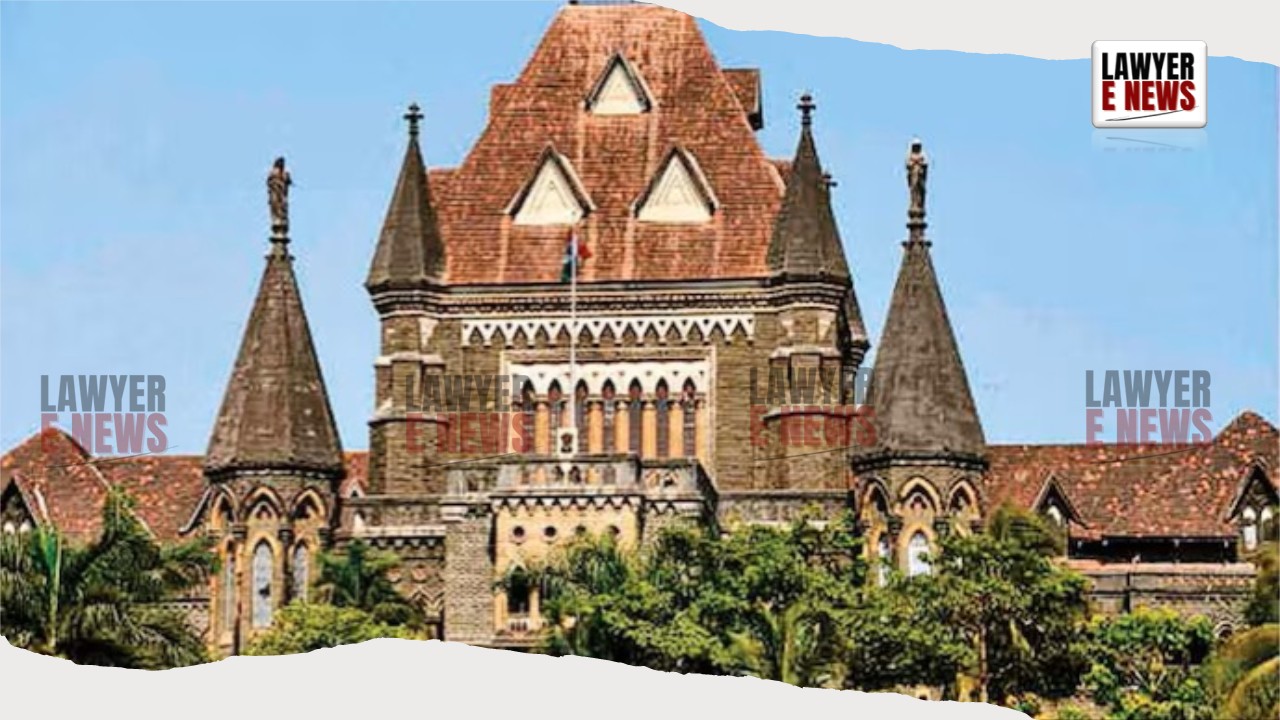
"No Court Can Create Posts or Grant Regularization in Absence of Sanctioned Vacancies" — Justice Rohit W. Joshi of the Bombay High Court holding that daily wage Safai Karmacharis of the Nagpur Municipal Corporation (NMC) cannot claim regularization of service solely on the basis of completing 240 days of work under Clause 4(C) of the Model Standing Orders (MSO), in the absence of sanctioned posts. The judgment decisively quashed the Industrial Court’s earlier rulings which had directed the NMC to regularize such workers and declared it guilty of unfair labour practices under the MRTU & PULP Act.
"Clause 4(C) Does Not Override Municipal Employment Laws" — High Court Discards Industrial Court’s Approach
The petitions arose from a series of Industrial Court judgments which had directed the NMC to regularize services of several Safai Karmacharis who had completed more than 240 days of work annually, by invoking Clause 4(C) of the Model Standing Orders framed under the Industrial Employment (Standing Orders) Act, 1946. The Industrial Court had also declared that NMC was indulging in unfair labour practice under Items 6 and 9 of Schedule IV of the Maharashtra Recognition of Trade Unions and Prevention of Unfair Labour Practices Act, 1971 (MRTU & PULP Act), for failing to grant permanency to these workers despite prolonged service.
The Bombay High Court, however, found this reasoning legally unsustainable. Citing binding Supreme Court precedents such as State of Karnataka v. Umadevi (2006) 4 SCC 1, MSRTC v. Casteribe Rajya Parivahan Karmachari Sanghatna (2009) 8 SCC 556, and CEO, ZP Thane v. Santosh Tiwari (2023) 1 SCC 456, the Court held that:
“No right to regularization accrues to a worker unless the employment is against a duly sanctioned post. Courts cannot mandate the creation of posts, and the authority to create posts lies squarely within the executive domain.”
Model Standing Orders Applicable, But No Right to Regularization Without Sanctioned Posts
While rejecting NMC’s contention that Model Standing Orders were not applicable due to its Certified Standing Orders, the High Court reaffirmed the applicability of MSO in view of NMC v. Ramchandra Sathe (1992(1) CLR 779). However, it made a critical distinction:
“Even if MSO is applicable, Clause 4(C) does not operate in a vacuum. Its application is necessarily subject to other laws, including those governing public employment, such as the Maharashtra Municipal Councils Act, 1965.”
Relying on Municipal Council, Tirora v. Tulsidas Bindhade, the Court emphasized that Municipal bodies are bound by Section 76 of the Municipal Councils Act, which requires that any appointment must be made against sanctioned posts created through proper procedure.
High Court Discards the ‘Perennial Nature of Work’ Argument Advanced by Workers
The petitioners (original complainants before the Industrial Court) had relied on several recent Supreme Court judgments including Jaggoo v. Union of India (2024), Shripal v. Nagar Nigam Ghaziabad (2025), and Dharamsingh v. State of U.P. (2025) to argue that when work is of a permanent and perennial nature, Courts can grant relief even without sanctioned posts.
But Justice Joshi clarified: “These newer judgments, while empathetic to workers’ hardships, do not reconcile with earlier binding decisions of the Supreme Court. In light of Pranay Sethi (2017), where conflicting judgments of equal strength exist, the earlier judgment prevails. Therefore, binding precedents such as Umadevi, Casteribe, and Tulsidas Bindhade must guide the adjudication.”
Creation of 4407 Supernumerary Posts by Government Cannot Be Re-Opened or Interfered With
Interestingly, during the pendency of these complaints, the State Government had already created 4407 supernumerary posts for regularization of such Safai Karmacharis. NMC had issued appointment orders regularizing the complainants against these posts, but excluded the benefit of their past services.
While complainants claimed this to be a continuation of unfair labour practices, the Court held otherwise: “Once the complainants have accepted appointment on supernumerary posts, with a clear clause waiving prior service benefits, they cannot now turn around and seek benefits of regularization under MSO Clause 4(C).”
The Court noted that such appointments, even if made after two decades of service, were still policy-based and legally valid administrative decisions, which could not be supplanted by judicial orders granting broader relief contrary to law.
“Court Cannot Direct Creation of Posts or Interfere in Policy-Based Regularization” — A Constitutional Reminder
Justice Joshi underscored the constitutional boundaries of judicial review:
“The High Court, in exercise of powers under Article 226, cannot direct the Government to create posts, nor can it interfere in the policy domain of regularization schemes. The right to be considered for regularization exists, not the right to be regularized.”
He cited Ilmo Devi (2021) 20 SCC 290, where the Supreme Court categorically held that no direction can be issued to create posts or formulate policies of regularization.
Favouritism Allegation Dismissed — Earlier Regularization Cases Had Sanctioned Posts
The complainants had also alleged arbitrariness and favouritism by the NMC, pointing to past cases where regularization was granted to similarly placed employees. However, the High Court found this analogy factually incorrect.
“In those earlier cases, such as ULP No. 377 of 2011, regularization was granted to employees who were employed against sanctioned posts and where the evidence demonstrated discriminatory denial of benefits. That is not the situation here.”
Industrial Court Orders Set Aside — MSO Clause 4(C) Cannot Be Invoked to Bypass Constitutional Requirements
The Bombay High Court conclusively held that in absence of sanctioned posts, no entitlement to regularization arises under Clause 4(C) of the Model Standing Orders. The Industrial Court’s direction to forward fresh proposals for regularization based on mere completion of 240 days’ service was found to be unsustainable.
All impugned judgments and orders of the Industrial Court — including those in Complaint ULP No.413 of 2018 and related matters — were quashed. The writ petitions filed by NMC were allowed, bringing relief to the municipal body and reaffirming long-standing constitutional jurisprudence on public employment.
“The right to claim permanency cannot be founded merely on longevity of service or the nature of work performed. It must be tethered to lawful appointment, adherence to statutory procedure, and existence of a sanctioned post.”
Date of Decision: 20 December 2025





