-
by sayum
29 August 2026 9:28 AM







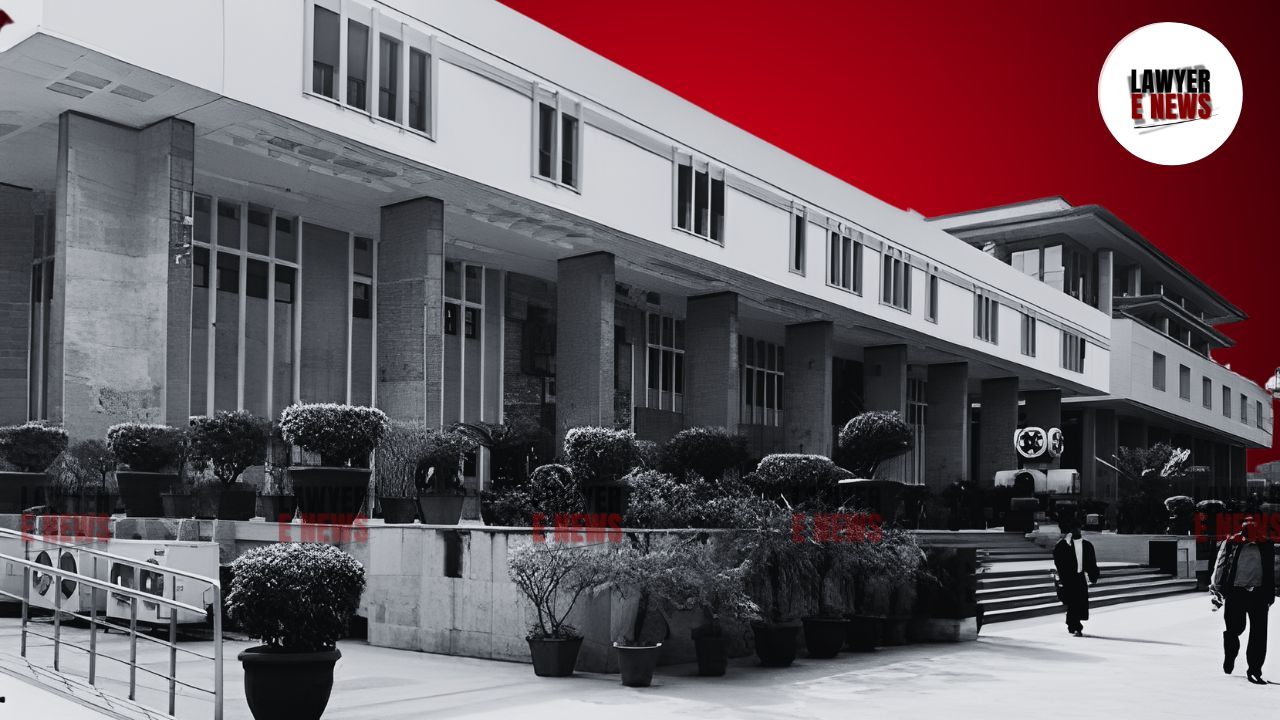
"Maintenance fixed in 2012 at ₹10,000/- cannot by any stretch of reasoning be said to remain adequate in 2025... A modest enhancement is warranted in view of the rise in cost of living and increase in respondent’s income." - Delhi High Court delivered a significant judgment in the domain of family law, particularly concerning the rights of legally wedded spouses to seek enhanced maintenance under Section 127 of the Code of Criminal Procedure, 1973. The Court set aside the Family Court’s decision that had refused enhancement and allowed the revision petition, increasing the monthly maintenance amount from ₹10,000 to ₹14,000, with effect from the date of filing of the revision.
The case also resulted in a key direction regarding the petitioner’s entitlement to Central Government Health Scheme (CGHS) benefits, with the High Court ordering restoration of her name to the respondent's CGHS card—a step reinforcing the legal entitlements flowing from marital status.
“Maintenance Fixed a Decade Ago Cannot Be Eternal”
The core legal issue before the Court revolved around the interpretation and application of Section 127 CrPC, which allows for alteration of maintenance orders under Section 125 upon proof of a "change in circumstances." The petitioner had approached the Family Court seeking enhancement of her 2012-awarded maintenance of ₹10,000/month to ₹30,000/month, citing increased living costs, deterioration of health due to arthritis and thyroid issues, loss of parental support following her father’s death, and a significant rise in the respondent’s income post-retirement.
The Family Court had rejected the application on 3rd September 2024, reasoning that since the respondent’s gross salary in 2012 was ₹45,455 and his present pension was ₹40,068, there was no substantial increase in income. This comparison, however, failed to consider that the original maintenance order had been based on net salary of ₹28,705, and not gross income.
Justice Swarana Kanta Sharma termed this reasoning “flawed”, holding:
“What has been completely overlooked is that in 2012, the net income of the respondent was taken to be only ₹28,705 and on the basis of this, maintenance of ₹10,000 was fixed. In contrast, the admitted pension of the respondent today is ₹40,068 per month… The comparison drawn by the Family Court was erroneous.”
33-Year-Long Separation and Years of Litigation
The parties were married in 1990, but the petitioner alleged that she was deserted by the respondent just two years later, in 1992. No children were born from the wedlock. Over the years, several rounds of litigation ensued, including failed attempts by the respondent to seek restitution of conjugal rights and divorce.
In 2012, the petitioner was awarded ₹10,000 per month under Section 125 CrPC, which was upheld by the Delhi High Court in 2013. With the passage of time, and the rising cost of living, she filed for enhancement under Section 127 CrPC in 2018. However, her application remained pending for several years and was eventually rejected in 2024.
Following that rejection, she approached the High Court in revision, which has now culminated in this detailed judgment in her favour.
“Retirement Does Not Mean Reduction in Maintenance”: Delhi High Court Rejects Respondent’s Defence Based on Superannuation
One of the central arguments advanced by the respondent was that his retirement in 2017 and advancing age (now 70) should insulate him from an enhanced maintenance liability. This was categorically rejected by the Court, which cited settled precedents and reaffirmed:
“The phrase 'change in circumstances' under Section 127 CrPC includes not only the financial condition of the husband, but also the financial, health, and support system-related changes in the wife’s life… Retirement alone does not bar enhancement.”
The Court referred to the decision in Sarita Bakshi v. State [(2022) SCC OnLine Del 1707], which had clarified that change in financial circumstances can arise from both sides—either due to increase in income of the paying spouse or increased needs or hardship of the receiving spouse.
Further, citing Rajnesh v. Neha [(2021) 2 SCC 324], the Court emphasized that maintenance must be a fair share reflective of present realities, and that the right to maintenance is a continuing obligation.
Denial of CGHS Benefits to Legally Wedded Wife Condemned; Respondent Directed to Restore Access
An equally important aspect of the judgment relates to the Central Government Health Scheme (CGHS) benefits. The petitioner had requested access to CGHS facilities under her husband's entitlement as a retired government employee. Despite being the legally wedded wife and a court-acknowledged recipient of maintenance, the respondent had removed her name from his CGHS card.
The High Court found this “deeply concerning”, stating:
“The entitlement to a CGHS/DGHS card is a valuable right flowing from the marital relationship and cannot be denied merely because the wife seeks treatment in a government hospital.”
It further noted that the CGHS card was not a matter of the husband’s generosity but a legal entitlement conferred by the State, and hence the respondent had no valid reason to deny it.
Consequently, the Court ordered the respondent to ensure the re-inclusion of the petitioner’s name on the CGHS card within two months, and to provide her with a copy to enable her to access medical treatment.
Bank Balance and Fixed Deposits Not Grounds to Deny Maintenance to Non-Earning Wife: Court Rejects Family Court’s Observations
In its 2024 order, the Family Court had placed reliance on the petitioner’s fixed deposit of ₹4 lakh and bank balance of ₹2,09,724 to conclude that she was not in financial distress. This was also rejected by the High Court, which observed that the money was part of her late father’s limited savings, and did not constitute regular income or financial independence.
The Court held that minimal savings cannot be equated with means for self-sustenance, particularly for a woman aged 60 suffering from chronic health issues. Maintenance, the Court emphasized, is about ensuring a life of dignity, not just bare survival.
Balancing Equities Between Senior Citizens: Court Opts for Modest Enhancement
While the petitioner had sought a threefold increase from ₹10,000 to ₹30,000 per month, the High Court, after taking note of both parties being senior citizens with limited means, ordered a modest enhancement to ₹14,000 per month.
“The petitioner is entitled to a fair amount which would enable her to maintain herself with dignity. A modest enhancement would strike a just balance between the competing equities of both parties.”
The arrears at the enhanced rate are to be paid within six weeks, and the respondent is also required to complete the CGHS card formalities within two months.In setting aside the Family Court’s rejection and modestly enhancing the maintenance amount, the Delhi High Court has reaffirmed the dynamic and evolving nature of maintenance law in India. The judgment emphasizes that maintenance orders cannot remain static, and must respond to inflation, changes in financial conditions, and deteriorating health—particularly when both spouses are in the twilight of their lives.
In a clear message, the Court observed: “Maintenance fixed a decade ago cannot be eternal... The Court must respond to change in circumstances with sensitivity and legality.”
This judgment not only reaffirms the principles laid down by the Supreme Court in Bhagwan Dutt, Rajnesh, and other landmark cases, but also adds to the jurisprudence by addressing emerging concerns such as access to CGHS benefits and the financial vulnerability of aging spouses.
Date of Decision: September 01, 2025