-
by sayum
08 August 2026 1:54 PM







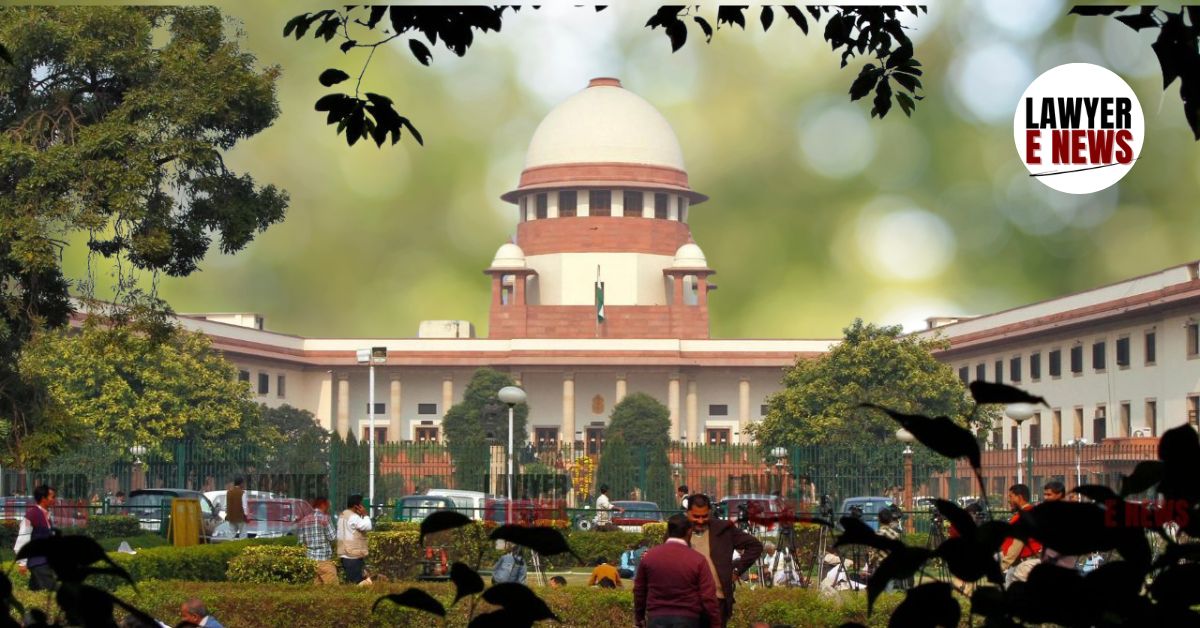
“Administration of Universities Must Not Collapse Over Power Tussle — Students Cannot Be Caught in Crossfire”: Supreme Court of India in The Chancellor, APJ Abdul Kalam Technological University v. State of Kerala & Ors. upheld the Kerala High Court’s interpretation that appointments of temporary Vice-Chancellors (VCs) under Section 13(7) of the APJ Abdul Kalam Technological University Act, 2015, cannot exceed six months and any notification stating “until further orders” is ultra vires.
A Bench comprising Justice J.B. Pardiwala and Justice R. Mahadevan emphasised that education and the welfare of students must not become casualties of legal and administrative battles between the Chancellor and the State Government, urging both to act cooperatively and expedite the process of appointing regular Vice-Chancellors.
“Time Limit Is Express and Binding – Interim VCs Cannot Continue Beyond Six Months”
The dispute originated from a notification dated 27.11.2024, issued by the Chancellor, appointing Dr. K. Sivaprasad as interim VC of the APJ Abdul Kalam Technological University, to hold office “until further orders”. The State of Kerala challenged this as violating the explicit six-month limit prescribed in Section 13(7) of the Act.
The Supreme Court, affirming both the Single Judge and the Division Bench of the Kerala High Court, held:
“In both the provisions [Section 13(7) of Technological University Act and Section 11(10) of Digital University Act], the time period prescribed is maximum six months. It is always open for the Chancellor to issue a fresh Notification… but the period in any case cannot exceed six months.” [Para 11]
The Court thus declared the Chancellor’s notifications invalid for having no statutory backing for open-ended tenure.
“Let Not Legal Technicalities Derail University Functioning” – Court Balances Legality with Educational Continuity
Although the Supreme Court upheld the High Court's declaration that the notifications were unsustainable, it appreciated the High Court’s judicious restraint in not disrupting ongoing administration:
“We appreciate the concern expressed by the High Court… It would have an adverse impact on the functioning of the Universities and the interest of the student community.” [Para 14]
Recognising the administrative vacuum in both the Technological and Digital Universities, the Court permitted the Chancellor to issue fresh notifications under the relevant Acts, strictly within the six-month window, to avoid disruption during the ongoing legal and administrative process.
“Chancellor and State Must Work in Harmony – Students Cannot Be Made to Suffer”
Striking a conciliatory tone, the Court urged both the Chancellor and the State of Kerala to set aside differences and work jointly to ensure regular appointments:
“Ultimately, it is not a matter of mere exercise of powers or who would exercise such powers. It has something to do with the education of the students of this country.” [Para 18]
“Why should the students suffer in this type of litigation?” [Para 18]
The Court was informed that although Search Committees were constituted, their validity was under challenge, and interim orders were pending before the High Court. In response, the Supreme Court refrained from issuing substantive directions on that issue but urged both sides to resolve the impasse collaboratively.
“Fresh Notifications Allowed, But Only Within Statutory Bounds” – No Endorsement of Earlier Violations
The Court made it explicitly clear that although the earlier notifications were invalid, the Chancellor retains the power to reappoint interim Vice-Chancellors through fresh notifications under Section 13(7) (Technological University) and Section 11(10) (Digital University):
“We clarify that it shall be open for the Chancellor to issue two fresh Notifications… for the appointment of Vice-Chancellors in both the Universities.” [Para 20]
However, such appointments must strictly adhere to:
The prescribed categories of appointees (i.e., a VC of another university, the Pro-VC of the university, or Secretary to Government, Higher Education Department),
And the maximum six-month duration.
“UGC Regulations Override Contradictory State Provisions” – High Court’s Clarification Stands
The Supreme Court implicitly endorsed the High Court’s clarification that the UGC Regulations on Minimum Qualifications, 2018, would govern qualifications and appointment process of Vice-Chancellors:
“UGC Regulation… will govern the method of appointment… notwithstanding any contrary provision in the 2015 Act.” [HC Direction (iv)]
This reiterates the primacy of UGC Regulations in appointments across Indian universities and reflects the Court's continued insistence on compliance with national educational standards.
Legal Clarity Delivered, But Pragmatism Prevails in Protecting Students’ Interests
In conclusion, the Supreme Court’s judgment affirms the rule of law by enforcing clear statutory limits on temporary appointments, but simultaneously ensures that academic governance continues without collapse.
While the Chancellor’s action was declared legally unsustainable, the Court permitted a corrective course through fresh, time-bound appointments, even as efforts toward regular Vice-Chancellor appointments continue.
This ruling reflects a measured blend of legal precision and judicial pragmatism in the field of educational governance.
Next Hearing: 13 August 2025
Date of Decision: 30 July 2025