-
by sayum
05 August 2026 3:07 PM







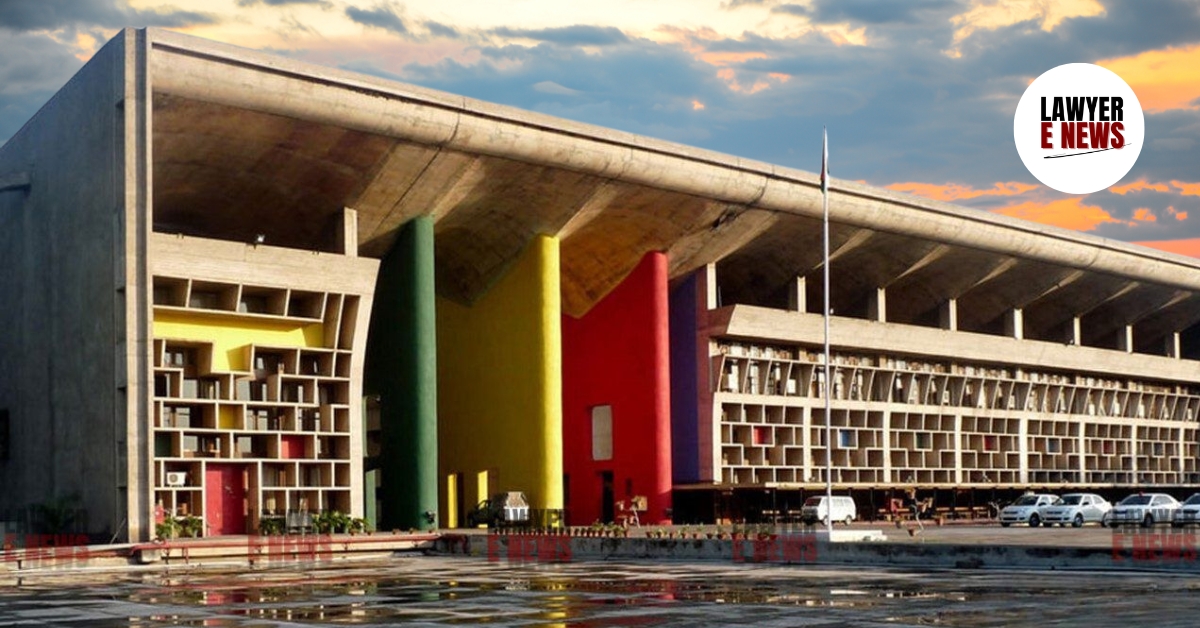
When the Reason for the Law Ceases, the Law Itself Ceases": Punjab and Haryana High Court delivered a significant ruling, highlighting the interplay of personal liberty, right to fair trial, and the diminishing justification for continued pre-trial incarceration. Justice Sumeet Goel allowed regular bail to Harjinder Singh, accused of grievous assault under Sections 307, 324, 323, 506, and 34 of the Indian Penal Code, 1860, citing that prolonged detention could severely cripple the right to defend and fair trial when prosecution evidence is nearly complete.
The case stems from a familial dispute turned violent, culminating in FIR No. 44 dated July 11, 2022, registered at Police Station Maloud, District Khanna, Ludhiana. The complainant, Tirath Singh, alleged that his uncle Harjinder Singh @ Raj, along with his son Angrej Singh, viciously assaulted his father Nachhattar Singh using a 'rambi' (artisan tool), resulting in grievous injuries, including exposed intestines and injuries to the jaw and underarm. The trigger for the attack was allegedly derogatory remarks made against the complainant’s mother by Harjinder Singh, which escalated into a brutal attack witnessed by Tirath Singh himself.
Harjinder Singh was arrested on July 12, 2022, and remained in custody for over three years without conclusion of trial. He sought bail under Section 483 of the newly enacted Bharatiya Nagarik Suraksha Sanhita, 2023 (BNSS), after an earlier bail petition was dismissed as withdrawn in April 2024.
The petitioner pleaded prolonged incarceration, absence of criminal antecedents, advanced age (69 years), and the near conclusion of prosecution evidence—with only the government doctor’s testimony remaining. The defense contended that continued detention without imminent trial completion unjustly hindered the petitioner’s fundamental right to prepare his defense.
Conversely, the State strongly opposed the bail plea, highlighting the grievousness of the offence, past dismissal of bail, and absence of changed circumstances, relying on the gravity of allegations and the impact on public order.
Justice Sumeet Goel engaged in a meticulous examination of the balance between societal interests and individual liberty. Drawing from constitutional jurisprudence and binding precedents, the Court observed:
“As the venerable legal maxim goes ‘Cessante ratione legis, cessat ipsa lex’—when the reason for the law ceases, the law itself ceases—duly encapsulates within its ambit, the factual milieu of the instant case.”
The Court acknowledged that pre-trial detention aims to prevent interference with justice and secure trial presence. However, with prosecution evidence nearly complete and prolonged custody exceeding three years, these rationales stood substantially eroded.
Reaffirming the constitutional guarantee of a fair trial, the Court stated:
“A criminal trial is not a one-sided affair; it embodies the adversarial system where both the prosecution and the defense must be afforded an equal, if not greater, opportunity to substantiate their respective cases.”
Referring to the Supreme Court’s precedent in Gudikanti Narasimhulu v. Public Prosecutor (1978 AIR SC 429), the Court emphasized:
“It makes sense to assume that a man on bail has a better chance to prepare or present his case than one remanded in custody. And if public justice is to be promoted, mechanical detention should be demoted.”
Addressing the maintainability of a successive bail petition, Justice Goel referenced the High Court’s own judgment in Rafiq Khan v. State of Haryana, 2024 (2) RCR (Criminal) 819, observing that:
“Second/successive regular bail petition(s) filed is maintainable in law and hence such petition ought not to be rejected solely on the ground of maintainability thereof.”
The Court found substantial change in circumstances, including lengthy custody and near conclusion of prosecution evidence, justifying reconsideration of bail.
Summing up, the Court held: “Suffice to say, further detention of the petitioner as an under-trial is not warranted in the facts and circumstances of the case.”
Granting bail, Justice Goel imposed standard conditions, including non-tampering of evidence, appearance before trial courts, abstention from further offences, and prohibition from changing contact details without permission.
The ruling underscores the High Court’s commitment to upholding fundamental rights of the accused while balancing public interest. By emphasizing fair trial rights, the Court ensured that pre-trial incarceration is not extended into unjust punishment, especially in the twilight phase of prosecution evidence.
Date of Decision: 16.07.2025