-
by sayum
28 August 2026 10:07 AM







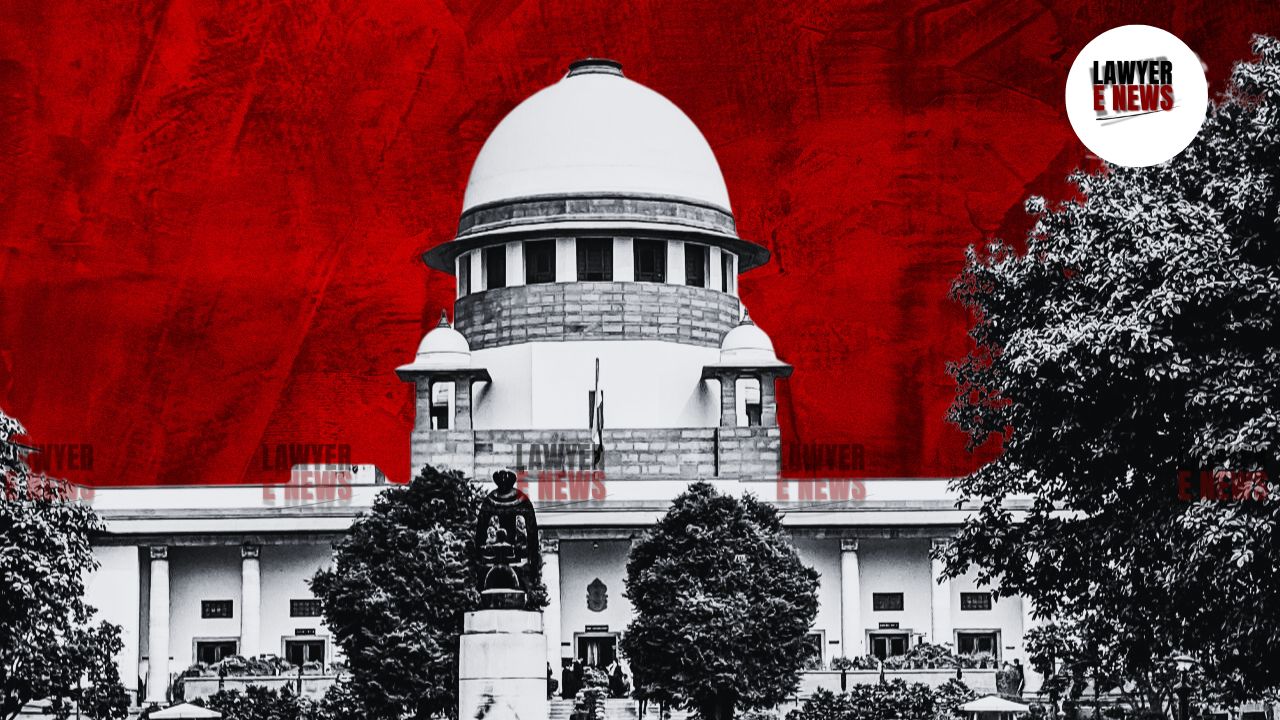
“Justice must not only be done, but must also be seen to be done… even those who investigate must also be investigated to preserve public trust in the system”, Supreme Court of India affirming that investigating officers of the CBI are not immune from prosecution when accused of serious cognizable offences. The Court upheld the Delhi High Court’s 2006 direction for registration of FIRs against senior CBI officers Vinod Kumar Pandey and Neeraj Kumar, sending a powerful message on the accountability of law enforcement officers themselves.
The Court declared, “It is high time that sometimes those who investigate must also be investigated to keep alive the faith of the public at large in the system.” With this, the Supreme Court rejected arguments seeking protection under official duty and refused to condone alleged misuse of public power behind the veil of procedural technicalities.
“Registration of FIR is Mandatory When Allegations Disclose Cognizable Offence – No Shield of Internal Inquiry Can Bar Constitutional Oversight”
The judgment opens with the Supreme Court condoning the delay in filing the appeal, observing that the appellants had pursued Letters Patent Appeals in the Delhi High Court which were eventually dismissed on the ground of non-maintainability. However, the Court chose to hear the matter on merits and refused to restrict its inquiry to procedural grounds.
The dispute traces its origin to two writ petitions under Article 226 of the Constitution filed in 2001 by Vijay Aggarwal and Sheesh Ram Saini, who alleged grave misconduct, abuse of authority, and fabrication of records by CBI officers Vinod Kumar Pandey (then Inspector) and Neeraj Kumar (then Joint Director). The Delhi High Court, after extensive examination of the allegations, directed registration of FIRs based on the complaints and ordered an independent investigation by the Special Cell of Delhi Police.
The appellants contended that the High Court had exceeded its jurisdiction by:
Directing FIR registration without first exhausting remedies before a Magistrate;
Overriding the CBI's own preliminary inquiry report which had found no cognizable offence;
Holding that prima facie offences were made out, leaving no discretion to the Investigating Officer;
Proceeding without sanction under Section 197 CrPC, as the actions were purportedly committed in official capacity.
The Supreme Court, however, dismissed these claims in categorical terms. Referring to the landmark ruling in Lalita Kumari v. Government of U.P., the Court reiterated, “Registration of FIR is mandatory under Section 154 Cr.P.C. if the information discloses commission of a cognizable offence. No preliminary inquiry before FIR is permissible in such a situation.”
It further stated that the internal inquiry conducted by the Joint Director of CBI could not be treated as conclusive or binding, and did not preclude the High Court from forming its own prima facie opinion based on material on record.
“Public Servants Cannot Abuse Power and Hide Behind Uniform: Accountability Must Extend to Every Office”
The Supreme Court laid bare the specific factual allegations that justified investigation. In Sheesh Ram Saini’s complaint, it was alleged that CBI officers fabricated a seizure memo post facto, having seized documents on April 26, 2000 but creating the memo only on April 27 — a clear violation of the CBI Crime Manual and indicative of criminal forgery and tampering.
Similarly, Vijay Aggarwal accused the officers of summoning him in violation of a bail order, threatening him with abuse, and attempting to coerce withdrawal of his brother’s complaint against Neeraj Kumar. The Court termed this conduct as “grave in nature” and “prima facie disclosing cognizable offences.”
It rejected the notion that such conduct, even if during official work, could be shielded under Section 197 CrPC, observing, “CBI officers, being public servants, cannot claim immunity if they knowingly prepare false or incorrect records during the course of seizure or abuse their official position.”
The Court firmly held that protection under CrPC provisions does not extend to actions rooted in mala fide and personal vengeance disguised as official acts. The attempt to invoke Section 140 of the Delhi Police Act and the bar of limitation were also dismissed, with the Court highlighting the exceptional nature of the misconduct and the failure of internal mechanisms to bring accountability.
“When Police Refuse to Police the Police, Courts Must Intervene: High Court’s Discretion Rightly Exercised”
The Court also addressed the issue of whether the High Court’s intervention under Article 226 was appropriate, especially when the complainants had not first approached the Magistrate. Relying on Ramesh Kumari v. State (NCT of Delhi) and Anurag Bhatnagar v. State (NCT of Delhi), the Court held:
“Alternative remedy is not an absolute bar for invoking the extraordinary jurisdiction or the inherent jurisdiction of the High Court under Article 226 of the Constitution or Section 482 Cr.P.C.”
It emphasized that in situations where the local police refuse to act due to institutional hesitation or potential conflict of interest, constitutional courts are justified in stepping in to safeguard the rights of citizens and the integrity of justice.
“Delay Cannot Be a Shield Against Investigation in Serious Allegations Against Power-Wielding Officers”
Despite the delay of more than a decade in challenging the High Court’s order, the Supreme Court refused to use this as a ground for scuttling the probe. It held that the delay was not willful and was caused due to the appellants pursuing LPAs in good faith.
The Court underscored the gravity of the allegations, observing:
“It would be a dichotomy of justice if such an offence is allowed to go uninvestigated particularly when there is involvement of the officers on deputation to CBI.”
Reiterating the timeless legal adage, the Bench said, “Justice must not only be done, but must also be seen to be done.”
The Supreme Court modified the High Court’s order only to the extent that the investigation should not be conducted by the Special Cell (meant for terrorism cases), but rather by the Delhi Police, under an officer not below the rank of Assistant Commissioner of Police.
It also permitted the preliminary inquiry report by the CBI to be looked into during investigation, but not treated as conclusive or binding.
The Court directed that the investigation be concluded within three months and that the appellants must join the investigation and cooperate fully, adding that no coercive steps, including arrest, shall be taken unless custodial interrogation is deemed necessary.
The appeals were partly allowed, and the judgment of the Delhi High Court dated 26.06.2006 was modified but affirmed in principle, recognizing the High Court’s discretion and factual analysis as sound.
“Accountability Is the Cornerstone of Rule of Law — Even the Most Powerful Must Face Scrutiny”
This judgment will be remembered not just for its outcome, but for the principles it reaffirms — that power cannot become a cloak for impunity, that the rule of law applies equally to investigators and the investigated, and that constitutional courts remain the last bastion when the executive falters in holding its own accountable.
As the Court poignantly concluded: “It is high time that sometimes those who investigate must also be investigated to keep alive the faith of the public at large in the system.”
Date of Decision: September 10, 2025