-
by sayum
27 August 2026 7:40 AM







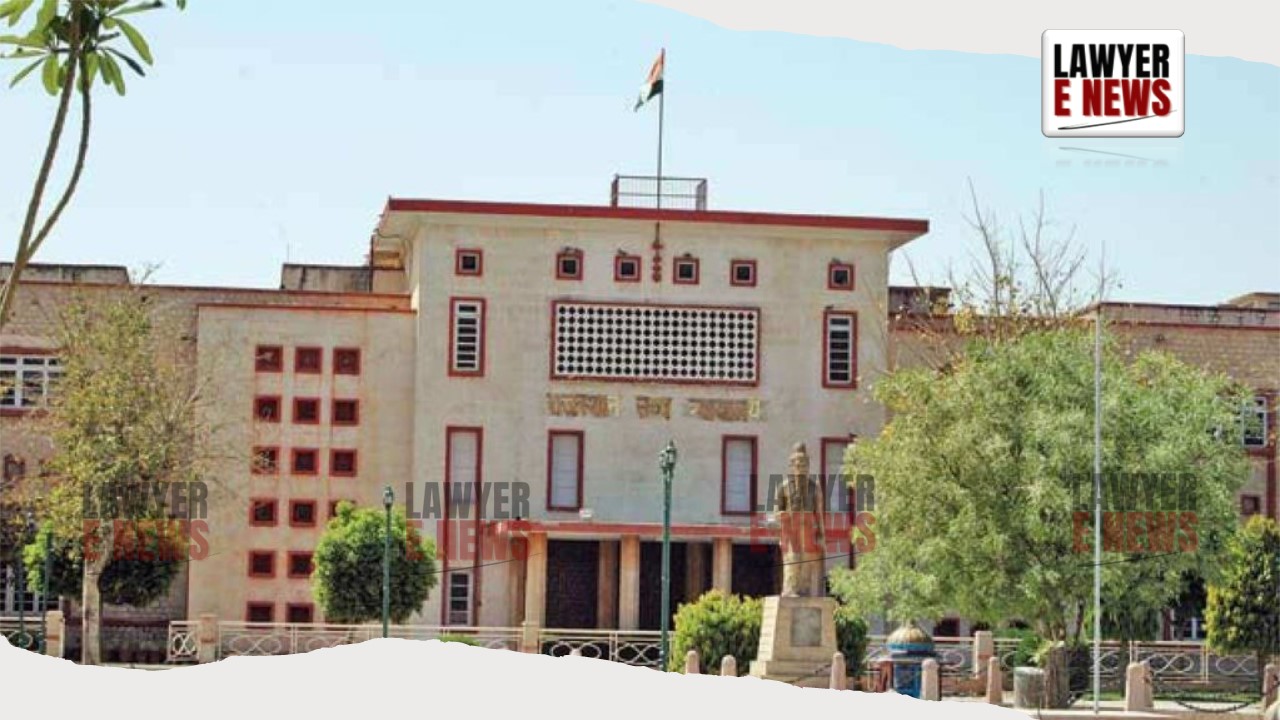
“The Functioning and Working of the Court Cannot Be Allowed to Stop, Particularly for Matters Involving Personal Liberty of Persons Languishing in Jails” – Rajasthan High Court
Rajasthan High Court (Jaipur Bench) came down heavily on the ongoing lawyers' strike in the state, observing that “boycott of courts infringes the litigants’ right to speedy justice” as guaranteed under Article 21 of the Constitution of India. In a strongly-worded judgment delivered by Justice Anoop Kumar Dhand in Rajesh Kushwah v. State of Rajasthan, the Court reminded the Bar that lawyers cannot hold justice to ransom in the name of protest and reiterated the binding nature of the Supreme Court’s precedent in Ex-Capt. Harish Uppal v. Union of India (2003) 2 SCC 45.
The observations came while hearing a suspension of sentence application, where the petitioner had continued to remain incarcerated despite a release order due to his inability to deposit the fine amount. The Court, while addressing the personal liberty issue, condemned the broader strike initiated by lawyers against the High Court’s administrative decision to declare two Saturdays a month as working days.
“Lawyers Have No Right to Strike or Boycott Courts – Even Token Strikes Not Permissible”
The judgment opened by directly referring to the strike action taken by three Bar Associations—two at the Principal Seat in Jodhpur and one at the Jaipur Bench—who had passed resolutions to abstain from work in protest against the Full Court's administrative resolution for working Saturdays.
Justice Dhand emphasized that the law is already settled by the Supreme Court, which in Ex-Capt. Harish Uppal had categorically held:
“Lawyers have no right to go on strike; or give a call for boycott; or even a token strike. The functioning and working of the Court cannot be allowed to stop, particularly for matters involving personal liberty of persons languished in the Jails.”
The Court noted that despite clear directives and a notification in the cause list dated 23.01.2026 clarifying that lawyers’ presence on working Saturdays is voluntary and not mandatory, advocates had still chosen to boycott the courts—disrupting critical hearings involving bail and liberty.
Impact on Justice System: Court Cannot Be Paralyzed by Protests
The Court expressed its concern that in a democracy, the right to dissent and protest is protected under Article 19(1)(b), but such right is not absolute and must be exercised without hampering justice delivery.
“The right to protest must be balanced with the rights of other citizens such as the right to life and personal liberty,” the Court observed, adding that courts cannot be held hostage due to protests by legal professionals.
The Court referred to the Advocates' Amendment Bill, 2025, which prohibits lawyers from abstaining from court work, stating that such legislation is in line with constitutional guarntees under Article 21.
“Boycott of courts directly violates the rights of the litigants to speedy justice,” the Court said, adding that under no circumstances can personal liberty cases be delayed due to lawyer strikes.
The Court advised that the path forward in a democratic system must be through “debates and dialogues”, not strikes. It observed that the grievances of the Bar had already been acknowledged by the formation of a committee on 06.01.2026 to examine the issue, and the strike was unjustified while such dialogue was pending.
A Call for Responsibility and Reform
Justice Dhand made it clear that lawyers play a vital role in the justice system and must lead by example in upholding constitutional values. While they are entitled to express dissent, such expression must not impede access to justice—especially for the poor and incarcerated who depend solely on the court for their liberty.
“Going on strike and remaining absent from Court work is not a solution. Every challenge has a solution. Debates and dialogues can lead to a better understanding,” the Court noted in its appeal for responsible conduct.
Finally, the Court directed that a copy of the order be sent to the Bar Council of India and the Bar Council of Rajasthan to consider appropriate steps in this regard, signalling institutional accountability for strikes that paralyze justice.
In an era where pendency and access to justice are already critical challenges, the Rajasthan High Court’s decision serves as a firm judicial reminder that no right—be it protest or association—can override the fundamental right to liberty. The boycott of courts, especially in personal liberty matters, is not just professional indiscipline, but a direct constitutional violation.
Justice Dhand’s order may not be treated as a precedent for other cases, but his warnings about the consequences of judicial paralysis amid strikes echo far beyond the walls of the courtroom.
Date of Decision: 24 January 2026