-
by sayum
29 August 2026 9:28 AM







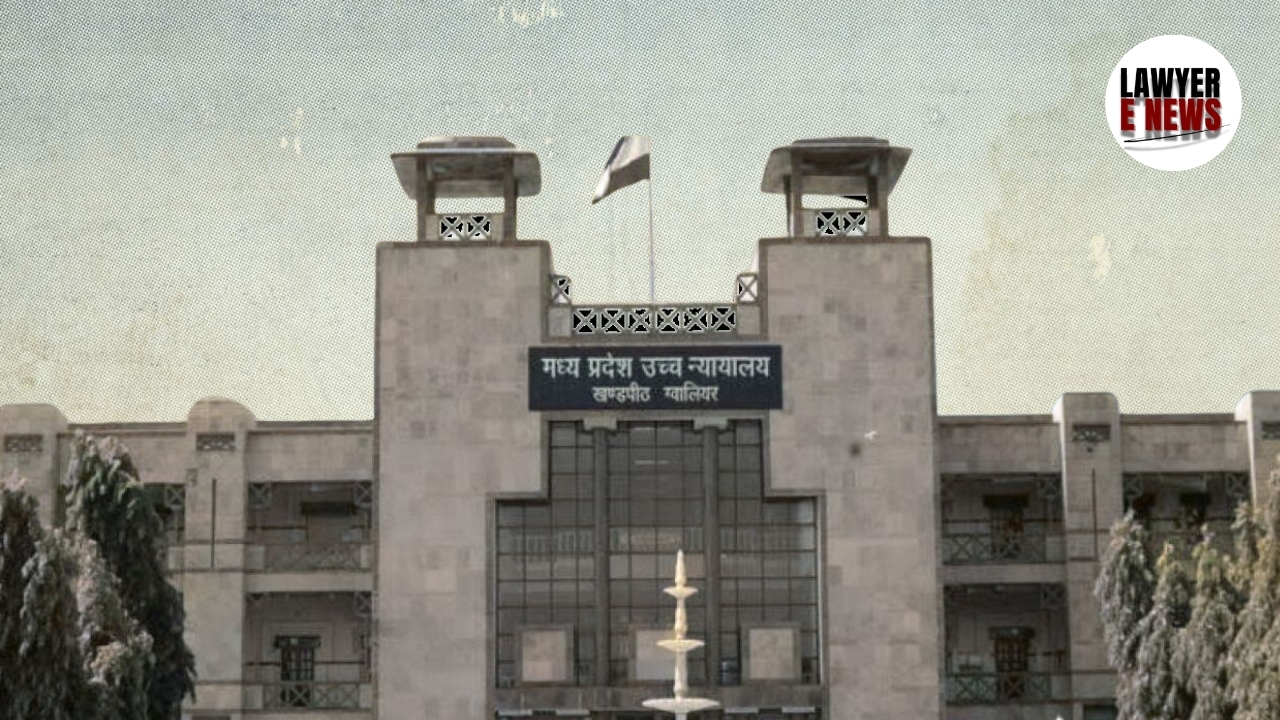
Madhya Pradesh High Court (Justice Jai Kumar Pillai) delivered a reportable judgment in Deceased Jhitra S/o Hemla (through deceased Nanka S/o Jhitra) through LRs Bhulki and Others v. Kailash and Others. The Court dismissed the second appeal in limine, upholding the concurrent findings of the trial and first appellate courts that declared the plaintiff Kailash, nephew of the deceased Tulsabai and Gamna, as the rightful successor to their agricultural lands under the Indian Succession Act, 1925.
The Court made it clear that “no exemption under Section 3 of the Indian Succession Act, 1925 has been proved to exclude the Bhil tribe,” and therefore the statutory rules of succession under Sections 24, 28, and 32 governed the devolution of the estate.
“Adoption Not Proved – Succession Decided on Nearest Kindred”
The appellants argued that the plaintiff’s claim of adoption was unsupported by documentary evidence and could not be accepted under the Hindu Adoption and Maintenance Act, 1956, especially since Section 2(2) excludes its application to aboriginal tribes. The High Court noted that both the trial court and the first appellate court had in fact rejected the plea of adoption. Instead, they had declared the plaintiff entitled on the independent ground that he was the closest surviving relative, namely the nephew, of the deceased couple.
Quoting the settled law, the Court observed: “If no Hindu Law is applicable on parties as per Section 2(2) of the Adoption Act, 1956, then the next possibility is that of customs, and if custom is not proved, succession shall be decided on principles of natural justice, equity and good conscience.” Relying on Ram Charan & Ors. v. Sukhram & Ors. (Civil Appeal No. 9537/2025), the Court affirmed that the plaintiff’s position as nearest kindred was sufficient to uphold his title.
“Mutation Entries and Compensation Do Not Confer Ownership”
The appellants contended that the land belonged to their ancestor Hemla Meda, who allegedly gave it to Tulsabai as a gift during marriage, and that subsequent mutation entries and possession entitled them to compensation when the land was acquired for the Mahi Canal Project.
The High Court rejected this plea, holding that the registered sale deed dated 14 April 1966 in favour of Gamna remained valid and unchallenged. “Mutation entries are only for fiscal purposes and do not create or extinguish title,” the Court reiterated, declaring the mutation in favour of the defendants and the subsequent sale to the State as null and void. Accordingly, compensation from acquisition proceedings was declared payable only to the plaintiff, the lawful successor.
“Customary Law Plea Fails Without Notification”
The appellants attempted to rely on Madhu Kishwar v. State of Bihar (1996) 5 SCC 125 to argue that Scheduled Tribes like the Bhils are governed by custom and not by the Indian Succession Act. The Court distinguished the precedent, pointing out that in Madhu Kishwar, there was an express State notification exempting tribes under Section 3 of the Succession Act. In the present case, no such notification by the State of Madhya Pradesh was produced.
“It is crystal clear that in absence of an exemption under Section 3 of the Act, the Indian Succession Act applies in full force,” Justice Pillai held.
“No Substantial Question of Law – Appeal Dismissed”
The High Court emphasized that under Section 100 CPC, a second appeal lies only when a substantial question of law is made out. In this case, the findings of both lower courts were concurrent, based on evidence, and not perverse. Questions relating to adoption, mutation, and compensation did not meet the threshold.
“Considering the totality of the facts and circumstances, this Court is of considered opinion that no substantial question of law arises in the present appeal for determination,” the judgment concluded.
The Madhya Pradesh High Court has reaffirmed that Scheduled Tribes, unless expressly exempted by State notification under Section 3 of the Indian Succession Act, 1925, are governed by its provisions in matters of intestate succession. The plea of adoption failed for want of proof, but the plaintiff succeeded as nearest kindred. The appeal was dismissed, confirming the plaintiff’s ownership, invalidating defendants’ mutation and sale, and directing compensation in his favour.
Date of Decision: 29 August 2025