
-
by sayum
29 August 2026 3:15 PM







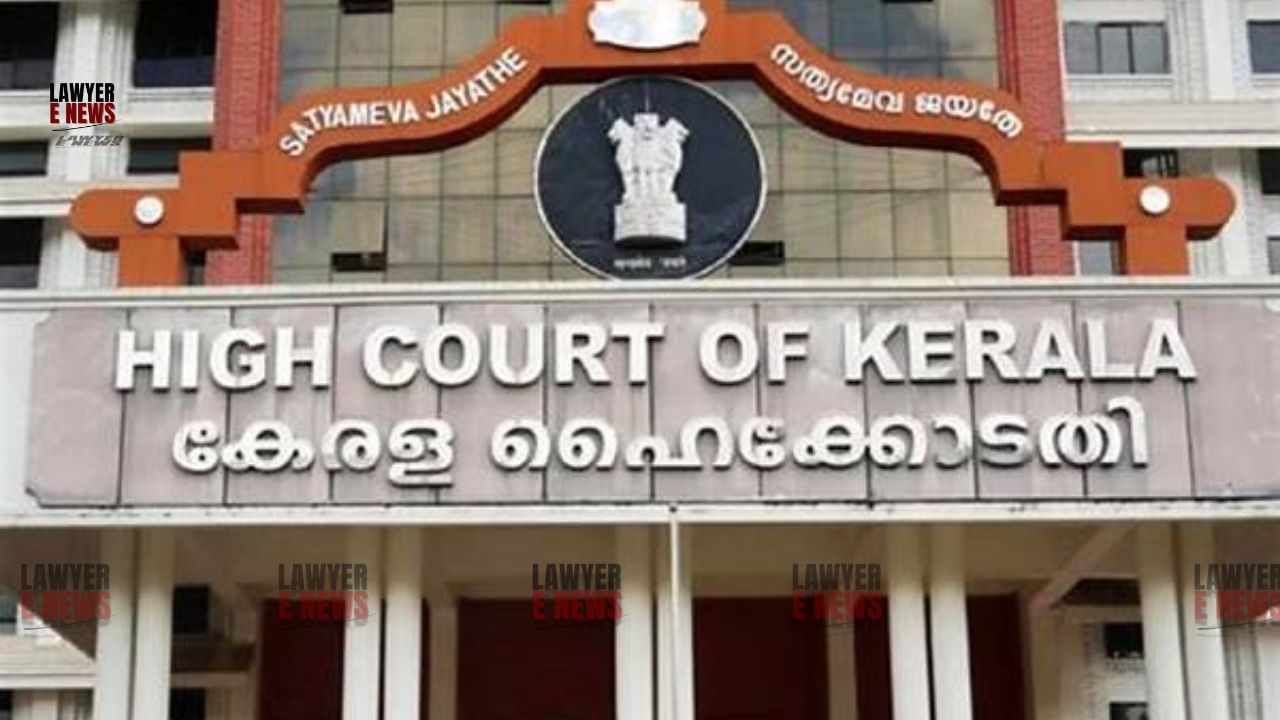
“Where Consideration Flows Entirely from One Spouse, Mere Inclusion of the Other’s Name in Sale Deed Does Not Confer Joint Ownership”, In a significant matrimonial ruling Kerala High Court comprising Justice Sathish Ninan and Justice P. Krishna Kumar set aside the Family Court’s refusal to acknowledge the husband’s exclusive ownership over a jointly registered property and at the same time upheld the award of ₹5,00,000 as damages granted to the wife for mental agony caused by false and repeated allegations of infidelity.
The High Court, after analysing the evidence, declared the husband as the absolute owner of 85 cents of land, holding that the entire sale consideration had proceeded from him, and that the wife’s claim of financial contribution was unsupported by credible proof. At the same time, the Court found that the wife had been subjected to “persistent and humiliating character allegations” and that the Family Court was justified in awarding damages.
The parties were married on 14 June 2000. While the husband was employed abroad, he claimed that he purchased 85 cents of property through his father and included the wife’s name on the Ext.B1 Sale Deed dated 23.01.2004 purely due to cordial marital relations at the time. He asserted that the entire consideration came from his own resources, including a bank withdrawal, a bank loan taken by his father, and a chitty operated in the wife's name but funded by him.
The wife, in her defence, claimed that she contributed ₹2 lakhs towards the purchase – ₹1 lakh from the sale of trees on her father’s property and another ₹1 lakh borrowed from a friend (PW4). However, the Family Court had earlier rejected the husband’s claim and declared joint ownership, while granting the wife ₹5 lakhs in damages for mental suffering caused by the husband’s “unfounded and scandalous accusations” of extramarital affairs.
Justice Ninan, writing for the Bench, found the documentary and oral evidence overwhelmingly in favour of the husband’s claim. The Court observed that: “Ext.B4 Bank passbook reveals the withdrawal of an amount of ₹4,00,000 on 21.01.2004. Ext.B3 evidences that the father had availed a loan of ₹1,00,000 from a Bank on 20.01.2004.”
The husband also explained that the balance was arranged through a chitty, which, although run in the wife's name, was funded by him. During cross-examination, the wife admitted that it was the husband who paid the chitty installments. As recorded in the judgment:
“The wife admitted the existence of a chitty in her name with KSFE. As PW1, she admitted that the payment of its installments was by the husband.”
On the other hand, the wife failed to substantiate her alleged contribution. The Court noted: “Though the claim is that the trees standing in her father's property were sold, the father is not examined. The wife as PW1 was not able to depose anything relating to the alleged sale.”
Further, regarding the alleged loan of ₹1 lakh from a friend (PW4), the Court observed: “A reading of the deposition of PW4 in its entirety does not inspire the confidence to find that she had obtained the amount of ₹1,00,000/- from her father and had lent that amount to PW1.”
Holding that the Family Court had erred in disregarding clear financial records, the High Court ruled: “The evidence as above sufficiently indicate that the sale consideration proceeded not from the wife but from the husband. The above materials have been overlooked by the Family Court. The finding of the Family Court is liable to be set aside and we do so.”
Accordingly, the Court declared the husband to be the absolute owner of the property covered under Ext.B1 Sale Deed.
Court’s Analysis on Mental Agony and Defamation
On the wife’s claim for damages due to defamation and mental cruelty, the Court affirmed that the allegations made by the husband were not only unsubstantiated but also excessive and damaging to the wife's dignity.
The Court recorded: “A reading of the objections filed by him to the original petition categorically reveals that he had been making allegations against her of having illicit relationship with a doctor in the hospital where she had worked, with the students who studied at a computer centre run by her, as against her co-workers when she stood as a candidate in the Panchayat election, and even as against a tailor who took measurement for her blouse.”
Justice Ninan observed that these were not mere suspicions but persistent character attacks which had concrete consequences:
“The wife had to quit the job and had to withdraw herself from the public. She claimed damages for defamation and mental suffering.”
The Court found no merit in the husband’s justification that these were based on “information from relatives and friends.” It held:
“The husband could not adduce any evidence to substantiate his allegations. The Family Court while granting a decree for damages of ₹5,00,000 had due consideration to the above aspects. No materials could be placed before us to overturn the same.”
Accordingly, the appeal filed by the husband challenging the damages was dismissed, and the Family Court’s award of ₹5,00,000 was affirmed.
The Kerala High Court's ruling underscores two vital legal principles: first, that registered joint ownership of property does not override proof of exclusive financial contribution, and second, that false and humiliating allegations within a marriage are actionable under law, especially where they result in loss of livelihood and emotional trauma.
Declaring the husband as the exclusive owner of the disputed property, the Court concluded: “The evidence as above sufficiently indicate that the sale consideration proceeded not from the wife but from the husband.”
Simultaneously, upholding the damages for mental agony, the Court affirmed: “Evidently, the claim of the wife that she had suffered mental trauma on the allegations of the husband, was justified. The decree warrants no interference.”
Ultimately, Mat.Appeal No.674 of 2018 was allowed, granting the husband exclusive ownership over the property, while Mat.Appeal No.675 of 2018 was dismissed, with the wife retaining her ₹5 lakh award for mental agony.
Date of Decision: 18 August 2025