-
by sayum
29 August 2026 3:15 PM







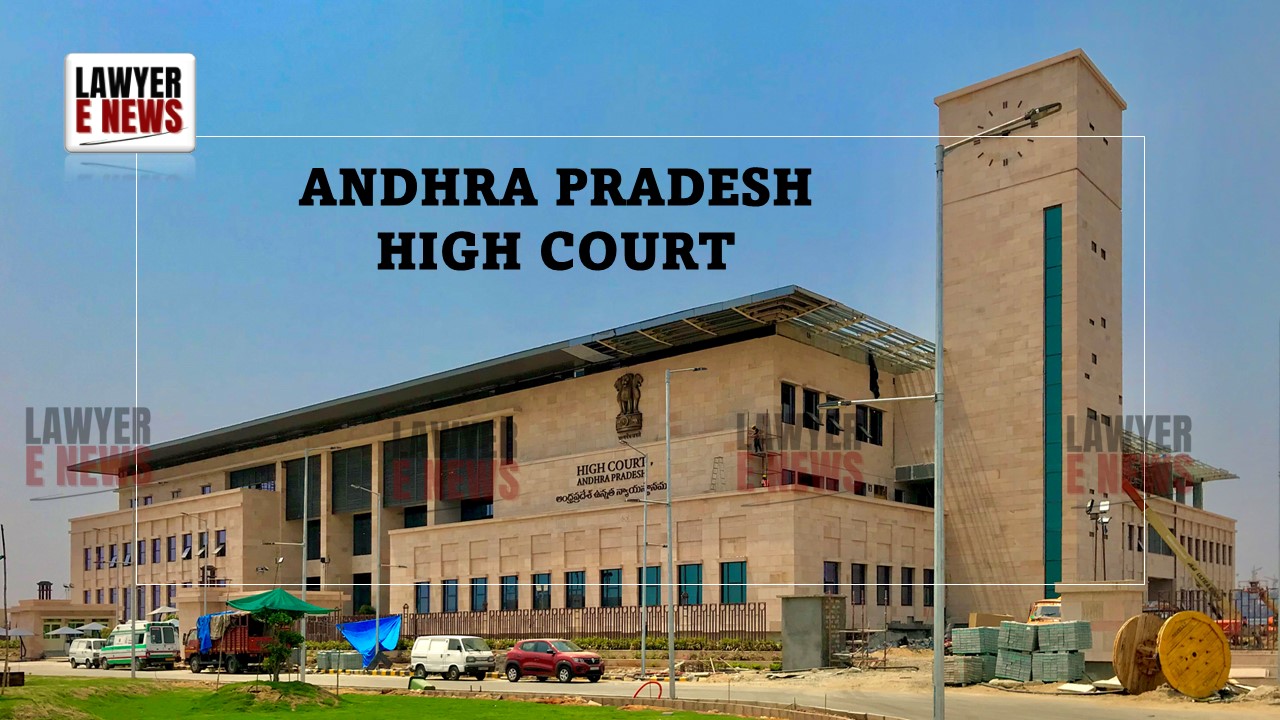
"Applicability of SC/ST Act Requires Proof of Caste-Based Intent, Not Mere Mention of Caste" — In a significant ruling High Court of Andhra Pradesh at Amaravati granted regular bail to former Minister and MLA, Kakani Govardhan Reddy. The case involved grave allegations of illegal quarrying, criminal conspiracy, and offences under the SCs & STs (Prevention of Atrocities) Act, 1989.
Allowing the appeal under Section 14A(2) of the SC/ST Act, Hon’ble Dr. Justice Y. Lakshmana Rao held that no prima facie case was made out under the SC/ST Act, and observed, “The allegations made against the appellant are bald to attract the provisions of ‘the SC & ST Atrocities (PoA) Act’.”
The genesis of the case lies in a report submitted by the District Mines and Geology Officer, Nellore, alleging rampant illegal mining in government land in Tatiparthi Village. FIR was registered against three individuals for trespass, mischief, theft, and illegal mining. Subsequently, based on the statement of LW-11 — Somireddy Chandramohan Reddy, a political rival of the appellant — the prosecution expanded the scope of allegations by adding explosive-related offences, criminal conspiracy, and offences under the SC/ST Act.
The appellant, Kakani Govardhan Reddy, who had earlier been a Cabinet Minister and MLA from Sarvepalli, was included in the list of accused through an alteration memo on 28.02.2025 and again on 31.03.2025, invoking provisions under the SC/ST Act. He was arrested on 26.05.2025 and had remained in judicial custody for 84 days before securing bail through this appeal.
Applicability of the SC/ST Act — Court Says "Intent Is Key"
A central question before the Court was whether the invocation of Sections 3(1)(r), 3(2)(va), and 3(2)(iii) of the SC/ST Act was justifiable, especially when the statements of key prosecution witnesses (LWs 13 to 15) did not name the appellant or mention any caste-based intimidation by him.
The Court made a crucial clarification: “Indeed, to attract the provisions of ‘the SCs & STs Atrocities (PoA) Act’, scheduled offence ought to have been committed against SC/ST person with the knowledge of the victim’s caste. Its applicability requires proof of caste-based intent, not just the act itself.”
The Judge went on to note that “in the statements of L.Ws.13, 14, and 15, the name of the appellant is not mentioned, nor is there any allegation that he intentionally insulted or intimidated members of the Scheduled Tribe community.”
Evidence Against the Appellant: Court Finds It Insubstantial and Confessional in Nature
Much of the prosecution’s case was built upon confessions by co-accused recorded during police custody. The Court was critical of this approach, observing:
“Most of the material collected during the investigation is co-accused confession, which is basically a weak piece of evidence.”
Citing the Supreme Court’s ruling in P. Krishna Mohan Reddy v. State of Andhra Pradesh, the Court reiterated that:
“A police statement of an accused which is in the form of a confession is per se inadmissible… and no reliance whatsoever can be placed on such statements either at the stage of bail or during trial.”
The Court further found that even the alleged confessional statement of Accused No.7 — which led to the discovery of a dumping site in the appellant’s native village — did not constitute strong evidence, as it was not corroborated by independent proof.
Timing of Alteration Memo and Political Motive: Court Takes Serious Note of "Calculated Move"
One of the striking features noted in the judgment was the timing of the alteration memos that included the SC/ST Act offences — they were filed just after the appellant sought anticipatory bail.
The Court remarked: “When the appellant filed two petitions, one on 25.03.2025 for grant of anticipatory bail, and another on 26.03.2025 for quashment of FIR… the provisions of ‘the SC & ST Atrocities (PoA) Act’ were added to the case.”
This led the Court to infer that the additions were not organic but potentially driven by political motivations:
“It is the contention of the Appellant that it is a calculated move at the advice of MLA of Sarvepalli to defeat the claim for protection under Section 25(3) of ‘the BNSS’.”
Risk of Tampering With Evidence or Intimidation of Witnesses: Court Dismisses the Concern
On the argument advanced by the prosecution regarding the risk of tampering with evidence or threatening witnesses, especially those belonging to Scheduled Tribes, the Court was not persuaded.
“There is no allegation that before his arrest he had threatened any witness or intermeddled with the investigation.”
The Court found that the investigation had substantially progressed, with 36 witnesses already examined and statements recorded:
“Definitely, the investigation is not at nascent or rudimental stage. Prime portion of the investigation is completed.”
On Parity with Co-Accused: Bail Granted to Others, No Reason to Deny Here
Highlighting that co-accused (Accused Nos. 6, 7, and 8) had already been granted bail, the Court noted that:
“The Appellant stands on similar footing, and no distinguishing circumstances have been pointed out by the prosecution to justify a deviation.”
Prosecution Material Fails to Justify Continued Incarceration
Summing up its conclusion, the Court stated:
“There may not be any chance of Appellant absconding or fleeing away, in case the Appellant is enlarged on bail… Bail is the rule and jail is the exception as laid down in State of Rajasthan v. Balchand.”
Accordingly, the Criminal Appeal was allowed, and the appellant was granted regular bail, subject to certain conditions, including refraining from entering Nellore District during the pendency of the investigation.
The Andhra Pradesh High Court's decision in this case is not just a relief for Kakani Govardhan Reddy — it is a judicial reaffirmation of constitutional principles that safeguard individual liberty, check misuse of special statutes, and underscore the evidentiary threshold necessary for pre-trial detention. The ruling acts as a reminder that accusations, even grave ones, must be backed by substantive legal proof — not political rhetoric or speculative confessions.
Date of Decision: 18 August 2025