-
by sayum
05 August 2026 9:31 AM







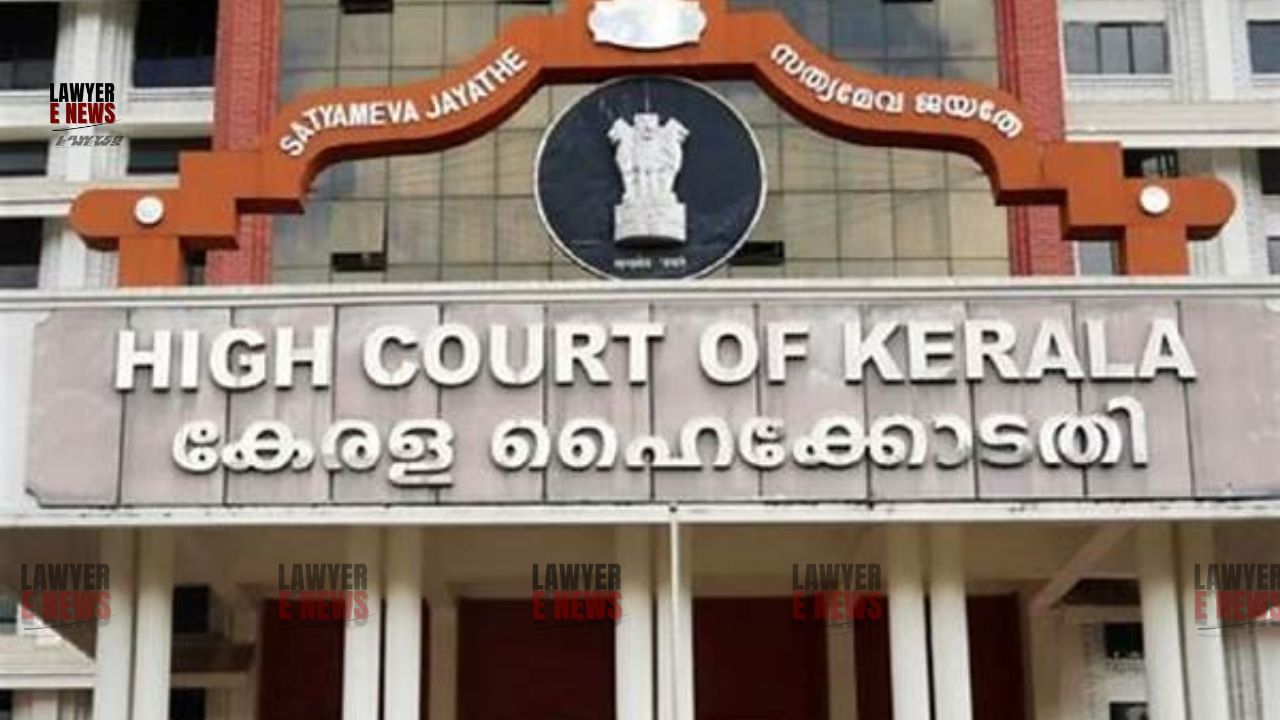
“Prolonged Custody Without Justification Violates Article 21—Investigation Is Complete, Accused Has No Antecedents”, In a judgment reinforcing the constitutional presumption of liberty, the Kerala High Court granted bail to a 25-year-old accused in a ₹58.34 lakh online trading fraud, citing prolonged pre-trial custody and the completion of investigation. Justice C.S. Dias, while allowing the bail, invoked the Supreme Court’s ruling in Jalaluddin Khan v. Union of India [2024 INSC 604], emphasizing that once statutory conditions are satisfied, courts should not hesitate to grant bail even in serious cases.
“If the Courts start denying bail in deserving cases, it will be a violation of the rights guaranteed under Article 21 of our Constitution,” the Court quoted approvingly.
Anandhu K.J., the third accused in Crime No. 274/2025 of Mavelikkara Police Station, was charged under Sections 318(4) read with Section 3(5) of the Bharatiya Nyaya Sanhita, 2023, and Section 66(D) of the Information Technology Act, 2008. According to the prosecution, Anandhu and his associates added the de facto complainant to a WhatsApp group under the pretext of offering lucrative online trading returns. On January 5, 2025, the complainant transferred ₹58.34 lakhs but was never paid any returns, and the money was allegedly misappropriated.
Anandhu had been in judicial custody since April 7, 2025. His bail application was opposed by the prosecution, which warned of the risk of tampering with evidence and influencing witnesses if he were released.
Justice Dias acknowledged the seriousness of the allegations but stressed the absence of prior criminal history and the near-completion of investigation as strong grounds for bail.
“The petitioner has been in judicial custody for the last 39 days. The investigation is practically complete, and recovery has been effected. He does not have any criminal antecedents.”
Referring to the landmark judgment in Jalaluddin Khan, the Court reiterated: “Even in serious offences, the settled law is that bail is the rule and jail is the exception. Once a case is made out for the grant of bail, the Court cannot decline to grant bail.”
The Court found no compelling reason to continue custody and allowed bail with standard conditions to safeguard the integrity of the investigation and trial.
Anandhu was directed to be released on executing a bond of ₹1,00,000 with two solvent sureties.
The Court also clarified that modifications to the bail conditions must be sought before the jurisdictional court and that investigation may proceed even while the accused is out on bail, as per Sushila Aggarwal v. State (NCT of Delhi) [2020 (1) KHC 663].
This ruling underscores the judiciary’s obligation to uphold personal liberty, especially when the investigative process no longer necessitates custody. By invoking both legal principle and constitutional ethos, the Kerala High Court reminded law enforcement and lower courts that extended detention cannot become a substitute for conviction.
“The duty of the Courts is to consider the case for grant of bail in accordance with the law,” the judgment reiterates—an important reaffirmation of due process in financial fraud cases.
Date of Decision: May 16, 2025