-
by sayum
08 August 2026 1:54 PM







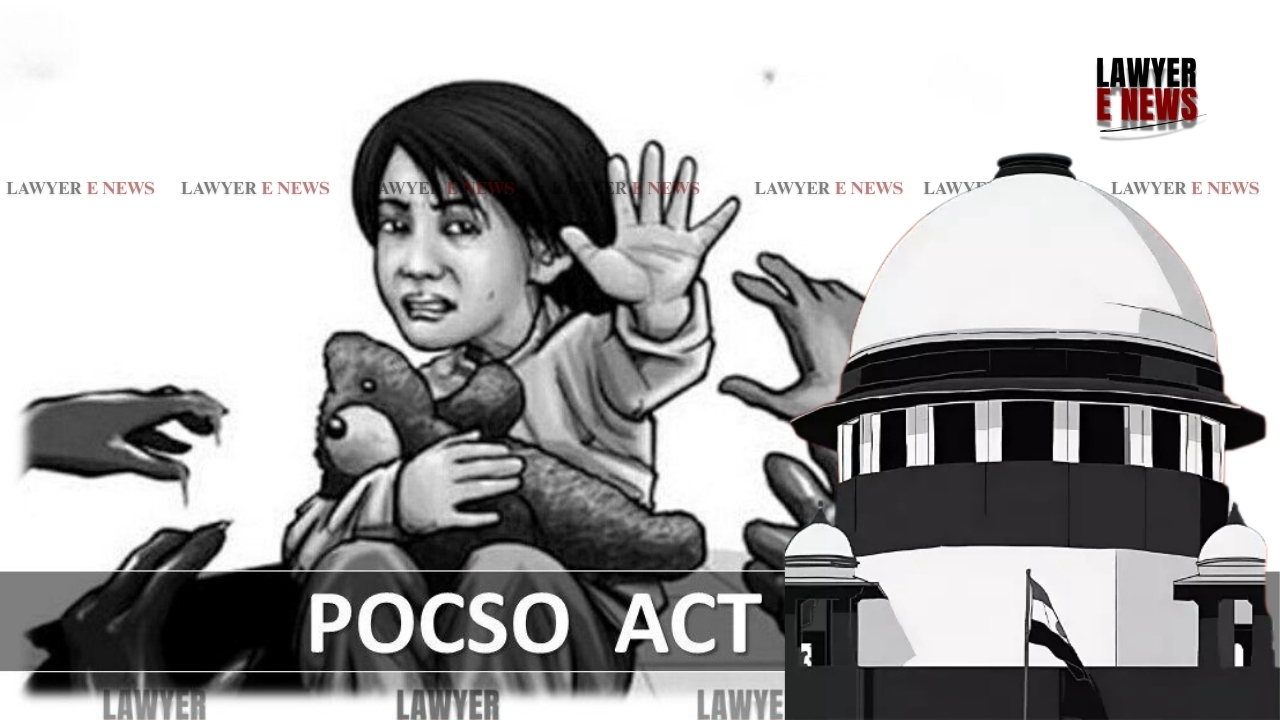
“Contradictions in Child’s Testimony Can’t Be Sole Ground for Bail in Heinous Sexual Offences” – SC Sets Aside Bail, Sends Matter Back to Delhi HC. Supreme Court of India delivered a critical judgment in the case of X v. State of NCT of Delhi & Anr., wherein it set aside the Delhi High Court’s order granting bail to the accused in a case involving heinous allegations of rape, criminal conspiracy, and abetment of sexual assault against a minor, under provisions of both the Indian Penal Code and the Protection of Children from Sexual Offences (POCSO) Act, 2012.
A Bench comprising Justice B.V. Nagarathna and Justice K.V. Viswanathan found the High Court's reasoning "inadequate" and held that bail in cases involving minor victims of sexual assault must be backed by cogent judicial evaluation, especially when the offences carry grave statutory implications.
“Bail in Such Cases Cannot Be Granted in a Casual Manner” – Court Questions High Court’s Approach
The central grievance before the Supreme Court was that the Delhi High Court, in its order dated 26 November 2024, while allowing bail to the accused, had failed to assign substantial or legally tenable reasons for doing so.
Counsel for the complainant – who is the father of the minor victim – argued that the High Court merely extracted arguments of parties at length, but its reasoning was confined to one solitary paragraph, which, according to the appellant, did not justify the grant of bail given the seriousness of the offences.
Accepting this submission, the Supreme Court observed: “While the High Court has recorded the submissions of the learned counsel for the respective parties at length, it has given reason only in paragraph 11… which are not in tandem with the relief that was actually sought for and the relief that was granted.” [Para 10]
“Contradictions in the Victim’s Statement Are Not Enough” – Court Rejects Bail Justification Based on Timeline Discrepancy
The High Court had primarily relied on perceived contradictions in the minor girl’s statements under Section 164 CrPC and the initial complaint – particularly regarding the timeline of alleged incidents.
The Supreme Court unequivocally rejected this as a sufficient basis for granting bail in POCSO cases: “Such discrepancies required careful judicial scrutiny rather than forming the sole basis for bail, especially in sensitive offences involving minors.” [Headnotes; Paras 8–10]
“The High Court ought to have considered the matter(s) from all perspectives and as to whether the accused were entitled to the relief of bail.” [Para 11]
The Court emphasised that inconsistencies in statements of minor victims—particularly in the context of sexual abuse—are not uncommon and must be evaluated with sensitivity, caution and depth, not used as a mechanical basis for bail.
“Such Conduct by the High Court Does Not Meet the Requirements of Judicial Scrutiny” – Matter Sent Back for Fresh Consideration
The Court found it troubling that the seriousness of the allegations, including offences under Sections 6, 10 and 17 of the POCSO Act and Sections 376, 376(C), 328 IPC, did not weigh adequately in the High Court’s mind.
“In the circumstances, we find that the ends of justice would be met in the instant cases if the impugned order is set aside and the matters are remanded to the High Court for reconsideration of the bail applications…” [Para 12]
Accordingly, the Supreme Court set aside the High Court’s order, and directed that the bail applications be heard afresh by the Delhi High Court within one month, starting from 23 July 2025, the first date of appearance.
“No Coercive Steps Against Accused for Now – But Bail Under Cloud” – Court Balances Interim Protection with Judicial Oversight
Recognising that the accused had already been on bail since November 2024 and had complied with conditions, the Court did not immediately order their arrest. However, it kept the bail provisional:
“No coercive steps shall be taken till the disposal of the bail applications by the High Court.” [Para 14]
“The bonds executed by the respondent-accused(s) shall remain till the disposal… by the High Court.” [Para 16]
Simultaneously, it directed the accused to cooperate with the Sessions Court proceedings, clarifying that the remand to the High Court would not delay or interfere with trial progress.
Bail in POCSO Offences Not to Be Treated Lightly — Court Reiterates Need for “Judicial Sensitivity and Reasoned Approach”
This judgment sends a strong signal to constitutional courts across the country: Bail in cases involving child sexual offences must not be granted on superficial grounds or mechanical assessments of inconsistencies. The Supreme Court underlined that such orders must reflect the gravity of allegations, the vulnerability of victims, and the public interest protected by the POCSO Act.
By remanding the matter back to the Delhi High Court for time-bound reconsideration, the Court sought to restore the integrity of the bail process, particularly in cases involving the protection of children from sexual offences.
Date of Decision: 15 July 2025