-
by sayum
29 August 2026 3:15 PM







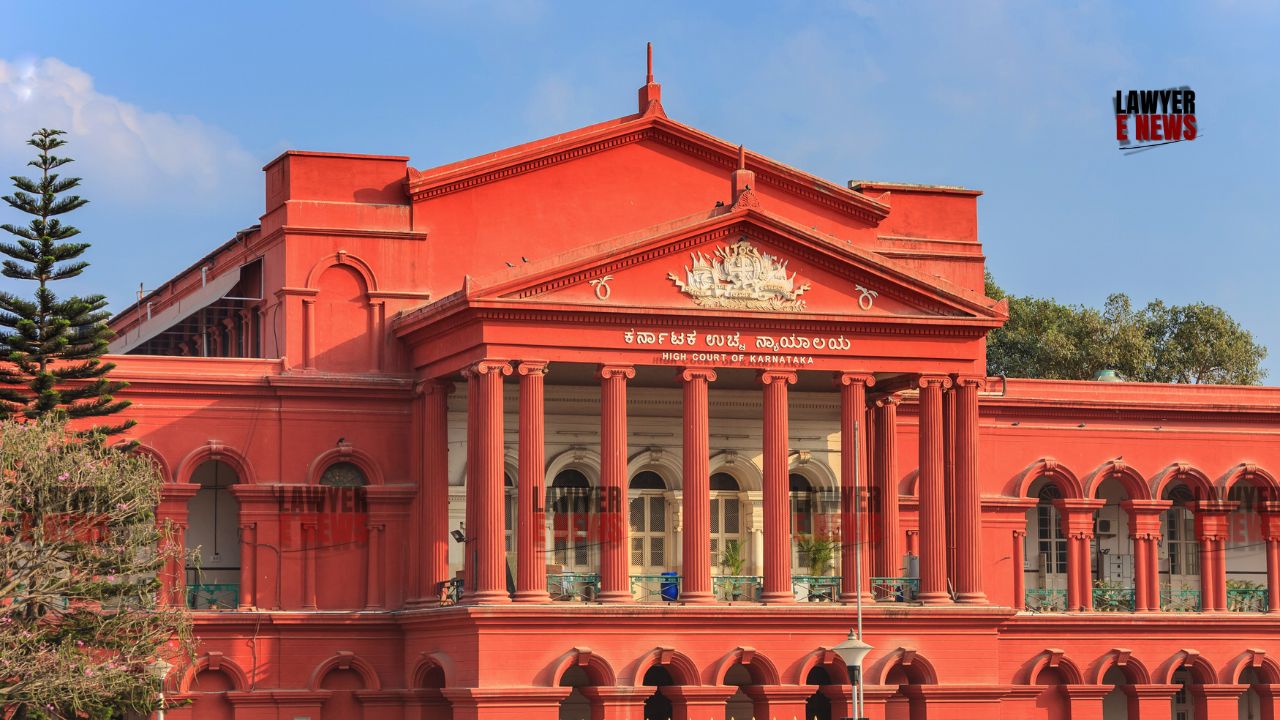
Liberty of the Accused Cannot Override the Right to a Free and Fair Trial” — In a significant ruling Karnataka High Court cancelled the bail granted to Ashwath S. (Accused No.9), an accused in the high-profile murder case of BJP leader Yogesh Gowda, investigated by the Central Bureau of Investigation. Justice M.I. Arun held that the accused had “used his liberty to interfere in the course of justice,” and ruled that his bail “is liable to be cancelled till the evidence of PW.10, PW.30 and PW.40 is completed before the trial court.”
Yogesh Gowda, a political figure of significant prominence in Dharwad, was brutally murdered on 15 June 2016. The initial investigation led to the arrest and charge-sheeting of six individuals. However, after public pressure and concerns over the impartiality of the probe, the matter was transferred to the CBI in 2019.
The CBI's reinvestigation shifted the narrative, leading to the exoneration of the previously charge-sheeted accused and implicating a new set of individuals, including high-ranking politicians and police officers. Among those later arrested was Ashwath S., who had secured bail from the High Court in 2022.
In the present proceedings, the CBI sought cancellation of his bail under Section 439(2) CrPC and Section 483(3) of the Bharatiya Nagarik Suraksha Sanhita, 2023, on the ground that the accused had been actively threatening prosecution witnesses.
“Proof Beyond Reasonable Doubt Not Required for Bail Cancellation”
The High Court began its legal analysis by clarifying the evidentiary threshold for bail cancellation. Drawing on the landmark ruling in State (Delhi Administration) v. Sanjay Gandhi, the Court reiterated that:
“Proof of actual interference is not necessary; a reasonable apprehension that the accused will interfere with the course of justice is sufficient to justify cancellation of bail.”
The Court emphasized that this is not a mini-trial, and that the test of “balance of probabilities” applies. It stated:
“The liberty of the accused, though important, must not result in compromising the justice delivery system. The liberty of the accused cannot override the right of the victim and the prosecution to conduct a fair and uninfluenced trial.”
“Threatening Witnesses Inside Court Premises Cannot Be Taken Lightly”
The Court found that three material witnesses — PW.10, PW.30, and PW.40 — had directly accused Ashwath of threatening them during and before their appearances in the court.
PW.10, who had turned approver, lodged a complaint with the CBI stating that he received a threatening WhatsApp call from mobile number 9591029837. The voice, which he identified as belonging to Ashwath, warned him against testifying.
PW.30, a female witness, gave a particularly alarming account. She narrated how she was approached inside the court corridor by Ashwath, who threatened her by saying:
“Do not mess with us… the police and government are ours… What we want only will happen… You will face consequences if you dare speak anything before the court against me.”
PW.40 also filed a complaint alleging similar threats by the accused within the court premises.
The Court observed that “though the trial court has not followed the guidelines laid down by the Apex Court while ordering for protection of these witnesses, the same has been rightly accorded based on the facts and circumstances.”
“Denial by Accused Not Enough to Overcome Multiple Corroborated Complaints”
The accused claimed that the complaints were fabricated and part of a conspiracy. He pointed out that similar allegations had been rejected in a previous petition and argued that PW.10 was a “partisan witness.”
However, the High Court refused to accept this line of defence. It held that:
“In my opinion, the statements of PW.10, PW.30 and PW.40 and Y. Sudhir Kumar and Bhimashankar Patil will have to be believed as opposed to the denial of the respondent/accused No.9.”
The Court found corroboration in the call data records and testimonies that showed the disputed mobile number was being used by the accused to coordinate with co-accused and contact prosecution witnesses.
“Protection of Witnesses Is a Precondition to Justice”
The Court referred to the Supreme Court’s landmark ruling in Mahender Chawla v. Union of India, which held that witness protection is a sine qua non for a fair trial.
Though a formal Threat Analysis Report was not prepared, the High Court found that in light of repeated threats to material witnesses, protection was justified. It remarked:
“Protection to a witness is not just a courtesy of the state, but a constitutional necessity to uphold Article 21 — the right to a fair trial.”
Bail Cancelled to Preserve Integrity of the Trial Process
The High Court allowed the petition partially by cancelling the bail of Ashwath S., but did so conditionally — his bail would remain cancelled only until the deposition of the three threatened witnesses is concluded.
The Court clarified: “The bail granted in favour of the respondent/accused No.9 is cancelled for a period till the evidence of PW.10, PW.30 and PW.40 is completed before the trial court. Thereafter, it is open for the respondent/accused No.9 to approach the court once again for grant of bail.”
The Court further directed the trial court to expedite the examination of these witnesses and granted Ashwath one week to surrender.
This ruling highlights the judiciary’s growing concern about the increasing trend of witness intimidation in politically sensitive trials. The High Court’s message is unequivocal — bail is a shield for liberty, not a sword to subvert justice.
Date of Decision: 18 August 2025