-
by sayum
26 August 2026 12:18 PM







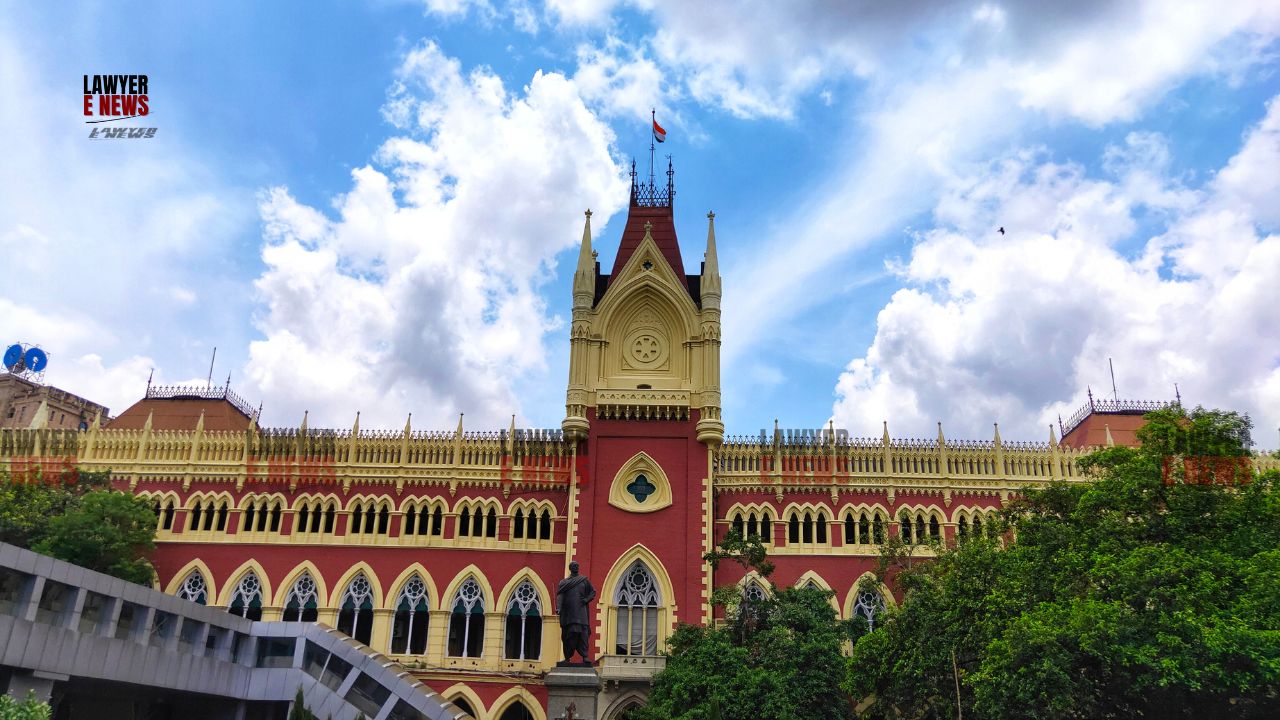
“In contempt jurisdiction, the Court does not sit in judgment over the parent order and there is little or no scope of passing any orders on merits by reopening the parent order”— In a seminal ruling Calcutta High Court, comprising Justice Sabyasachi Bhattacharyya and Justice Supratim Bhattacharya, allowed a civil appeal against an order discharging a contempt rule, holding that when a Single Judge travels beyond contempt jurisdiction to affect substantive rights, a Letters Patent Appeal is maintainable despite the bar under Section 19 of the Contempt of Courts Act.
The dispute originated from a writ petition filed by the Appellant, Rekha Mondal, seeking regular employment. By an order dated March 7, 2024, the Single Judge directed the Directorate of Youth Services to engage the Appellant on a contractual basis with a monthly honorarium of Rs. 10,000/-. This order was subsequently modified on May 3, 2024, enhancing the honorarium to Rs. 19,000/- based on a Government Memo. When the authorities failed to comply, the Appellant filed a contempt application.
However, while hearing the contempt petition on July 26, 2024, the Single Judge not only discharged the contempt rule against the officials but also recorded adverse findings against the Appellant. The Single Judge observed that the Appellant had misled the Court regarding her employment status and held that she was entitled to only Rs. 11,890/- (the rate for volunteers) rather than the Rs. 19,000/- previously ordered. Furthermore, the Court imposed "penal costs" of Rs. 1,100/- on the Appellant for her alleged "contumacious conduct."
The Maintainability Challenge
The State-respondents raised a preliminary objection regarding the maintainability of the appeal. Relying on Section 19 of the Contempt of Courts Act, 1971, and Supreme Court precedents in D.N. Taneja v. Bhajan Lal and State of Maharashtra v. Mahboob S. Allibhoy, the State argued that an appeal lies only against an order punishing for contempt. Since the Single Judge had discharged the rule, they contended that no appeal could lie.
“Where Single Judge, while discharging rule, travels beyond contempt jurisdiction and passes directions affecting substantive rights, such order qualifies as a ‘judgment’ appealable under Clause 15 of the Letters Patent.”
Letters Patent Jurisdiction
The Division Bench rejected the State's objection. While acknowledging that Section 19 of the 1971 Act does not provide for an appeal against the discharge of a contempt rule, the Court held that the remedy lies under Clause 15 of the Letters Patent. The Bench reasoned that the impugned order did not merely discharge the contemnors; it traversed beyond the scope of contempt jurisdiction by modifying the quantum of remuneration fixed in the parent order and imposing penal costs. These directions directly affected the "valuable civil rights" of the Appellant, thereby qualifying the order as a "judgment" amenable to a Letters Patent Appeal.
Exceeding Contempt Jurisdiction
On the merits, the Division Bench came down heavily on the approach of the Single Judge. The Court observed that the Single Judge had effectively sat in appeal over his own previous orders (dated March 7, 2024, and May 3, 2024), which had attained finality as they were never challenged by the State. By relying on documents produced by the State on the very day of the contempt hearing—without giving the Appellant an opportunity to rebut them—and reducing the payable amount to Rs. 11,890/-, the Single Judge acted wholly without jurisdiction.
“The learned Single Judge, sitting in contempt jurisdiction, sat over judgment on his own order and reopened the same, which is entirely de hors the jurisdiction of the court while hearing a contempt application.”
Violation of Natural Justice
The Division Bench further held that the finding of "contumacious conduct" against the Appellant was procedurally flawed. The Single Judge had imposed "penal costs" without issuing any rule against the Appellant or affording her an opportunity to explain her conduct. The Court termed this procedure "de hors the law," noting that stigmatic and penal consequences cannot be visited upon a litigant without due process. The Bench also found the Single Judge's findings contradictory, as the order simultaneously acknowledged that the writ petition disclosed the Appellant's volunteer status while accusing her of suppressing it.
The Court allowed the appeal and set aside the impugned order dated July 26, 2024. The Contempt Rule was revived, and the Single Judge was requested to hear the contempt proceedings afresh from the stage prior to the passing of the impugned order. However, considering the legal questions involved, the Division Bench stayed the operation of this judgment for three months to enable the respondents to approach the Supreme Court.
Date of Decision: 23/12/2025