-
by sayum
12 August 2026 1:53 PM







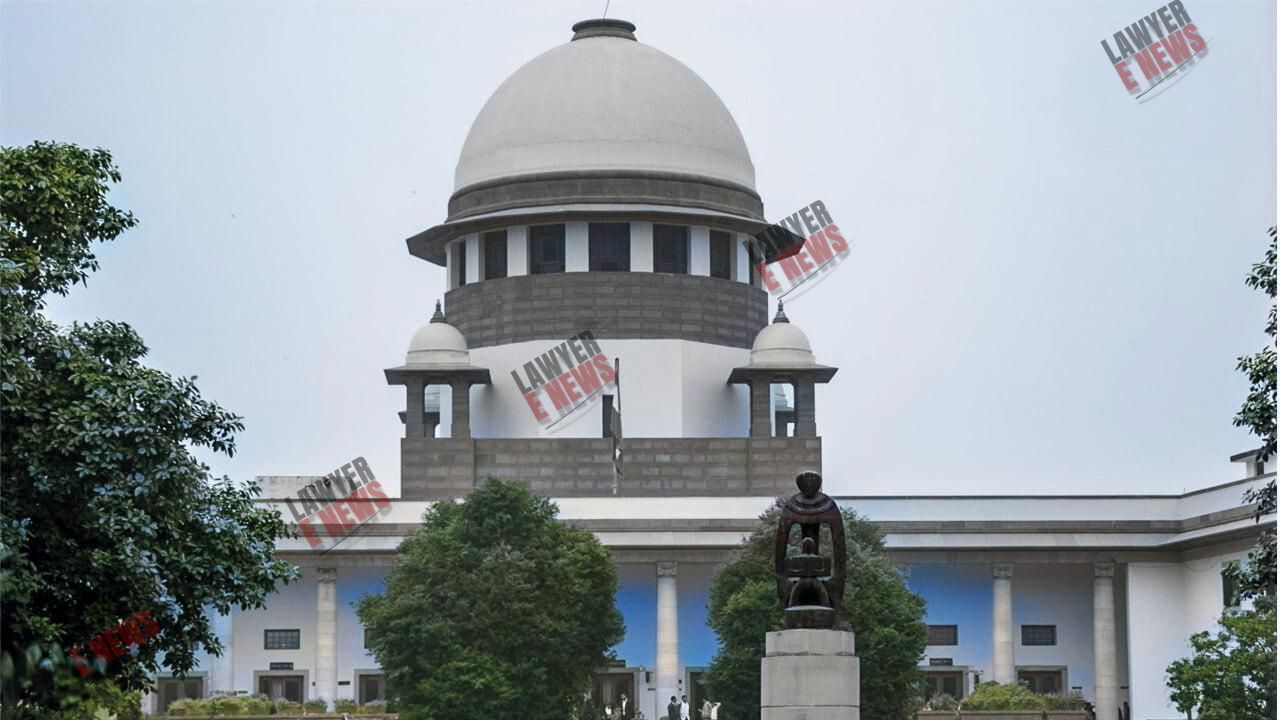
High Court Must Assess Evidence on Record Before Rejecting Appeal in Limine - In a significant ruling Supreme Court set aside the Patna High Court’s order summarily dismissing an appeal against the acquittal of a murder accused without examining the trial court records. The Court ruled that "when an appeal is filed against an acquittal, the High Court must apply its judicial mind to the trial court's findings and cannot reject it outright without proper scrutiny."
The case arose from an appeal filed by Sanjay Kumar, the informant and son of the deceased, challenging the acquittal of the accused, Meghnath Koiri, in a 2011 murder case. The High Court, without calling for the trial court records, had dismissed the appeal in limine on July 3, 2013, citing inconsistencies in prosecution evidence.
Setting aside this order, the Supreme Court ruled that "the High Court erred in dismissing the appeal without examining whether the trial court’s findings were sustainable in law." The matter has been remanded for fresh adjudication, and the High Court has been directed to hear the appeal on March 24, 2025.
"High Court Dismissed Appeal Without Examining Key Evidence" – Supreme Court Highlights Judicial Lapses
The prosecution’s case was that on April 2, 2011, three intruders entered the shop of the deceased, Ishwar Chander, and one of them fired at him. The accused, Meghnath Koiri, was allegedly caught at the scene with injuries and later arrested when police arrived.
During the trial, several prosecution witnesses, including Sanjay Kumar (PW-8), the informant and son of the deceased, and Kalam (PW-7), an eyewitness, testified against the accused. The investigating officer, Krishna Chandra Dubey (PW-10), confirmed that the accused was found at the crime scene.
However, the High Court dismissed the appeal without calling for trial court records, relying only on the defense argument that the evidence was weak. The Supreme Court found this approach flawed, ruling that "an appeal against acquittal requires a proper examination of evidence, and rejecting it without reviewing trial court findings is a miscarriage of justice."
"Acquittal in Arms Act Case Does Not Automatically Exonerate Accused in Murder Trial"
One of the reasons cited by the High Court for dismissing the appeal was that the accused had been acquitted in a separate trial under the Arms Act, 1959, due to lack of ballistic evidence.
Rejecting this reasoning, the Supreme Court ruled that "the Arms Act case was an independent trial, and its outcome had no bearing on the murder case. The acquittal under the Arms Act does not automatically invalidate eyewitness accounts of the accused’s involvement in the crime."
The Court referred to Sections 40 to 44 of the Indian Evidence Act, 1872, stating that: "A judgment in a separate trial is not conclusive proof of innocence in another case. The High Court should have independently examined the evidence in the murder trial instead of relying on the Arms Act acquittal."
"Failure to Call Trial Court Records Rendered High Court’s Decision Unsustainable"
The Supreme Court strongly criticized the High Court’s failure to examine trial court records before dismissing the appeal. The judgment noted that: "In an appeal against acquittal, the High Court has a duty to call for trial court records and verify whether the findings are legally sustainable. Summary dismissal without reviewing the evidence amounts to abdication of judicial responsibility."
The Court also observed that: "The depositions of key witnesses, including the informant and the investigating officer, directly contradicted the trial court’s reasoning, yet the High Court ignored these aspects while dismissing the appeal."
"Appeal Restored, High Court Directed to Hear the Case on Merits"
Allowing the appeal, the Supreme Court ruled: "The impugned order dated July 3, 2013, dismissing the appeal in limine is quashed. Criminal Appeal (DB) No. 573/2013 shall stand revived on the file of the High Court. The appeal shall be heard on merits, and the High Court shall issue notice and decide the case in accordance with law."
To prevent further delay, the Supreme Court directed that "both parties shall appear before the High Court on March 24, 2025, and the case shall be heard expeditiously."
The Supreme Court’s ruling reaffirms that "an appeal against acquittal cannot be dismissed without a proper judicial assessment of the trial court's findings. High Courts must exercise due diligence before rejecting appeals at the threshold."
By restoring the appeal and directing fresh adjudication, the judgment ensures that "judicial oversight is exercised in acquittal cases, preventing potential miscarriages of justice due to procedural lapses."
Date of decision: 27/02/2025