-
by sayum
09 August 2026 11:43 AM







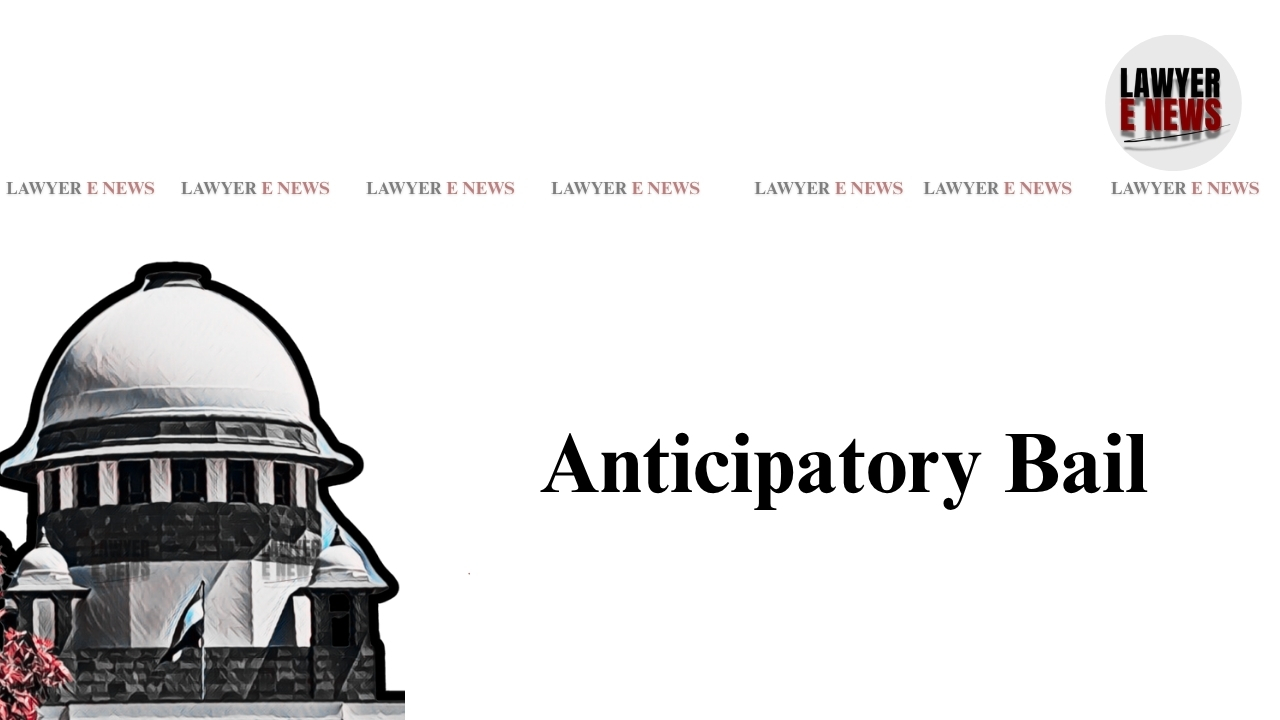
“Grave Allegations, Suppression Of Facts And Intimidation Of Witnesses Justify Revocation Of Bail—Courts Must Exercise Caution While Granting Pre-Arrest Bail”, In a significant decision on 21st July 2025, the Supreme Court of India cancelled the anticipatory bail granted to the estranged husband and his associates in a serious property dispute case involving forcible trespass, assault, and fraudulent misuse of inherited property. The decision came in the case of Nikita, where the Court found the accused guilty of concealing material facts, threatening witnesses, and repeatedly misusing judicial indulgence.
While overturning the High Court’s order granting pre-arrest bail, the Bench of Justices Vikram Nath and Sandeep Mehta delivered a stern rebuke to the misuse of anticipatory bail, stating:
“Anticipatory bail is an extraordinary remedy… the grant of interim protection or protection to the accused in serious cases may lead to miscarriage of justice and may hamper the investigation to a great extent as it may sometimes lead to tampering or distraction of the evidence.”
A Story of Fraudulent Power of Attorney, Forcible Occupation, and Systematic Harassment
The case involved complainant Nikita Shetty, who lodged FIR No. 1-103 of 2023 at Deccan Police Station, Pune, against her estranged husband Vishwajeet Vinaykrao Jadhav and his accomplices for forcibly trespassing into a hotel property, Hotel Vaishali, inherited by her from her deceased father.
The estranged husband allegedly procured a forged power of attorney and gift deed and, after obtaining a temporary injunction, barged into the property with a group of men, vandalised the premises, damaged CCTV systems, and intimidated the staff.
As detailed in the judgment, “Armed with the ex parte injunction order, accused Vishwajeet… forcibly trespassed into the premises owned by the appellant-complainant, where they caused extensive damage including disconnecting the CCTV system, cutting down the DVR wires, and vandalizing the interiors.”
After the civil court’s ex parte injunction was later set aside, the accused continued to misuse it to gain anticipatory bail from the High Court.
Supreme Court Slams High Court For Granting Bail Despite “Grave Allegations And Deliberate Suppression”
In a sharply worded judgment, the Supreme Court criticized the High Court for granting bail despite the accused’s deliberate suppression of the setting aside of the civil injunction order. The Court found,
“The High Court seems to have glossed over this important aspect of the case and granted indulgence of pre-arrest bail… without considering the nature and gravity of allegations… and the fact that there was an imminent need for custodial investigation.”
The Court further observed that the accused misled the court by concealing material developments and thus secured anticipatory bail through deception.
“Threatening Witnesses, Tampering With Evidence Are Sufficient Grounds To Cancel Bail”: Supreme Court Observes In Strong Terms
The Court also gave detailed consideration to post-bail conduct. Referring to police reports and State affidavits, the Court noted: “Accused Vishwajeet threatened an employee of the subject-hotel with dire consequences insinuating that he would be removed from his job… Furthermore, by threatening the witnesses, the accused-Vishwajeet has flouted the conditions of anticipatory bail order.”
The Supreme Court reinforced the settled principle that violation of bail conditions and misuse of liberty justifies cancellation of bail, stating,
“Where liberty granted by the court is misused for intimidating witnesses and thwarting justice, courts have not just a right but a duty to intervene.”
Custodial Interrogation Essential In Serious Cases: Supreme Court Cites Srikant Upadhyay Judgment
The Supreme Court also reiterated established principles on anticipatory bail, relying on Srikant Upadhyay v. State of Bihar, 2024 SCC OnLine SC 282, to emphasize that:
“It cannot, by any stretch of imagination, be said that anticipatory bail is the rule… Grant of interim protection to the accused in serious cases may lead to miscarriage of justice.”
The Court found the allegations of fraudulent loan procurement of ₹5 crore by mortgaging the disputed hotel property, using forged documents, to be grave enough to warrant custodial interrogation, not bail protection.
Bail Cancelled, Accused Directed To Surrender
Concluding in no uncertain terms, the Supreme Court ruled: “The incident… was a clear-cut attempt by the estranged husband… to dispossess his own wife from her lawfully inherited property… The High Court clearly erred in granting such liberty… The anticipatory bail granted… is hereby cancelled.”
The Court directed the accused to surrender within two weeks, adding that they may apply for regular bail, subject to the right of the police to seek custodial interrogation.
A Strong Judicial Reminder: Anticipatory Bail Is Not A Weapon For Oppression
This judgment sends an unequivocal message that anticipatory bail cannot be a tool for oppressors to avoid investigation, particularly in cases of property fraud, intimidation, and suppression of facts. The Supreme Court underscored that courts must exercise “cautious and judicious discretion” in granting bail, especially when the liberty granted is being misused to obstruct justice.
As the Court eloquently observed, “Bail cannot become a shield to dispossess rightful owners, defraud institutions, and terrorise witnesses. The integrity of the criminal process demands vigilant scrutiny of such abuses.”
Date of Decision: 21st July 2025