-
by sayum
29 August 2026 3:15 PM







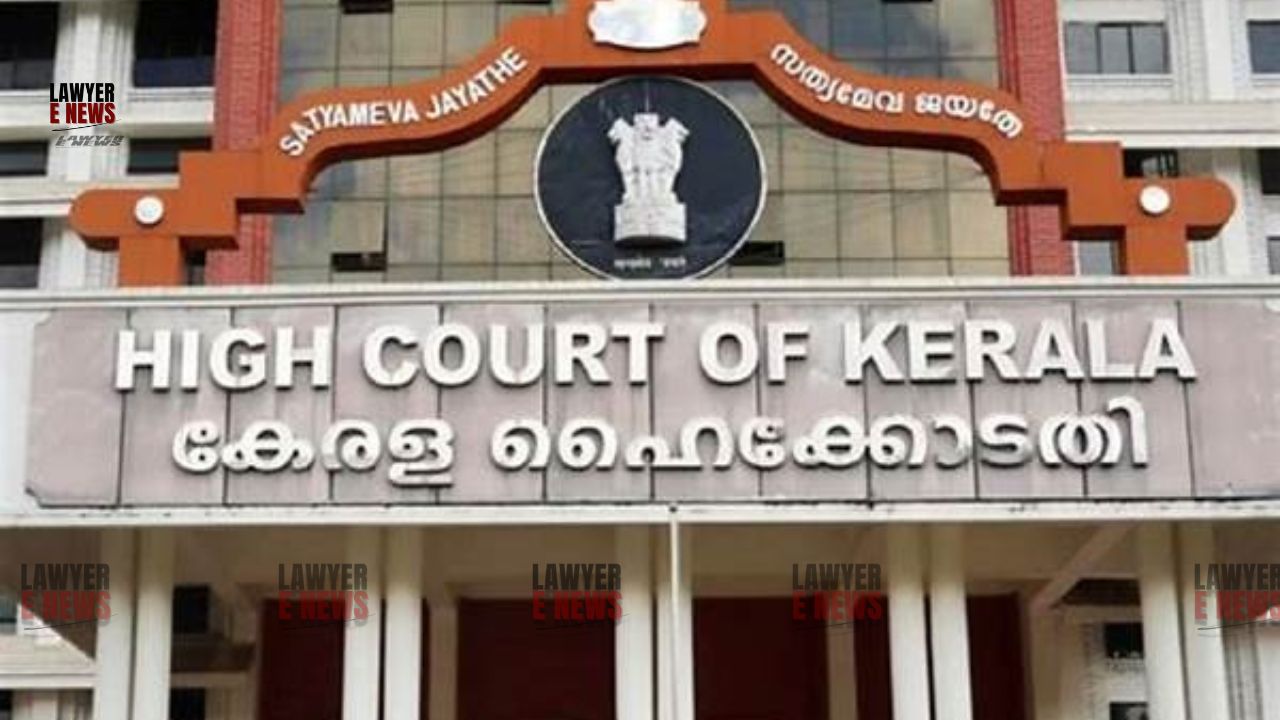
“Where there is prima facie material of large-scale forgery, fabrication, and misappropriation, and custodial interrogation is necessary, the court shall not come to the rescue of the accused by granting anticipatory bail”— Kerala High Court emphatically declined to grant anticipatory bail to a woman police writer accused of forging government records and misappropriating over ₹20.9 lakhs while serving in the Traffic Enforcement Unit at Muvattupuzha. The court, while dismissing the plea under Section 482 of the Bharatiya Nagarik Suraksha Sanhita, 2023, laid down that in corruption cases involving meticulous manipulation of public records and assets, anticipatory bail should only be granted in rarest of rare cases where prosecution appears to be manifestly malafide or false.
Justice A. Badharudeen observed that the allegations against the petitioner were not mere clerical lapses but a “well-orchestrated misuse of public position,” and that custodial interrogation was necessary for handwriting comparison, recovery of falsified records, and tracing unaccounted income.
“Petitioner tampered with vouchers even after obtaining bank seal—prima facie offence made out under Sections 409 and 13 of the PC Act”
The prosecution case stems from events during 2009 to 31 October 2021, when the petitioner, a woman civil police officer and writer in the Traffic Wing, was entrusted with collecting and depositing compounding fee amounts in government accounts. It was alleged that she systematically falsified TR-5 registers, forged deposit vouchers, and deposited lesser amounts while recording higher receipts.
The High Court noted the incriminating weight of consistent statements made by bank officials, who confirmed that “the remittances were always made by the petitioner and that she submitted all sets of the voucher in person,” and that “she alone handled the vouchers which were tampered with after affixation of bank seal.”
Dismissing her claim that she had no role in tampering, the Court held, “The bank records and testimonies of staff prima facie establish that it was the petitioner who alone carried out the acts necessary to facilitate the misappropriation. Her control over documentation and the lack of explanation regarding altered vouchers strongly supports the charge.”
“Conscious silence of the accused in the face of damning financial records—salary and bank balance do not match huge chitty and EMI payments”
One of the key contentions raised by the accused was that she was being falsely implicated, and that her assets were derived from salary and loan repayments. The Court scrutinised her bank statement, which showed a salary of ₹20,000 to ₹23,000 per month, while LIC payments alone amounted to ₹21,000, and significant sums were transferred to multiple chit funds and societies, including KSFE and the Tailoring Employees Society.
The Court noted, “The petitioner’s remittances to chitties and societies are grossly disproportionate to her salary and available bank balance. Her silence on the source of these payments speaks volumes.”
Rejecting her defence that she used her salary and family income to make these payments, the Court declared, “The burden lay on the accused to explain the source of these funds. She has chosen to remain vague and evasive. The inference that these funds are misappropriated cannot be ruled out at this stage.”
“Recovery of 405 falsified vouchers and sensitive records from the accused’s residence demolishes her claim of innocence”
A search conducted by the Vigilance team in the presence of the Executive Magistrate at the accused’s residence led to the recovery of over 400 expenditure vouchers, eight TR-5 cash books, duty registers, and multiple passbooks and bank-related documents. The petitioner alleged that the recovery was fabricated and planted due to internal grudge by another constable.
The Court rejected this outright, stating, “The search was executed lawfully and witnessed by an Executive Magistrate. The allegation that the Magistrate colluded with the Vigilance to plant documents is not only baseless but defamatory.”
It added, “The presence of original government records in her residence is damning. Her failure to explain why sensitive materials were in her private possession strengthens the prima facie case of deliberate forgery and criminal breach of trust.”
“Granting bail at this stage would derail investigation—specimen handwriting and custodial confrontation essential”
The investigating agency informed the court that several forged vouchers and entries in government registers needed to be compared with the petitioner’s handwriting, and only custodial interrogation would enable proper verification and recovery of further material.
Agreeing with this, the Court ruled, “The nature of the forgery and the modus operandi adopted clearly shows that the same cannot be unearthed unless the petitioner is interrogated in custody. This Court cannot allow anticipatory bail to become an obstruction in unravelling deep-rooted corruption.”
Referring to Devinder Kumar Bansal vs. State of Punjab, the Court reiterated that anticipatory bail should not be granted where the gravity of the offence is high, and the role of the accused is well established through bank records, oral testimonies, and documentary evidence.
“This is not a case of harassment, but a calculated act of embezzlement”—No special grounds for protection under Section 482 BNSS
Dismissing the contention that the petitioner is a widow and being falsely implicated due to rivalry, the Court concluded, “This is not a case where the prosecution is motivated or baseless. On the contrary, the facts point to a pattern of deliberate defalcation carried out over years under a veil of forged records.”
It added, “Exceptional circumstances are absent. The petitioner must face the investigation and explain her role. Anticipatory bail is wholly unwarranted.”
Anticipatory Bail Application Dismissed, Petitioner Directed to Surrender
Concluding that the petitioner’s custodial interrogation was “essential for effective investigation into a complex web of forgery and misappropriation,” the Kerala High Court dismissed her anticipatory bail application, observing that granting protection would result in “obstruction of justice and dilution of accountability in public service.”
The Court directed, “The petitioner shall surrender before the Investigating Officer within ten days. In case of failure, she shall be arrested and dealt with in accordance with law.”
Date of Decision: 25 August 2025