-
by sayum
30 August 2026 4:28 AM







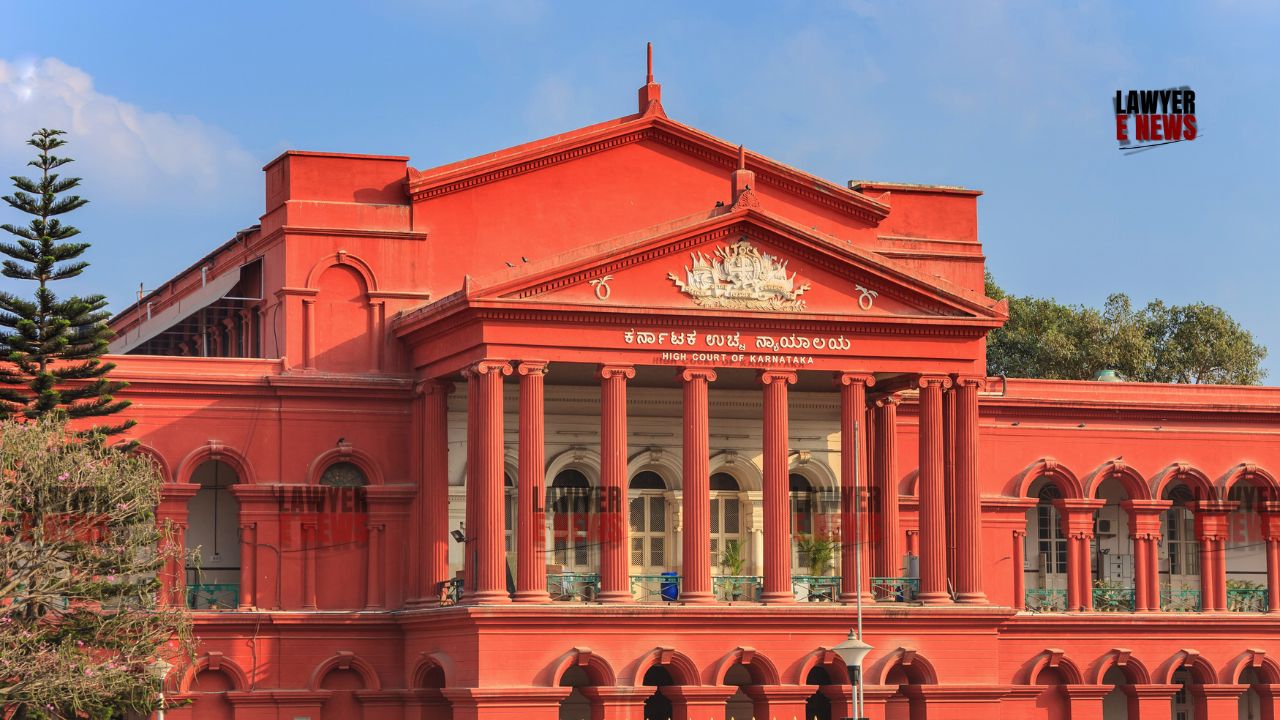
“Ignominy suffered by a sportsperson under presumption of guilt overrides due process... fairness must remain the bedrock of anti-doping adjudication.” — Karnataka High Court holding that a four-year ban imposed on a decorated national basketball player by the Anti-Doping Disciplinary and Appeal Panels was “vitiated by non-consideration of vital material, absence of reasoned adjudication and a palpable breach of principle of fairness.” The Court found the anti-doping proceedings riddled with procedural lapses, lack of transparency, and mechanical conclusions that rendered the entire action “unsustainable in law.”
Justice M. Nagaprasanna set aside both the Disciplinary Panel’s order dated 11 October 2022 and the Appeal Panel’s order dated 16 April 2024, observing that “strictness in liability does not mandate callousness in process.”
The petitioner, Shashank J. Rai, a senior national basketball player and a government officer, had been suspended from sports for four years after a urine sample collected on 5 February 2022 tested positive for 19-Norandrosterone (19-NA), a prohibited anabolic steroid. Rai, however, contended that the presence of 19-NA was the result of his regular consumption of pork, particularly from non-castrated male pigs — a dietary staple in his native region of coastal Karnataka.
“Suspicion Must Not Replace Proof; Scientific Evidence Must Not Be Dismissed Mechanically”
The Court began by posing the central legal question: “Has the process that culminated in a 4-year debarment of the petitioner suffered from procedural infirmities or breaches of natural justice, so as to render the penalty so imposed unsustainable in law?”
Referring to the statutory framework under the National Anti-Doping Act, 2022 and the National Anti-Doping Rules, 2021, the Court underlined that while the regime operates on the principle of strict liability, the law explicitly guarantees procedural safeguards.
Quoting Section 22(8) of the Act, the Court noted:
“The Disciplinary Panel shall after hearing all parties and after considering all evidence placed before it, by an order in writing... determine the consequences of Anti-Doping Rule Violations.”
However, neither the Disciplinary Panel nor the Appeal Panel addressed the petitioner's core defence — that pork consumption could lead to endogenous 19-NA — or engaged with the expert affidavits and scientific studies he produced.
The Court observed:
“Despite the cogency and credibility of such evidence, the Appellate Authority in its order renders no meaningful engagement with the submissions nor provides any discernible rationale for discarding the evidence.”
Justice Nagaprasanna added that anti-doping tribunals are not exempt from constitutional and legal obligations:
“The foundational requirements of principles of natural justice cannot be sacrificed projecting administrative expediency.”
“Once Relied Upon, Procedure Must Be Followed Faithfully — Not Selectively Ignored”
The Court further noted serious flaws in the handling and processing of the urine sample. Although the sample was first opened and resealed in Delhi, it was then sent abroad to the Federazione Medico Sportiva Italiana in Rome for GC/C/IRMS testing without furnishing prior test reports to the athlete.
“The sample has travelled all over… Section 21 would require accurate, verifiable and documented procedure of sample handling. The case at hand is a classic illustration of breach of sample integrity.”
While the athlete had even paid ₹98,176 for further testing, the prosecution failed to explain why pharmacokinetic testing — initially directed by the Appeal Panel — was never carried out. The Court found this to be a deliberate omission:
“Not a whisper is made as to why the pharmacokinetics test was not pursued, despite the directions of the Appellate Authority.”
“A Career Tarnished by Injustice Deserves Restitution, Not Bureaucratic Delay”
Calling out the Disciplinary Panel’s rigid approach, the Court observed that the athlete was penalized despite the presence of purchase bills, affidavits from pork suppliers, and scientific literature that clearly indicated 19-NA could result from pork consumption.
“The petitioner’s plea was neither frivolous nor speculative. It was supported by material rooted in plausible biochemical explanation.”
Instead of applying the mitigating provisions under Article 10.6 of the Rules (which allow reduction of ineligibility based on no significant fault or negligence), the Disciplinary Panel held the violation to be “intentional” merely because exogenous origin of 19-NA was reported in the lab test.
Justice Nagaprasanna lamented the human cost of this procedural miscarriage:
“The petitioner is a national sportsman, a civil servant in uniform, who has now suffered the ignominy of public censure and has seen his professional aspirations wither under the cloud of suspicion.”
The Court underscored the irreversible impact of such flawed adjudication:
“Once a sports person is found accused of doping, his past achievements become suspect, as if victory was not earned but engineered.”
“Time Has Already Taken Its Toll — The Law Must Now Offer Closure”
Although the normal recourse would have been to remand the matter for fresh adjudication, the Court refused to prolong the ordeal further, noting:
“The debarment of the petitioner sprang in the year 2022. As on date, 3 years have passed by. Three-fourths of the period of penalty is already over.”
Concluding that the orders lacked any application of mind and ignored high-quality scientific material, the Court granted full relief to the petitioner:
“To give a quietus and permit the petitioner to continue his sporting career, I deem it appropriate to obliterate the orders.”
“Strict liability under anti-doping law is not a carte blanche to disregard fairness, reason, and scientific accuracy.”
Date of Judgment: 29 April 2025