-
by sayum
23 August 2026 2:56 PM







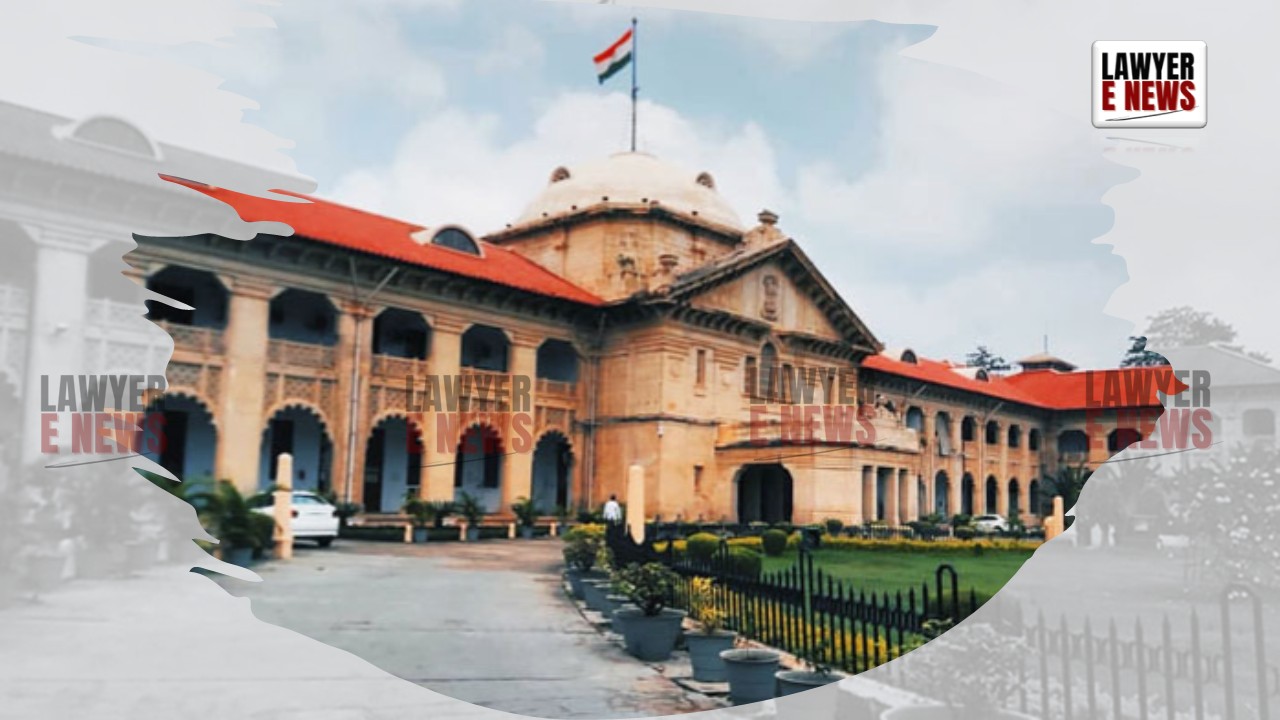
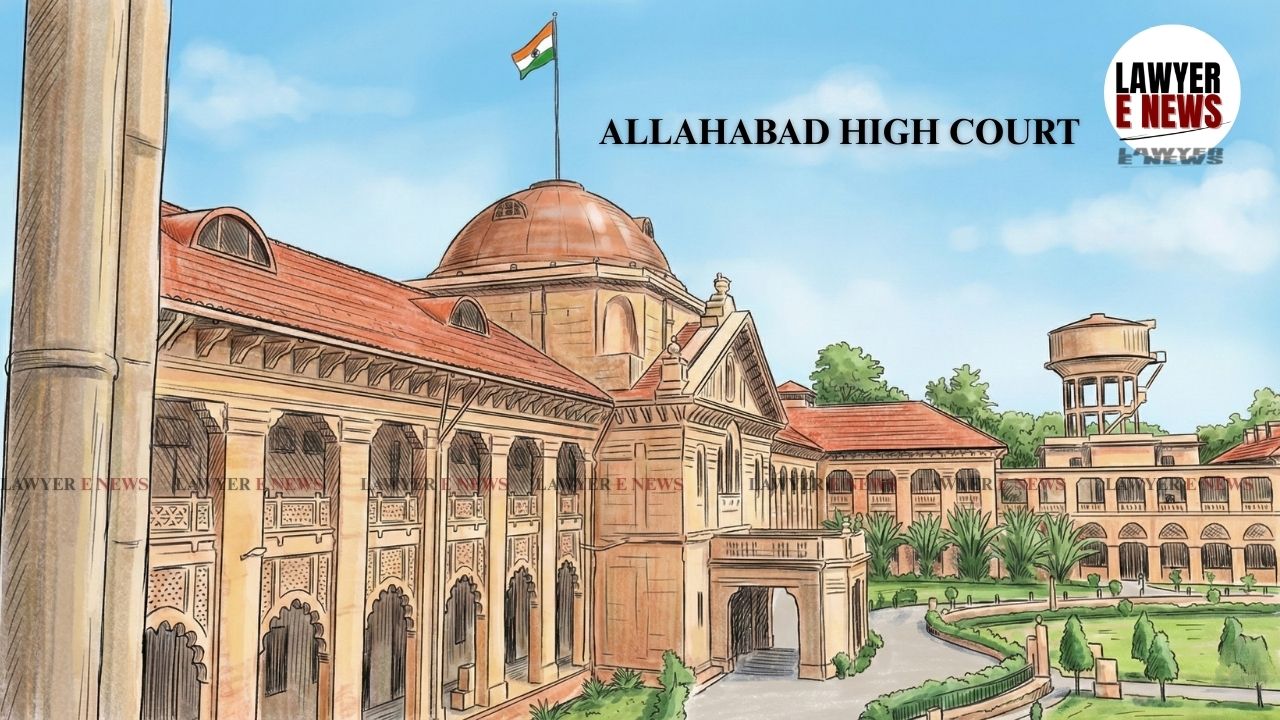
“When a witness admits ‘I was asleep and knew nothing’, their entire credibility collapses”, High Court of Judicature at Allahabad (Bench comprising Justice J.J. Munir and Justice Nalin Kumar Srivastava) acquitted three men previously convicted in a gruesome acid attack case that led to the death of a woman and injuries to her children, ruling that the prosecution failed to prove guilt beyond reasonable doubt due to an ante-timed FIR, contradictory ocular evidence, and the possibility of false implication arising out of past enmity.
Delivering its judgment in Kale v. State of Uttar Pradesh (Criminal Appeal No. 1345 of 2015, along with Appeals No. 3888 and 4448 of 2014), the Court set aside the trial court’s decision which had sentenced the accused to life imprisonment and held that the entire case was shrouded in grave doubt, unworthy of sustaining a conviction under Sections 304 and 326 read with Section 34 of the Indian Penal Code.
“An FIR Lodged After Consultation and Backdated to Appear Prompt Cannot Inspire Confidence”: FIR Declared Ante-Timed
The High Court’s ruling rested heavily on its finding that the First Information Report (FIR) was “clearly ante-timed”. Although officially recorded at 6:30 a.m., the Court concluded that the complainant had only returned to the village from Delhi at around 7:45 a.m., and the FIR was prepared after discussions with villagers.
“The FIR, though recorded at 6:30 a.m. as per the police records, was lodged only after consultation and deliberation at around 9:00 a.m.,” the Court observed, holding that such ante-timing of the FIR affected the integrity of the entire prosecution case. “The FIR belongs to that category where the delay and ante-timing casts a serious shadow on the spontaneity and credibility of the account,” the bench held.
In doing so, the Court distinguished between two categories of ante-timed FIRs: those arising from routine delay or negligence, and those tainted by design or manipulation. The present case, it held, fell squarely in the latter.
“An Injured Witness Cannot Be Believed If He Admits He Was Asleep and Knew Nothing”: Court Discards Prosecution’s Star Witness
Relying on the classic principle that injured witnesses deserve higher credibility, the Court nonetheless held that this presumption breaks down when the witness's own testimony is inherently self-destructive.
The Court found that PW-2 Rupesh, the son of the deceased and an injured survivor, had narrated the incident in graphic detail during his examination-in-chief. However, at the end of his cross-examination, he admitted, “All of us were asleep and I don’t know anything,” completely eroding the foundation of his testimony.
“It is perilous to rely on a witness who, despite claiming to be injured, finally admits to being unaware of the assault. Such contradictions vitiate the entire testimony,” the bench observed.
“Eye-Witness Who Claims to See Attack Then Goes to Answer Nature’s Call? Inherently Improbable”: PW-3’s Testimony Also Disbelieved
The Court also disbelieved the account of Babita (PW-3), daughter of the deceased and sister of the injured, who claimed to have seen the attack while awake to relieve herself. The judges noted that her version was riddled with contradictions about the sequence of events and the role of each accused.
“She claimed to witness the attack, then went to relieve herself, then returned, then saw her brother boxing the accused, then rushed to call her father — the entire sequence lacks naturalness and coherence,” the Court said.
Moreover, PW-3 attributed the fatal act of pouring acid to one accused (Anil), while PW-2 attributed it to another (Bablu), raising serious inconsistencies about a central fact in the prosecution case.
“Possibility of False Implication Cannot Be Ruled Out When There is Prior Conviction and Animosity”
The Court noted that two of the accused, Kale and Bablu, had previously been convicted for raping the complainant’s daughter and were on bail when the current incident occurred. While this could provide a motive for the accused, the Court observed it also gave a strong reason for the complainant’s family to falsely implicate them.
“This was a blind crime, committed at night, and no independent or disinterested witness came forward. In such cases, where animosity exists and testimonies are contradictory, the possibility of false implication assumes critical importance,” the Court ruled.
The Court reiterated that related witnesses are not inherently untrustworthy, but when they bear a grudge, their testimony must be scrutinized with greater caution, citing Raju @ Balachandran v. State of Tamil Nadu and Dalip Singh v. State of Punjab.
“Prosecution Must Stand on its Own Legs; Suspicion Cannot Replace Proof”
The judgment repeatedly emphasized that in criminal trials, the burden is on the prosecution to prove guilt beyond reasonable doubt. It noted that inconsistencies in testimony, coupled with an FIR that was ante-timed and suggestive of post-facto deliberation, left the entire case cloaked in suspicion.
“In such a prosecution, where the FIR is ante-timed, and both eye-witnesses give improbable and contradictory versions, the law cannot permit conviction merely on suspicion, however grave,” the Court ruled.
The trial court had wrongly relied on the credibility of interested witnesses without applying the proper standard of scrutiny, the High Court concluded.
Convictions Set Aside, Appellants Acquitted, and Released
Setting aside the trial court’s judgment dated 04.09.2014, the Allahabad High Court acquitted all three appellants — Kale, Bablu, and Anil — of all charges under Sections 326/34 and 304/34 IPC. It directed their immediate release unless they were wanted in any other case, and required them to furnish bonds under Section 481 of the Bharatiya Nagarik Suraksha Sanhita, 2023 (corresponding to Section 437-A CrPC).
“In the totality of circumstances, we hold that the prosecution have not been able to prove the case against the appellants beyond all reasonable doubt. They are entitled to the benefit of doubt,” the Court concluded.
Date of Decision: 19 December 2025