-
by sayum
29 August 2026 3:15 PM







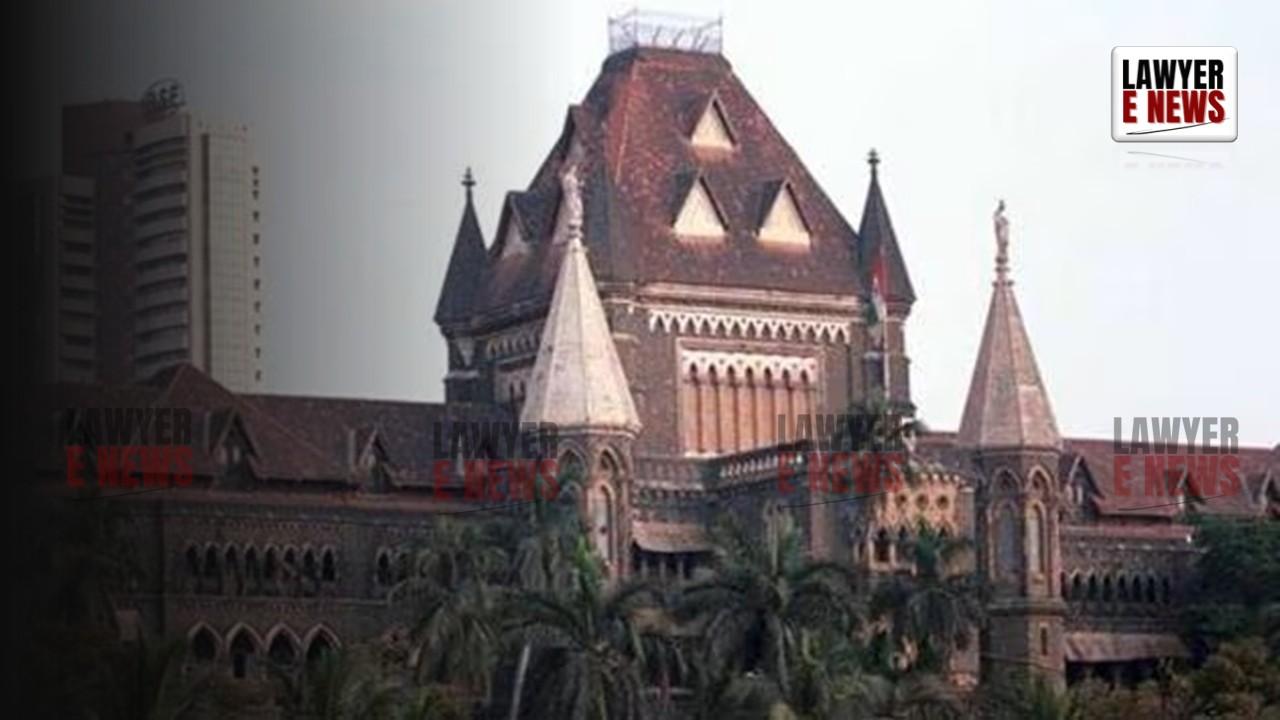
The Aurangabad Bench of the Bombay High Court has held that a civil suit originally filed by a non-banking financial company can, after amalgamation with a bank, be transferred to the Debts Recovery Tribunal (DRT) under the Recovery of Debts and Bankruptcy Act, 1993 (RDB Act). Justice Rohit W. Joshi dismissed Writ Petition, upholding the Commercial Court’s order to transfer a 2007 recovery suit to DRT Aurangabad.
The dispute arose when HDFC Limited filed Special Civil Suit No. 46 of 2007 to recover over ₹3.14 crore in two loan accounts. After the enactment of the Commercial Courts Act, the matter became Commercial Suit No. 12 of 2019. On 17 March 2023, the National Company Law Tribunal, Mumbai, approved the amalgamation of HDFC Limited into HDFC Bank Limited, a scheduled bank under the Banking Regulation Act, 1949.
Following this merger, HDFC Bank sought transfer of the suit to DRT under Sections 17 and 18 of the RDB Act. The Commercial Court allowed the transfer, prompting the defendant-petitioner to challenge it in the High Court.
Can a DRT hear a claim that originated from a non-banking lender?
The petitioner argued that the “debt” in question was advanced by HDFC Limited, a non-bank, meaning the DRT never had jurisdiction. Section 31 of the RDB Act, they said, only permits transfer if the DRT would have had jurisdiction at the time of filing, which in 2007 it did not. They contended that subsequent amalgamation cannot retrospectively confer DRT jurisdiction, and likened the merger to an “assignment” — a transfer that would not change the nature of the original cause.
The bank countered that after amalgamation, the claim was now one “by a bank” within Section 2(g) of the RDB Act, which defines “debt” to include amounts “claimed as due” by a bank, whether secured, unsecured, or assigned. With Sections 17 and 18 barring civil court jurisdiction over such claims, the DRT was the only proper forum.
Court’s Findings — “Section 31 must yield to Section 18”
Justice Joshi emphasised that Section 18 creates an absolute bar on civil court jurisdiction over matters falling under DRT’s domain:
“The bar does not operate only at the stage of institution of the suit. Section 18 clearly implies that the bar is applicable to pending suits as well.”
Adopting a purposive construction, the Court held that Section 31 — the procedural transfer provision — must be read harmoniously with Sections 17 and 18, with the latter prevailing where conflict arises. Even if the case did not “strictly” fall within Section 31’s wording, the amalgamation brought it within DRT’s exclusive jurisdiction because the claim was now being made “by a bank” as part of its business activity.
Rejecting the “assignment” analogy, the Court cited Saraswati Industrial Syndicate Ltd. (SC) to note that amalgamation extinguishes the transferor’s corporate existence — this was “not a case of assignment but of complete merger.”
On the definition of “debt”, the Court made it clear that: “The provision does not contemplate that the bank must claim an amount due which was advanced by it… To recover such amount also will be a part of the business activity of the bank, although the amount may not have been advanced by the bank itself.”
The writ petition was dismissed, affirming the Commercial Court’s transfer order. The interim stay on the transfer will, however, continue for six weeks to allow for further legal steps.
This ruling cements the principle that after amalgamation with a bank, even legacy suits by non-banking lenders fall under the DRT’s exclusive domain, reinforcing the RDB Act’s mandate to centralise bank debt recovery before specialised tribunals.
Decision Date: August 11, 2025