-
by sayum
26 August 2026 12:18 PM







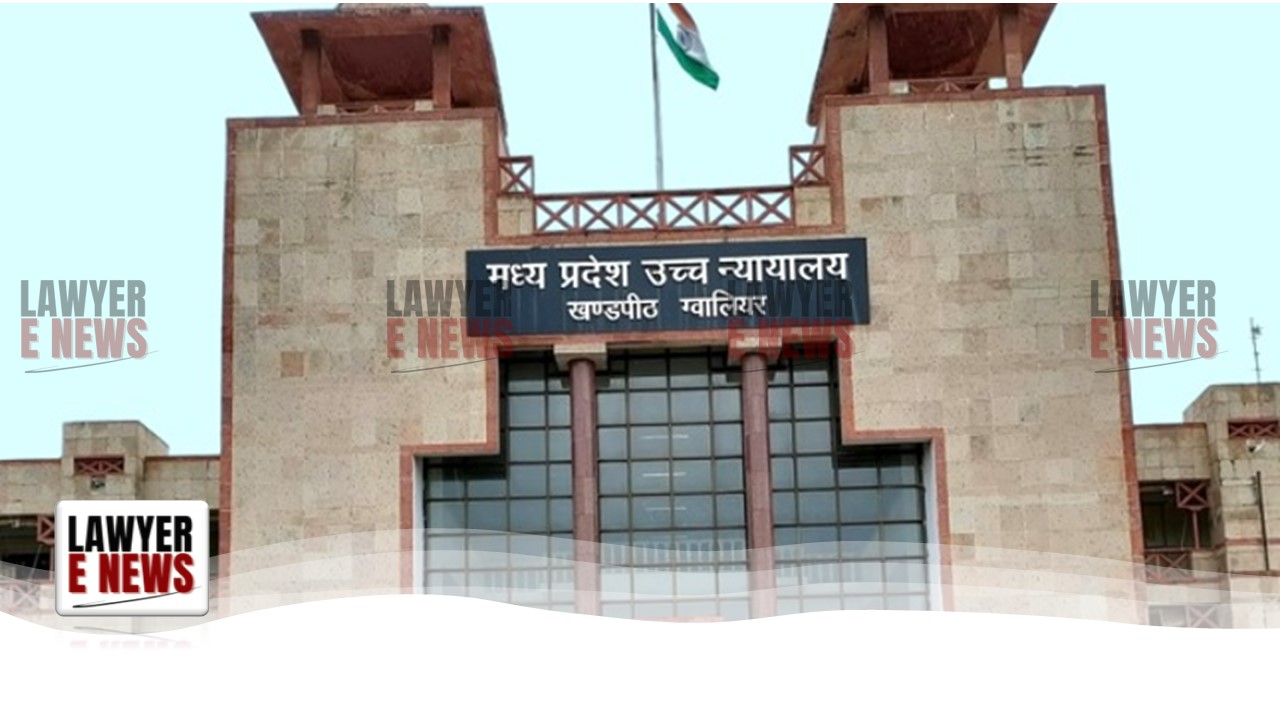
“Inherent Powers Under Section 528 BNSS Must Be Used Sparingly—Courts Cannot Pre-Judge Defence at Investigation Stage”, Madhya Pradesh High Court dismissed a petition under Section 528 of the Bharatiya Nagarik Suraksha Sanhita, 2023 (earlier Section 482 CrPC), seeking quashment of an FIR alleging dowry harassment, physical cruelty, and misappropriation of stridhan.
Justice Pramod Kumar Agrawal, while delivering a detailed 25-page order, held that serious and specific allegations of a cognizable offence—when taken at face value—cannot be dismissed at the threshold merely because they are disputed. The Court reiterated that the inherent powers of the High Court under Section 528 BNSS are not to be exercised to conduct a mini-trial, especially when investigation is ongoing.
“FIR is Not an Encyclopaedia—Prima Facie Allegations of ₹90 Lakh Dowry Demand and Stridhan Misuse Justify Criminal Investigation”
The complainant, Disha Jain, alleged that her in-laws and husband (petitioners), while residing with her in Japan, demanded ₹30 lakh and ₹10 lakh worth of jewellery at the time of marriage, and an additional ₹50 lakh later, coupled with repeated physical assaults, emotional abuse, and threats to life. According to the FIR, even after returning to India, the complainant was allegedly harassed to either pay the demanded dowry or agree to a divorce.
The Court, after perusing the FIR and material placed on record, observed:
“The allegations disclose a continuing offence of cruelty and harassment, supported by specific claims of monetary and physical abuse. This Court cannot undertake an evidentiary assessment at this stage.”
The bench further cited the landmark ruling in Neeharika Infrastructure Pvt. Ltd. v. State of Maharashtra [(2021) 19 SCC 401], stating:
“The police has a statutory right and duty to investigate cognizable offences. The High Court cannot interdict the process at the threshold unless the FIR, on its face, discloses no offence at all.”
“No Sanction Required for FIR Even If Offence Occurred Abroad—Section 188 CrPC Kicks in Only at Cognizance Stage”
One of the primary arguments raised by the petitioners was that since the alleged acts occurred outside India, in Japan, the FIR could not be registered without prior sanction of the Central Government, as per Section 188 of the CrPC.
Rejecting this plea, the Court clarified: “Sanction under Section 188 CrPC is required only at the stage of cognizance or trial. FIR registration and investigation are not contingent on prior approval from the Central Government. Moreover, part of the alleged offence continued in India.”
In support, the Court relied on the decisions in Thota Venkateshwarlu v. State of A.P., Ajay Aggarwal v. Union of India, and Nerella Chiranjeevi Arun Kumar v. State of A.P..
“High Court Not the Forum to Weigh Defence Evidence—Disputed Facts on Delay, Mediation, and Travel Are Trial Issues”
The petitioners had submitted that the FIR was delayed, motivated by extortion, and failed to reflect their version of events—such as mediation efforts, photographs of happy post-marriage life, and travel records of the complainant. They also cited a notice dated 24.09.2024 which, according to them, reflected marital discord rather than criminality.
Dismissing these arguments, the Court held: “Delay, motives, mediation history, or allegations of extortion are all disputed facts. At this stage, such matters are not determinative. They may be relevant during trial, but not in a petition under Section 528 BNSS.”
It was further held that mere photographic evidence of a few pleasant moments cannot displace specific allegations of sustained cruelty and dowry harassment.
“Once Investigation Has Begun, FIR Can’t Be Quashed Without Challenging Cognizance—Petition Held Not Maintainable”
The High Court further held that the petition was not maintainable under Section 528 BNSS since the petitioners only sought quashing of the FIR, without placing on record either the charge-sheet or the order of cognizance (if any) by the Magistrate.
Placing reliance on the Supreme Court decision in Pradnya Pranjal Kulkarni v. State of Maharashtra, SLP (Crl.) No.13424/2025, the Court emphasized:
“Once the charge-sheet is filed and cognizance is taken, a petition under Section 528 BNSS must specifically challenge those orders. A mere prayer to quash the FIR, in such circumstances, is not maintainable.”
“Suppression of Domestic Violence Proceedings and Prior Criminal History of Husband Show Lack of Bonafides”
The Court also noted that the petitioners failed to disclose the fact that the complainant had already initiated proceedings under the Protection of Women from Domestic Violence Act and filed a divorce petition. Moreover, petitioner No.1 (father-in-law) had a criminal record with multiple cases, including convictions totalling six years, and had illegally fled India in violation of court orders.
The Court remarked: “The concealment of material facts, such as ongoing DV Act proceedings and prior convictions, reflects lack of bona fides and disentitles the petitioners from equitable relief under Section 528 BNSS.”
Dismissing the petition, the Madhya Pradesh High Court made it clear that FIR No.198/2025 shall not be quashed, and that investigation must proceed in accordance with law. The Court reiterated the settled legal principle that inherent powers are not to be exercised to stall an investigation that is based on specific and cognizable allegations.
“This Court is not inclined to quash the FIR and the consequential criminal proceedings arising out of the same. Accordingly, the petition, being devoid of merits, is hereby dismissed,” the bench concluded.
The Court, however, clarified that: “Trial Court shall not be influenced by the observations made in this order during trial.”
Date of Decision: 19.12.2025